


The Industrial Bulk Packaging Market comprises a range of high-capacity containers—including intermediate bulk containers (IBCs), tank containers, drums, and bulk bags—designed for the safe transport and storage of liquids, granules, powders, and semi-solid materials. These packaging solutions offer advantages such as enhanced structural integrity, reusability, reduced handling costs, and compliance with stringent environmental regulations. Industrial Bulk Packaging Market industries strive to streamline supply chains, minimize product loss, and achieve operational efficiencies, the need for robust bulk packaging has never been greater.
Manufacturers are investing in materials like high-density polyethylene (HDPE), stainless steel, and composite blends to meet diverse chemical compatibility and durability requirements. In addition, the integration of smart sensors and RFID tagging enables real-time tracking, improving inventory management and reducing theft or spoilage. With growing concerns around sustainability, many companies are adopting recyclable and returnable bulk packaging, aligning with circular economy principles. In light of these developments and the expanding usage across chemicals, food and beverage, pharmaceuticals, and agriculture sectors.
The Global Industrial Bulk Packaging Market is estimated to be valued at USD 27.83 Bn in 2025 and is expected to reach USD 39.16 Bn by 2032, growing at a compound annual growth rate (CAGR) of 5.00% from 2025 to 2032.
Key TakeawaysKey players operating in the Industrial Bulk Packaging Market are
- Grief,
- BWAY Corporation,
- Cleveland Steel Container,
- Composite Containers LLC,
- Eagle Manufacturing Company.
These market players leverage extensive distribution networks and strategic partnerships to enhance their market share in key industrial regions. Advanced R&D investments and customized solutions for clients’ unique process requirements allow these companies to maintain a competitive edge in terms of product quality, safety compliance, and business growth.The growing shift toward sustainable and cost-efficient packaging solutions presents significant market opportunities for both established players and new entrants. Demand for lightweight, high-strength containers and digital traceability aligns with broader industry trends toward automation and eco-friendly materials.
This opens up market opportunities in emerging applications—such as biofuels, specialty chemicals, and nutraceuticals—as end-users seek to reduce their carbon footprint and optimize total cost of ownership through reusable designs.Global expansion is driven by rapid industrialization and increasing trade volumes across North America, Europe, Asia Pacific, and Latin America. Asia Pacific, in particular, is witnessing high growth due to rising manufacturing activity in China and India, supported by favorable government initiatives and investments in infrastructure. Europe’s stringent environmental standards and North America’s robust chemicals and food processing sectors further fuel demand. This geographic diversification enhances market dynamics and broadens the scope for tailored regional solutions.
Market DriversOne of the primary market drivers propelling growth in the Industrial Bulk Packaging Market is rising demand for sustainable and cost-effective transport solutions. As industries face increasing pressure to reduce waste and comply with regulatory restraints on single-use plastics, there is a marked shift toward reusable IBCs and bulk containers made from recyclable materials. In parallel, logistics managers are seeking to lower operational expenditure through efficient loading, stacking, and handling processes that reduce damage and spoilage. Market research indicates that supply chain optimization, driven by advanced bulk packaging, contributes significantly to market revenue growth by minimizing downtime and ensuring product integrity during transit.
Furthermore, heightened awareness of market challenges—such as fluctuating raw material prices and the need for robust hazard containment—has spurred investments in composite containers and steel drums that offer superior chemical resistance and durability. The convergence of these market dynamics, supported by ongoing market analysis and forecast insights, underscores the critical role of sustainable bulk packaging in fostering long-term business growth and operational resilience.
PEST Analysis
Political: The Industrial Bulk Packaging Market is influenced by stringent government regulations on waste management, transportation safety standards, and environmental compliance protocols that differ across jurisdictions. Policymakers’ emphasis on reducing carbon footprints and promoting circular economy initiatives has led to more rigorous permitting processes and elevated scrutiny of packaging materials, prompting stakeholders to intensify market research efforts and adapt to evolving regulatory frameworks.
Economic: Fluctuations in raw material costs—such as metals, plastics, and composites—coupled with inconsistent energy prices and shifting import-export tariffs significantly affect production expenses and profitability. Broader economic cycles, industrial output rates, and currency volatility shape investment strategies, creating both market opportunities for efficient supply-chain integration and challenges in balancing production capacity with demand.
Social: Growing societal focus on sustainability, corporate social responsibility, and resource conservation has driven end-users to favor eco-friendly and reusable packaging solutions. Increased awareness of health and safety among consumers and industrial clients alike has heightened demand for hygienic, traceable containers, influencing market dynamics and prompting manufacturers to prioritize transparent labeling and life-cycle assessments.
Technological: Rapid advancements in automation, robotics, and digital tracking technologies are revolutionizing manufacturing processes and warehouse operations. Intelligent sensors and IoT integration enable real-time condition monitoring of bulk contents, reducing spoilage and compliance risks. Next-generation materials science is delivering lightweight composites and bio-based alternatives that enhance durability and recyclability. Continuous innovation in design software tools accelerates prototyping and customization, streamlining product development and responding swiftly to emerging market trends.
Geographical Regions with High Market Value Concentration Industrial bulk packaging demand in North America remains robust, driven by the region’s highly automated manufacturing sector and stringent environmental regulations that favor high-performance containers. The United States and Canada lead in adoption of reusable steel and composite IBCs, underpinned by advanced logistics networks and large-scale chemical, food and beverage, and pharmaceutical industries. Western Europe also commands significant value, as countries like Germany, France, and the United Kingdom prioritize sustainability mandates, triggering strong uptake of eco-friendly packaging formats. Strict EU directives on waste reduction and circular economy principles have fueled the adoption of returnable and modular container systems, elevating overall industry share in this region.
Asia Pacific represents another major value center, with mature markets such as Japan and Australia embracing sophisticated bulk storage solutions for petrochemicals and agrochemicals. However, the scale of bulk packaging usage in China and South Korea, supported by thriving manufacturing hubs and expanding cold-chain infrastructure, contributes heavily to regional market revenue. Latin America’s concentration is more variable, anchored largely in Brazil and Mexico where agricultural exports and mining operations drive demand for robust IBCs. Meanwhile, Middle East & Africa exhibit niche value pockets—particularly in oil-rich Gulf states—where petrochemical refineries invest in specialized corrosion-resistant containers. Across all these geographies, market insights underscore the interplay of regulatory frameworks, industrial capacity, and logistical sophistication as key factors shaping concentration of value.
Fastest Growing RegionThe Asia Pacific region is experiencing the fastest growth in the industrial bulk packaging sector, propelled by rapid industrialization, infrastructure development, and governmental incentives aimed at modernizing supply chains. In Southeast Asia, nations such as India, Vietnam, and Thailand are investing heavily in chemical, pharmaceutical, and food processing industries, leading to an upsurge in demand for standardized IBCs and returnable packaging systems. Economic policies that encourage foreign direct investment and export-oriented manufacturing have galvanized production capacities, generating abundant market opportunities for both domestic and international suppliers.China stands out with accelerated expansion in its bulk packaging market, as manufacturers prioritize automation and digitalization to boost efficiency and meet stringent export quality requirements.
The proliferation of e-commerce in the region has also spurred demand for palletized and modular containers that enable rapid distribution across diverse terrains. Meanwhile, in South Korea and Japan, technological adoption—ranging from smart labels to real-time telemetry—has triggered a surge in advanced packaging deployments, reflecting broader market trends toward Industry 4.0 integration.Emerging economies within the region benefit from escalating infrastructure projects, including industrial parks and free-trade zones, which necessitate scalable storage and transportation solutions.
This dynamic environment fosters collaboration between packaging producers and end-users to co-develop tailored designs that optimize handling and reduce carbon footprints. Robust government initiatives targeting waste reduction and recycling further amplify the growth trajectory, encouraging companies to introduce bio-based materials and circular packaging models. Comprehensive market analysis underscores strong market drivers—such as rising commodity flows and escalating urbanization—as pivotal in cementing Asia Pacific’s leadership in bulk packaging expansion.
Get this Report in Japanese Language: 工業用バルク包装市場
Get this Report in Korean Language: 산업용대량포장시장
About Author:
Ravina Pandya, Content Writer, has a strong foothold in the market research industry. She specializes in writing well-researched articles from different industries, including food and beverages, information and technology, healthcare, chemical and materials, etc. (https://www.linkedin.com/in/ravina-pandya-1a3984191)
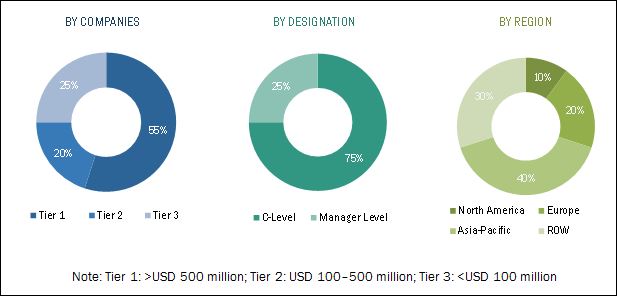
The market for industrial packaging is projected to grow from USD 54.94 Billion in 2016 to reach USD 93.28 Billion by 2026, at a CAGR of 5.4%.Browse 111 market data tables and 48 figures spread through 168 pages and in-depth TOC on “Industrial Packaging Market by Pack Type (Drums, Containers, Pails, Sacks, Crates), Material (Metal, Paperboard, Wood, Plastic), Application (Automotive, Food & Beverages, Building & Construction, Chemical), and Region - Global Forecast to 2026”.Request Report Sample @ http://bit.ly/2X2PtX3The global market for industrial packaging is dominated by large players such as Grief Inc. (U.S.), Mondi Plc (South Africa), Amcor Limited (Australia), WestRock Company (U.S.), International Paper (U.S.), Bemis Company Inc. (U.S.), Orora Group (Australia), Mauser Group (Germany), Sigma Plastics Group (U.S.), and Wuxi Sifang Drums Limited Company (China).These players have emphasized and adopted various strategies to expand their global presence and increase their market share.
Expansions & divestments, mergers & acquisitions, agreements, and new product launches are some of the major strategies adopted by market players to achieve growth in the Industrial labels market.The growth of the industrial packaging market was largely influenced by mergers & acquisitions in the last few years.
Agreements, mergers & acquisitions, expansions & investments and new product launches formed an essential part of their strategies, which led to the flow of considerable income within the company.
To maintain a competitive advantage on the competitors, top players emphasized on mergers & acquisitions.Companies adopted strategies such as mergers & acquisitions to increase the reach of their offerings, improve their production capacity, and focus on core operations.
Companies aim to serve the market efficiently by investing in manufacturing facilities and acquiring distribution centers in the fast-growing regions.
As a result of the same, Mondi Plc (South Africa), Amcor Limited (Australia), WestRock Company (U.S.), International Paper (U.S.), Bemis Company (U.S.), and Mauser Group (Germany) were the major companies that adopted these strategies.Speak to analyst @ Click HereAsia-Pacific to play a key role in the market for industrial packagingOn the basis of key regions, the market for industrial packaging is segmented into North America, Europe, Asia-Pacific, and the Rest of the World (RoW).
The Global Industrial Packaging Market Research Report - Industry Analysis, Size, Share, Growth, Trends and Forecast Till 2026 gives an evaluation of the market developments based on historical studies and comprehensive research respectively.
The market segments are also provided with an in-depth outlook of the competitive landscape and a listing of the profiled key players.Industrial packaging refers to packaging of industrial products by using various packaging techniques to increase overall productivity.
Types of packaging are metal, plastic, fibre, paper and others.
Industrial packaging is widely used in cosmetics, pharmaceuticals, logistics, transportation food and beverages, construction, Home Appliances and other end user industries.
Global industrial packaging market is segmented by pack types as drums including metal, plastic, and fibre packaging; IBCs that includes rigid and flexible packaging; sacks including paper, PE and other packaging, and pails that includes metal, plastic and other packaging.
Based on end user applications, the global industrial packaging market is segmented as chemicals and pharmaceuticals, plastics and rubbers, oil and lubricants, food and beverages, agriculture and horticulture, automotives, metal products, engineering, building and construction and others.
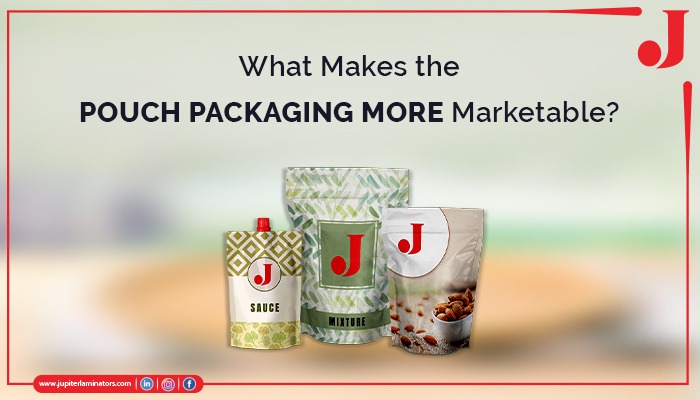
Flexible packaging has seen consistent growth in recent years, as innovations are coming up and this has made it a strong solution for a wide range of products, and increasingly attractive to a variety of brands.
As consumers laud the convenience and begin to understand the sustainability advantages of pouch packaging, these change how consumers interact with their products, making them more marketable in the industry.
At Jupiter Laminators, quality and aesthetics go hand-in-hand in manufacturing stand-up pouches.
Stand-up pouches are served with high benefits: easy to carry, open and resealable feature, cost-effective, and highly sustainable.
We at Jupiter Laminators, continuously work with modern techniques that enable us to be known as the top Flexible Packaging Material Manufacturers & Suppliers.