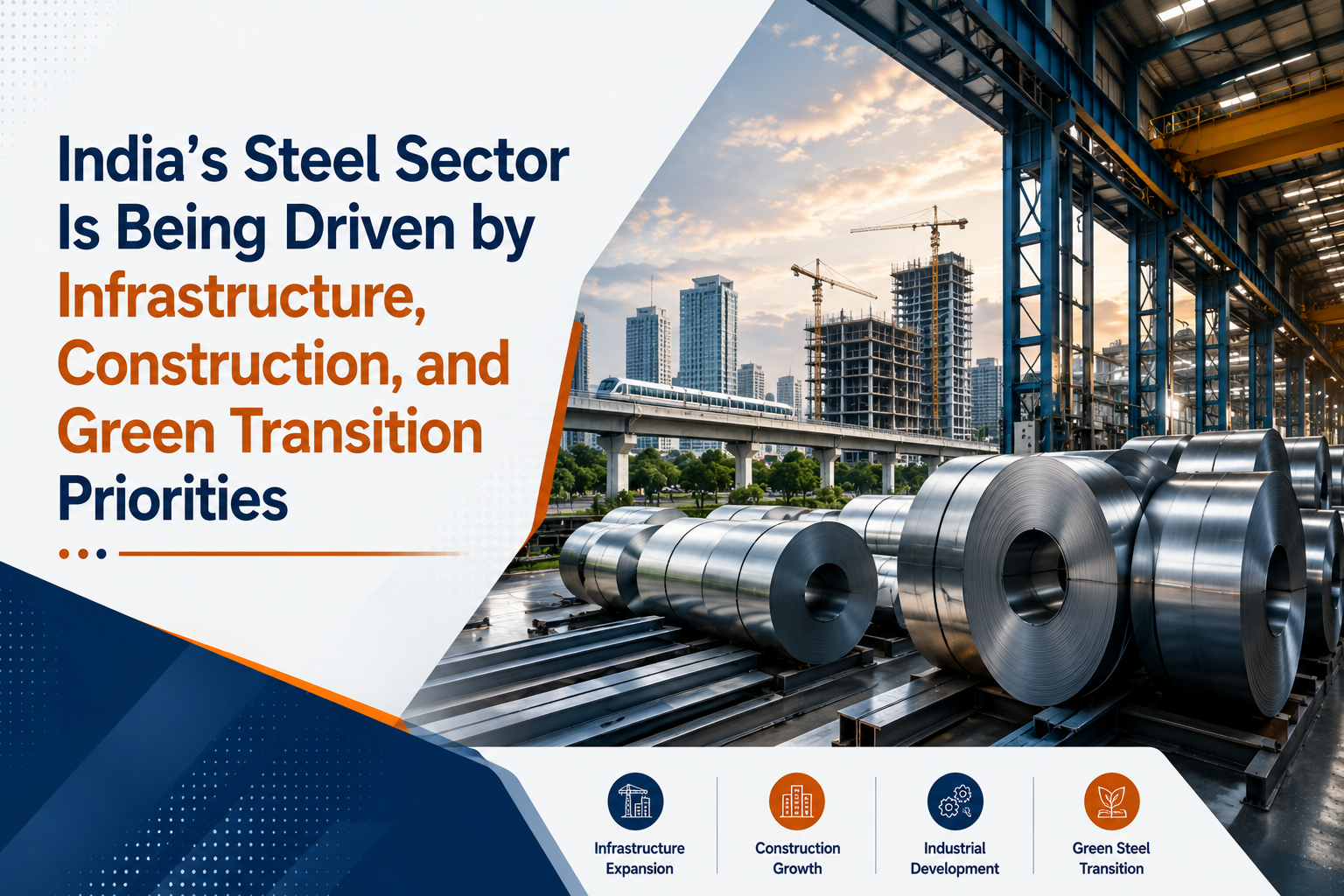
India’s steel sector is closely linked with the country’s infrastructure ambitions, construction activity, manufacturing growth, and industrial modernization. Steel is used across roads, bridges, metro systems, residential buildings, commercial complexes, railways, automobiles, power plants, machinery, consumer goods, and defense applications. As India continues to invest in urban development and industrial capacity, steel remains one of the most important materials supporting long-term economic expansion.
According to MarkNtel Advisors’ industry growth forecast, the India steel market was valued at around USD 140.5 billion in 2025 and is projected to grow from USD 150.50 billion in 2026 to USD 227.38 billion by 2032. The industry is expected to expand at a CAGR of 7.12% during 2026–2032, supported by infrastructure spending, construction demand, finished steel consumption, and policy-led manufacturing expansion.
## Infrastructure Spending Is Strengthening Steel Consumption
Infrastructure development is one of the strongest drivers of steel demand in India. Roads, highways, bridges, rail corridors, metro systems, airports, logistics parks, and urban infrastructure require long steel, structural steel, TMT bars, rails, beams, and fabricated components. These projects create bulk demand over long execution periods, making infrastructure a relatively stable consumption base.
The Government of India’s PM Gati Shakti initiative focuses on integrated infrastructure planning and multimodal connectivity. Such large-scale planning is important for steel because transport and logistics infrastructure typically require significant material input. As public and private infrastructure projects expand, demand for construction-grade and structural steel is expected to remain strong.
## Building and Construction Remains the Largest End-Use Area
Building and construction accounts for nearly 63% share of India’s steel consumption in 2026. This reflects steel’s structural role in residential housing, commercial buildings, industrial facilities, bridges, and urban development projects. Construction requires steel not only for reinforcement but also for frames, beams, roofing, fabricated sections, and high-rise structures.
India’s urbanization and housing needs continue to support this demand. The Ministry of Housing and Urban Affairs’ PMAY-Urban program has supported large-scale urban housing development, reinforcing the importance of materials such as TMT bars, structural sections, and fabricated steel. As housing, commercial real estate, and public infrastructure expand, building and construction will likely remain the largest consumption center.
## Finished Steel Holds the Leading Product Position
Finished steel accounts for around 65% share of India’s steel industry in 2026. This includes products such as bars, rods, wire rods, rails, beams, sections, hot rolled coils, cold rolled coils, galvanized steel, color-coated steel, and specialty products. Its dominance comes from direct usability across construction, automotive, machinery, energy, and industrial applications.
Finished steel is preferred because it can be deployed directly in downstream projects with limited additional processing. For construction companies, manufacturers, and infrastructure contractors, availability of finished steel supports faster project execution. As the sector expands through infrastructure and manufacturing demand, finished products are expected to remain central to steel consumption patterns.
## Domestic Production Capacity Supports Long-Term Demand
India is one of the world’s largest steel-producing countries, and domestic capacity expansion is supporting the sector’s growth outlook. The Ministry of Steel’s annual report outlines the government’s policy focus on capacity creation, domestic steel use, raw material availability, and technological modernization. These priorities are important because steel demand must be supported by reliable domestic production and supply chains.
The report also reflects India’s broader ambition to strengthen local manufacturing. Domestic steel production reduces dependence on imports and supports downstream industries such as construction, automobiles, engineering goods, railways, and energy equipment. However, production growth must also address raw material volatility, energy intensity, and environmental performance.
## Raw Material Volatility Is Encouraging Scrap-Based Production
India’s steel sector remains exposed to volatility in raw materials such as coking coal, iron ore, and scrap. Coking coal dependence is especially important because India imports a large share of its requirement. Price fluctuations can affect steelmaking costs, margins, and procurement planning.
This challenge is increasing interest in scrap utilization and electric arc furnace-based production. Scrap-based steelmaking can reduce dependence on imported coking coal and support lower-emission production routes. The government’s steel scrap policy aims to promote organized metal scrap recycling, improve resource efficiency, and support a more circular steel value chain.
## Green Steel Is Becoming a Defining Trend
Steel production is energy-intensive, and decarbonization is becoming a major strategic issue for producers. India’s steel companies are increasingly exploring renewable energy, hydrogen-based reduction, energy-efficient furnaces, scrap recycling, and process optimization. These changes are being influenced by domestic sustainability goals and international pressure for lower-carbon materials.
The International Energy Agency’s iron and steel analysis highlights the sector’s importance in industrial emissions and the need for cleaner production pathways. For India, green steel development will depend on technology cost, hydrogen availability, renewable power access, carbon policy, and buyer demand from infrastructure, automotive, and export-oriented industries.
## North India Holds a Strong Regional Position
North India accounts for around 31.78% share of India’s steel industry, supported by high population density, construction activity, infrastructure projects, and industrial clusters across states such as Uttar Pradesh, Delhi, Haryana, Rajasthan, and Punjab. The region’s demand is linked with urban housing, logistics corridors, expressways, commercial construction, and manufacturing centers.
Large infrastructure projects, including expressways, metro networks, industrial corridors, and urban expansion, continue to increase steel consumption in the region. North India’s strong demand base also supports distributors, dealers, project sales, and direct procurement channels serving construction and industrial users.
## Looking Ahead
India’s steel sector is expected to grow steadily as infrastructure expansion, building construction, manufacturing, finished steel consumption, and green production priorities shape demand. With the value projected to reach USD 227.38 billion by 2032 at a CAGR of 7.12%, growth is likely to remain strongest in building and construction, finished steel, North India, and infrastructure-led consumption. The sector’s long-term direction will depend on raw material security, scrap availability, low-carbon production, capital investment, and the ability of steel producers to meet India’s rising demand while improving environmental performance.