





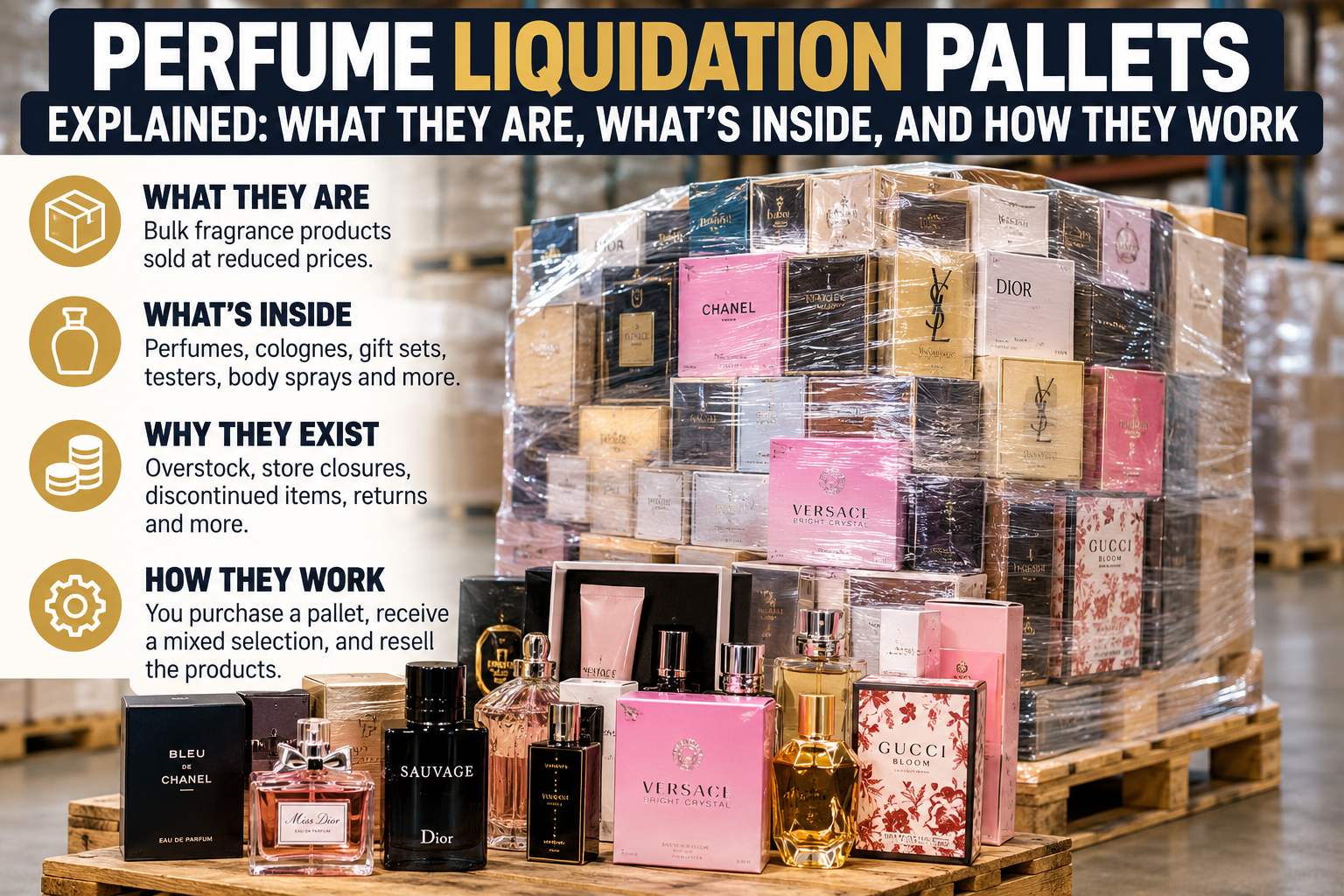
Understanding perfume liquidation pallets as a resale opportunity
Perfume liquidation pallets can offer attractive opportunities for resellers, discount retailers, online sellers, and wholesale buyers who want branded stock at below-standard trade pricing. However, fragrance inventory is not a category where buyers should rely on headline discounts alone. A pallet that appears profitable on paper can quickly become difficult to move if the stock is damaged, dated, poorly assorted, or made up of slow-selling brands. The most effective buyers approach each lot with a structured evaluation process that covers physical condition, brand strength, true landed cost, and realistic resale demand.
Because perfume is both a luxury and highly presentation-driven product, condition matters more than in many other liquidation categories. Customers buying fragrance expect authenticity, clean packaging, accurate fill levels, and a strong shelf or gifting appearance. Even when products are genuine, visible wear, missing caps, broken seals, or damaged boxes can reduce value sharply. That is why a practical inspection framework is essential before any commitment is made.
How to inspect condition in perfume liquidation pallets before buying
The first step in evaluating perfume liquidation pallets is to examine the stock condition in detail. Ask for a manifest if one is available, but do not stop there. Request clear photographs or videos showing outer cartons, inner packaging, bottle presentation, batch consistency, and any obvious defects. If an in-person inspection is possible, check whether the pallet contains factory-sealed units, shelf pulls, customer returns, overstock, or mixed-grade inventory. These categories carry very different resale implications.
Physical condition should be reviewed at several levels. Start with the master carton and inner case condition, as rough handling can indicate a higher likelihood of bottle damage. Next, assess retail packaging. Crushed corners, faded boxes, sticker residue, security tags, and torn cellophane may not make a product unsellable, but they affect where and how you can resell it. Finally, inspect the product itself. Look for cracked glass, loose atomisers, missing caps, leakage, evaporation, and inconsistent liquid colour. Fragrance that has been stored badly may show signs of heat exposure or ageing, both of which can affect customer confidence and repeat business.
It is also sensible to clarify the percentage of sellable units. A pallet with a low purchase price may still be poor value if only a modest portion is suitable for retail sale. Professional buyers often estimate stock across categories such as fully retail-ready, acceptable for discount sale, suitable only for clearance, and unsellable. This creates a far more realistic margin calculation than simply dividing the pallet cost by the unit count.
Evaluating brand strength and demand in fragrance liquidation pallets
Not all fragrance liquidation pallets are equal, even when the unit count looks impressive. Brand value drives sell-through speed, customer trust, and pricing power. Well-known designer names, established celebrity fragrances, premium niche labels, and recognised gift sets usually perform more strongly than unfamiliar private-label products. Buyers should review the exact brand mix rather than relying on generic descriptions such as “assorted branded perfume” or “mixed luxury fragrance”.
To assess brand value properly, compare current market demand across multiple sales channels. Look at major marketplaces, discount retailers, beauty sites, and completed sales data where possible. Focus not only on the listed price but on actual selling activity. A fragrance that appears expensive online may not be moving in volume. By contrast, a moderately priced but well-known brand may deliver better turnover and steadier cash flow.
Also consider product format. Eau de parfum, eau de toilette, travel sprays, testers, and gift sets all attract different buyer groups. Tester units may carry resale restrictions or customer perception issues depending on your market. Seasonal gift sets can be highly profitable at the right time of year but slower outside gifting periods. A strong pallet typically combines recognisable brands with commercially practical formats and sizes.
How to compare pricing properly across wholesale perfume pallets
When reviewing wholesale perfume pallets, buyers should move beyond the supplier’s quoted pallet price and calculate the full acquisition cost. This includes freight, import charges where relevant, handling, storage, payment fees, prep costs, packaging replacement, and expected loss from damaged or unsellable units. Only then can you determine the true cost per sellable item.
Price comparison should also take account of stock grade and assortment quality. A cheaper pallet is not automatically better if it contains high defect rates, weak brands, or mostly low-demand stock-keeping units. Conversely, a more expensive pallet may be justified if the inventory is clean, factory-sealed, and built around brands with proven resale demand. The correct comparison is not pallet versus pallet in total cost alone, but gross margin potential versus operational risk.
A useful method is to calculate three figures for every lot: best-case resale revenue, likely resale revenue, and downside clearance revenue. This approach helps remove optimism bias. If the numbers only work under perfect conditions, the deal is probably too fragile. Strong opportunities remain viable even when some units require discounting or some stock takes longer to sell.
Estimating resale margins and turnover from wholesale perfume pallets
Resale potential depends on both margin and speed. Buyers of wholesale perfume pallets should estimate not only how much profit a lot might generate, but how long capital will be tied up. Fragrance can produce healthy margins, yet slow-moving stock reduces cash efficiency and increases storage exposure. Build projections using realistic selling prices based on market evidence, not ideal retail figures.
Segment the pallet by likely resale channel. Premium boxed items may fit your website or marketplace listings, while lightly damaged packaging may be better suited to discount outlets, live selling, or bundle offers. Some stock may need to be grouped by brand, scent family, or size to improve movement. Your margin model should reflect this mixed-channel reality.
It is wise to include a shrinkage allowance. Even reputable liquidation stock can contain hidden issues that appear later, such as leaking bottles, customer complaints about packaging condition, or authenticity concerns caused by poor presentation. A conservative buffer protects your forecasting and helps you avoid overcommitting on marginal deals.
Supplier checks, authenticity controls, and final buying decisions
Before purchasing, investigate the supplier as carefully as the pallet itself. Ask about source type, grading standards, manifest accuracy, claim procedures, and authenticity controls. Genuine suppliers should be able to explain whether the stock comes from overstock, retail clearances, discontinued lines, or returns. Clear answers reduce risk and show whether the seller understands the fragrance category properly.
Authenticity is particularly important in perfume. Buyers should seek evidence of legitimate sourcing and examine packaging consistency, batch information, print quality, and product finish. If the supplier avoids detailed questions or provides limited documentation, caution is sensible. Even one problematic lot can damage seller reputation and customer trust.
In the end, the best buying decisions come from disciplined evaluation rather than enthusiasm for a low pallet price. Buyers who inspect condition thoroughly, verify brand value, compare full costs intelligently, and model resale margins conservatively are far more likely to build a profitable and sustainable fragrance resale operation.




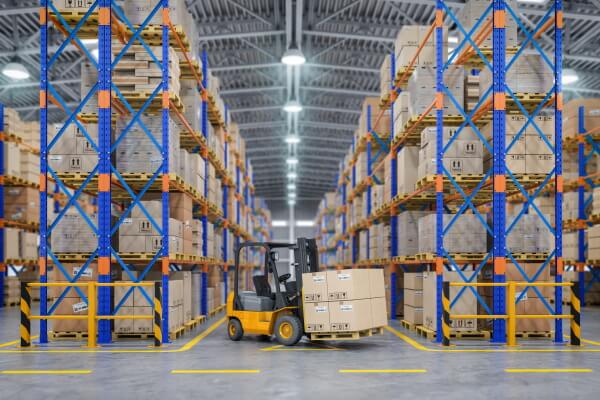
Liquidation pallets are used to source pharmacy, kitchen, and other stuff in bulk.
They are used to provide safety to valuable items.
There are two types of pallets, i.e., Wooden & plastic.
You can choose what is safe and more beneficial to you.
You can find a reliable liquidation pallets warehouse near me to buy pallets.Read more: https://sites.google.com/view/againgains/home
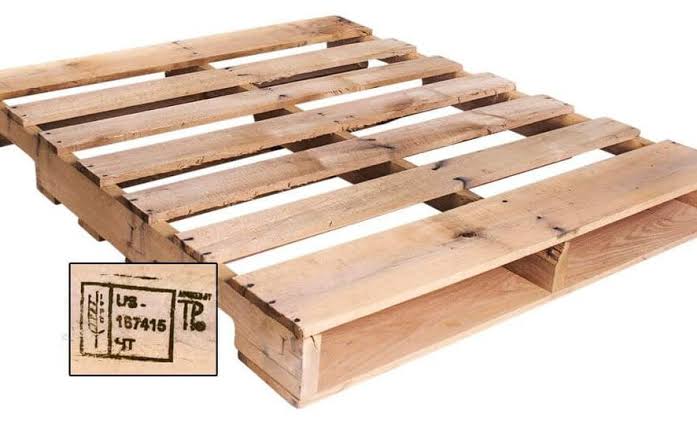
To heat treat your pallets, we place them in our kiln and heat it to a temperature high enough to kill any pests in the wood but not so high as to weaken the timber.We then mark that it is heat treated pallets, and issue a certificate.