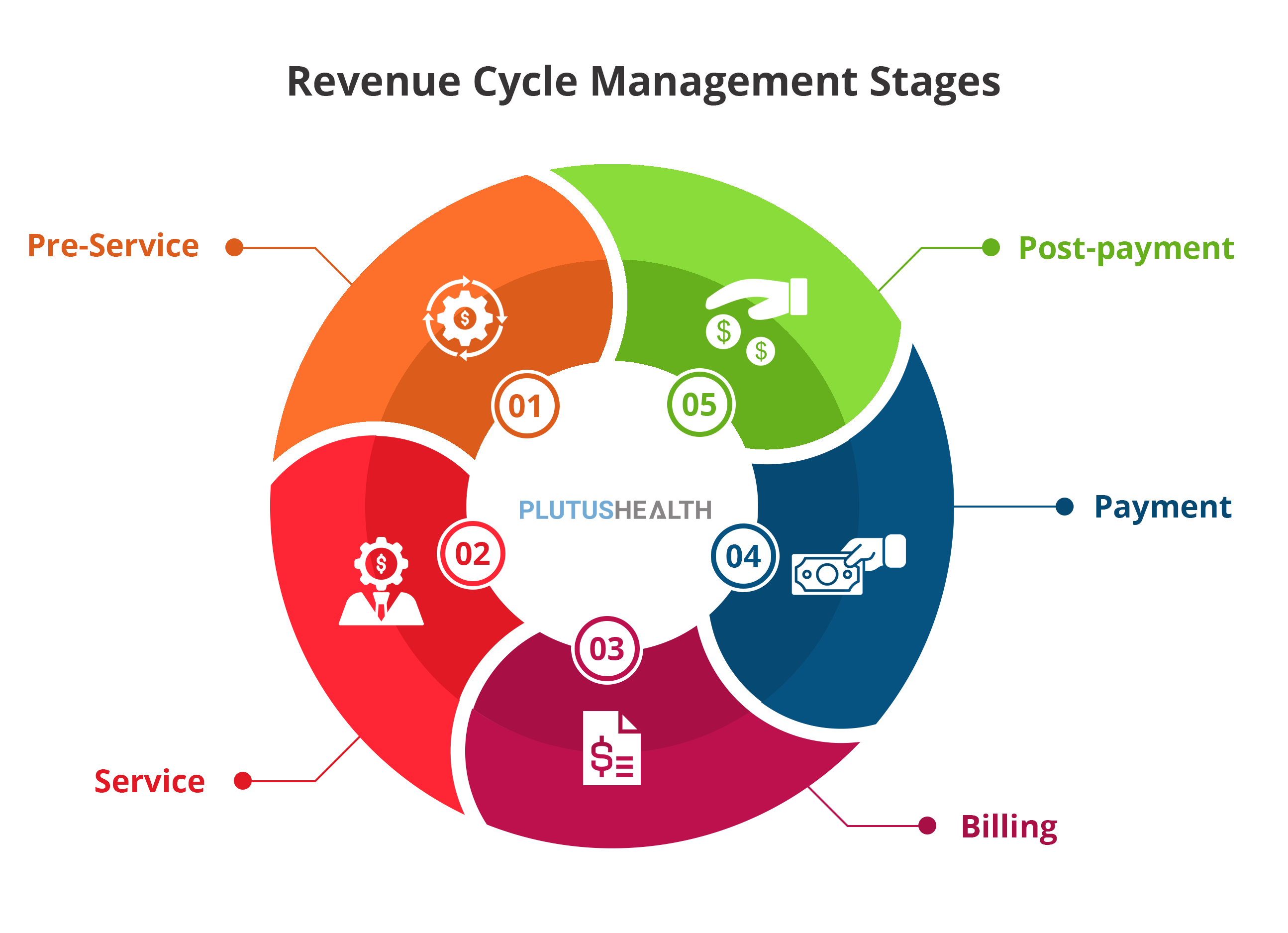
Introduction:
Revenue Cycle Management (RCM) is essential for personal injury healthcare practices that provide treatment to patients involved in accidents. Unlike traditional medical billing, personal injury billing often involves medical liens, Letters of Protection (LOPs), attorney coordination, and payments connected to future settlements.
An effective RCM in personal injury process helps healthcare providers manage billing documentation, track outstanding balances, improve collections, and maintain financial visibility throughout a case.
1. Understanding RCM in Personal Injury Practices
Revenue cycle management covers the financial processes involved in delivering healthcare services and settlement loans, collecting payments. In personal injury cases, this may include patient registration, treatment documentation, billing, medical lien management, payment tracking, and settlement-related coordination.
A structured RCM process helps practices manage the financial side of treatment while patients and attorneys navigate the personal injury claim.
2. Maintain Accurate Patient and Case Records
Accurate records are the foundation of successful revenue cycle management. Practices should maintain:
Patient and accident information
Attorney and law firm contact details
Treatment records and medical reports
Medical bills and itemized statements
Lien or LOP documentation
Outstanding balance and payment history
Keeping these details organized makes it easier to verify information and respond to requests from attorneys.
3. Streamline Medical Billing and Documentation
Incomplete billing records can create delays during payment review and settlement negotiations. Healthcare providers should prepare accurate invoices, maintain supporting treatment documentation, and review charges before sharing statements.
Consistent documentation helps attorneys understand medical expenses and reduces the chances of billing discrepancies.
4. Improve Medical Lien Management
Medical liens are an important part of many personal injury platform healthcare arrangements. Providers should monitor lien amounts, treatment expenses, payments, adjustments, and outstanding balances throughout the case.
A reliable medical lien management process helps practices maintain updated financial records and coordinate repayment discussions when a settlement is reached. The terms and enforceability of liens depend on applicable law and agreements.
5. Strengthen Coordination With Attorneys
Personal injury practices frequently communicate with attorneys to share medical bills, treatment records, balance updates, and other relevant information.
Establishing clear communication procedures helps reduce delays and ensures that both parties have access to the documentation needed for case and settlement-related decisions.
6. Use Technology to Improve RCM Workflows
Digital tools can simplify administrative tasks by organizing patient information, billing records, lien details, and payment updates in centralized systems.
Technology-supported workflows can help practices:
Monitor outstanding balances
Organize medical documentation
Track follow-up activities
Maintain payment histories
Improve communication between stakeholders
These capabilities can reduce manual work and improve visibility across multiple personal injury cases.
7. Work With a Medical Lien Servicing Partner
Managing medical liens and settlement-related financial workflows can become challenging as a practice handles more personal injury cases. A specialized servicing partner can support documentation, balance tracking, communication, and repayment coordination.
Gain Servicing supports medical lien servicing and Letter of Protection (LOP) management, helping healthcare providers and legal professionals coordinate important financial processes throughout personal injury cases.
Conclusion
Revenue cycle management for personal injury practices requires a coordinated approach to billing, documentation, medical lien tracking, collections, and attorney communication. By establishing consistent workflows and using specialized servicing support, healthcare providers can improve financial visibility, reduce administrative friction, and manage outstanding balances more effectively.
Frequently Asked Questions
1. What is revenue cycle management in personal injury healthcare?
It is the process of managing billing, medical documentation, outstanding balances, and payment coordination for treatment related to personal injury cases.
2. How is personal injury RCM different from traditional medical billing?
Personal injury RCM may involve attorneys, medical liens, LOP agreements, and payments associated with future settlements, rather than relying only on standard insurance billing.
3. Why is medical lien management important?
It helps providers track outstanding treatment expenses, maintain accurate balances, and coordinate repayment discussions.
4. How can personal injury practices improve collections?
Practices can improve collections by maintaining accurate records, reviewing balances regularly, following up consistently, and communicating with attorneys.
5. What does a medical lien servicing partner do?
A servicing partner can help organize lien documentation, monitor balances, and coordinate communication and repayment-related workflows.




Introduction:
Revenue Cycle Management (RCM) plays an important role in helping healthcare providers manage billing, track outstanding balances, and recover payments in per

Machine learning could become a new weapon in the fight against Medicare fraud.Machine learning can be a useful tool in detecting Medicare fraud, according to a new study that can recover anywhere from $ 19 billion to $ 65 billion lost in fraud each year.Researchers at Florida Atlantic University’s College of Engineering and Computer Science recently published the world’s first study using Medicare Big data, machine learning, and advanced analytics to automate fraud detection.
They tested six different machine learners on balanced and unbalanced data sets and eventually found that the RF100 Random Forest algorithm would be most effective in detecting potential cases of fraud.
They found that unbalanced data sets are more than balanced data sets when scanning for fraud.There are many implications in determining what fraud is and what is not, such as clerical error,” says Richard A. Bowder, senior author and Ph.D.“Our goal is to allow machine learners to know all this data and flag anything suspicious.
Then we can alert researchers and auditors, who should focus on 50 cases instead of 500 cases or more.”In the study, Bowder and colleagues examined Medicare data, covering 37 million cases from 2012 to 2015, for incidents such as patient abuse, neglect, and billing for medical services.
The team has reduced the data set to 3.7 million cases, which is still a challenge for human researchers charged with pinpointing Medicare fraud.The authors used the National Provider Identifier — a government-issued ID number for health care providers to compare fraud labels with Medicare Part data, which includes provider details, payment and charge information, policy codes, all policies, and medical specifications.When researchers compared NPI with Medicare data, they flagged fraudulent providers in a separate database.“If we can accurately assess the physician’s uniqueness based on our statistical analyses, then we can detect exceptional physician behaviors and flag as much fraud as possible for further investigation,” said Tagi M. Khoshgofthar, Ph.D., co-author, and professor at the school.So, if a cardiologist is wrongly labeled a neurologist, it is a sign of deception.However, the data set remains a challenge.
A small number of fraudulent providers and a large number of onboard providers have made data imbalance that can fool machine practitioners.