Biological risk - Biohazard or biohazard
Threats against human health become a daily struggle, which raises many research aspects; among which we have a very important one, biological risk.
A biological risk consists mainly of the presence of an organism, or substance generated by the said organism, that generates a degree of danger to human health.
To highlight these arguments, we cite as an example of the present EBOLA virus, a microorganism that spread very quickly and produced thousands of victims on the African continent.
Contamination or exposure to biological agents is a constant threat to our health since these can include sanitary waste, samples of a microorganism, virus, or toxin from a biological source that can be pathogenic. It can also include substances that are harmful to animals and other living beings.
All this generates an important role in us. Much of the exposure to biological agents can be considered a lack of observation and self-care of people; There are striking images to take care of many current pollutants in our environment, and the biological risk has a very notable international logo. The international community in mid-1966 approved the use of a symbol that quickly became used in schools, laboratories, and military weapons, as a sign of possible exposure to biological agents.
The term and its associated symbol are generally used as a warning so that those potentially exposed to the substances know this to take precautions. There is also an HCS / WHMIS biohazard badge that uses the same symbol. The expression "biological risk" is closely linked to the field of occupational risk prevention.
The main routes of penetration into the human body are:
Respiratory route: through inhalation. The toxic substances that enter this way are normally found in the environment diffused or in suspension (gases, vapors or aerosols). It is the main route of penetration of toxic substances.
Dermal route: by contact with the skin, in many cases without causing eruptions or notable alterations.
Digestive route: through the mouth, esophagus, stomach and intestines, generally when there is the habit of ingesting food, beverages or smoking in the workplace.
Parenteral route: by contact with wounds that have not been properly protected.
Some basic preventive criteria:
Risk identification and risk assessment, determining the nature, degree and duration of worker exposure.
Substitution of dangerous biological agents by others that are not or are to a lesser degree.
Risk reduction
Minimize the number of workers exposed to a biological pathogen.
Establish work procedures and adequate technical measures for protection, waste management, handling, and transport of biological agents in the workplace and emergency plans for accidents involving biological agents.
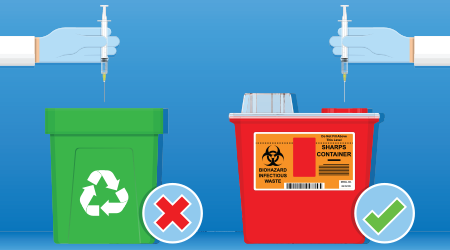
Adoption of safety measures for the reception, handling, and transport of biological agents and residues, including safe and identifiable containers.
Adoption of collective protection measures or, failing that, individual protection, when exposure cannot be avoided by other means.
Use of hygiene measures that prevent or hinder the dispersion of the biological agent outside the workplace. Existence of appropriate sanitary services, which include products to wash the eyes and/or antiseptics to wash the skin.
Use of the biohazard sign and other relevant warning signs.
Use of hygiene measures that prevent or hinder the dispersion of the biological agent outside the workplace
Verification, when necessary and technically possible, of the presence of biological agents used in the work outside the primary physical confinement.
Training and information for workers and/or their representatives in relation to: potential health risks, health and safety provisions, the use of protective equipment, the measures to be taken in the event of an incident, and for its prevention.
Establishment of a previous and continuous sanitary control.(Bulk chemo)