

Why are e-way bills necessary?
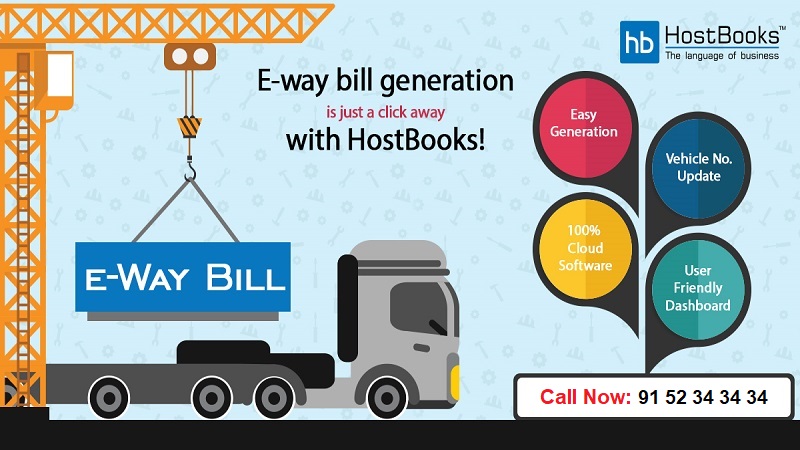
E-way bills aim to smoothen the VAT based billing system that was traditionally in use. The introduction of GST – a centralized structure, brings in uniformity and eliminates any bottlenecks that were earlier created at check posts.
Any person who is transporting a shipment whose worth is more than Rs. 50,000 should generate an e-way bill.
An e-way bill ensures that all the goods that are transported are in line with the GST rules and no party involved is evading from paying tax to the government.
How to generate an e-way bill
Income Tax Return is a process in which the taxpayer can use to claim tax deductions, net tax liability, and to document the gross taxable income. Here are a few prerequisites for any person to create an eway bill:
- Should be registered on EWB portal
- Invoice of the shipment should be handy. Bill or challan can also be used here.
- Registration documents of the vehicle used for transportation (If being transported by road)
- Transporter ID, Transport Document Index and date on the document should be present if the shipment is being sent by railways or by air transport.
Different parts of an e-way bill explained
The e-way bill consists of 2 parts. Part A and Part B. Everything that the sender/receiver/ transporter should fill out while raising a GST bill in Part A:
- GSTIN of sender and receiver or the receiver if the sender is not registered
- Place of origin (from where the shipment is being sent)
- Place of delivery
- Value of the shipment
- HSN code
- Reason for sending the goods