


Decentralized network is protocols distributed across multiple computing devices. The decentralized web (dWeb) runs applications and sites across a network of connected computers, ensuring that there is no single place of vulnerability, and that no one entity is able to control everything - including your data. By distributing data and using encryption, everything on the decentralized Internet is secure. In addition, the use of open source technology means that transparency is assured. Stay and grow with us at dWeb Guide - the future is here, the future is decentralized.

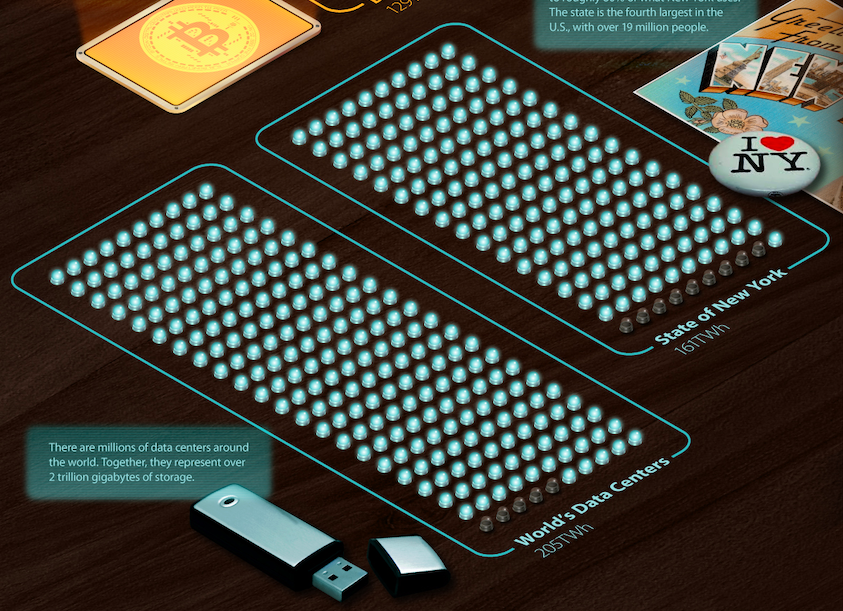
According to Energy Post, the Internet will consume 20% of the projected electricity demand with 8000 TWh by 2030, making it one of the most energy-intensive sectors in the world.
Hyperscale data centers typically use cutting-edge technologies — facility designs, cooling systems, and workload-optimized equipment to improve efficiency, but the current centralized approach leads to many bottlenecks.While many in the sector are trying to reduce energy consumption by powering their infrastructures with renewable energies, it will not shift the trend.
Companies in the industry must commit to reach the “zero carbon footprint” threshold and fast.In this article, you’ll discover more about the current energy consumption of the cloud industry, what we can do to improve the situation, and the best options to reduce the carbon footprint.Current Energy Usage Problems With Data StorageToday, the world's largest technology companies (Facebook, Amazon, Google, Microsoft, Apple, amongst others) own 80% of the global Internet and cloud infrastructure and 60% of its networks.
Here are some statistics indicating that this trend is in full bloom: A case that summarizes the vast footprint that companies create by choosing traditional data centers is Netflix.
If Netflix could host their data on a peer-to-peer network, it would look like torrents and come with the following benefits:Low carbon footprint24/7 availability of informationAvailable anywhere around the world100% secure informationA Change in HyperscaleData-centers energy usage has been relatively stable over the last half-decade, thanks partly to the emergence of super-efficient information factories with an ordered, standardized computing architecture that quickly scales up to hundreds of thousands of servers.Hyperscale data centers first appeared around a decade ago, when corporations like Amazon and Google began to require fleets of a quarter-million or more servers.According to a 2016 assessment by the Lawrence Berkeley National Laboratory, moving 80% of servers in small US data centers to hyperscale facilities will result in a 25% reduction in energy usage.
That transition is now underway.Today, the globe contains approximately 400 hyperscale data centers, many of which provide services to modest businesses or colleges that would not have had their servers in the past.On the other hand, there is a clear trend that companies are using cloud storage solutions that are based on hyperscale data centers, which makes it a matter of great concern.

Whenever there is a discussion about cryptocurrencies, a characteristic that is always mentioned is that they are decentralized.
What is Decentralized Network & how is it beneficial?
Today, we’re taking a closer look at decentralization.
The technology behind decentralization in Bitcoin and other cryptocurrencies is called blockchain.
It provides every user the ability to serve as a node that checks the validity of transactions.
Decentralized blockchain solutions are being adopted by organizations of every type, and industry.