


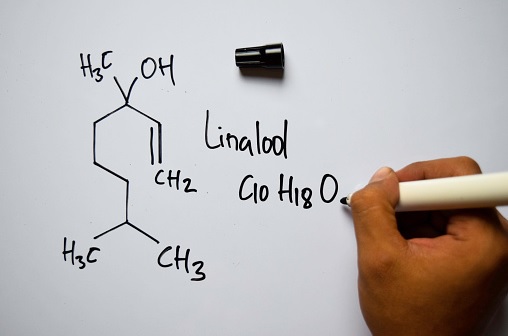
The characteristic aroma that typically distinguishes cannabis plants consists of a complex balance of volatile substances chemically identified as terpenes, a class of molecules that, only for cannabis, has over 120 different compounds. These compounds, interacting synergistically with each other, help to identify the multiple types of cannabis, distinguishing them by odors and quality. Produced in the trichomes, which are also responsible for the production of THC, terpenes are closely related to the genetics of the plant as well as to the growing medium, climate and temperature.
In essence, the terpenes commonly present in many flowers and plants such as lavender as well as cannabis, are nothing more than essential oils that determine the aroma of each species, defining their characteristic imprint and, although they do not contain cannabinoids, they are of fact able to act as modulators of the cannabinoid effect, thus enhancing the effects of CBD and THC.
What are terpenes
Terpenes constitute a group of molecules available in nature, mainly in the plant kingdom, in particular in conifers and in some species of insects: the main peculiarity that distinguishes them is the ability to give each botanical variety the characteristic aromatic level that distinguishes it. An example is given by species such as mint, orange blossom, lavender as well as lemon verbena, where an intense lemon aroma prevails.
On the other hand, taking into consideration the many varieties of marijuana plants commonly present in nature, the aroma or fragrance that distinguishes each of them is determined by the vast range of terpenes produced in a completely natural way by the same plant, and in particular by the inflorescences.
Chemically, terpenes are groups of molecules originating within trichomes, or the same glands present in the inflorescences, responsible for the production of THC: each distinct aroma is however determined according to different factors that can be genetic, environmental, climatic or simply dictated by the composition of the soil. And it is precisely the single molecular structure that distinguishes terpenes into 7 different classes depending on the genetics of the plant: specifically, the hemiterpenes, monoterpenes, sesquiterpenes, diterpenes, sesterpenes, triterpenes and polyterpenes, all characterized by a typical structure created on the basis of a isoprene chemical unit which tends to repeat itself regularly along the entire molecule.
However, i terpenes contained in cannabis they mainly belong to the classes of sesquiterpenes and monoterpenes. Monoterpenes are small and volatile, tangible the moment you squeeze a cannabis bud in your fingers and perceive its characteristic aroma. Sesquiterpenes, on the other hand, are heavy, large in size and therefore less volatile, appreciable the moment you vaporize or smoke the herb.
As often happens in nature, it is curious to think that terpenes are used by plants as a form of self-defense against predators. In fact, emitting a characteristic pungent and persistent aroma, they can repel some parasites and insects, but on the contrary they can attract the beneficial species necessary for pollination.
However, in addition to being responsible for secreting the typical fragrances that characterize each botanical species as well as the multiple varieties of marijuana, terpenes have the ability to promote and modify the psychoactive effects generated by THC.
In fact, there are many studies that have defined the correlation between the terpenes of cannabis plants and the effects that they are able to induce together with the therapeutic properties that can favor different actions depending on their combination and overlap, this because the different species of cannabis, constitute diametrically different types and quantities of terpenes. Suffice it to say that sativa hemp can present as many as 120 different terpene types.
These chemical compounds therefore contribute to carrying out important functions within the cannabis plant , representing the basis for building more complex and fundamental molecules for the correct metabolic balance of the same, such as for example stimulating hormones, vitamins, pigments, steroids, resins and even cannabinoids , also representing a real defensive barrier , given by the characteristic pungent odor, against any parasites, insects and fungi.
In the inflorescences the monoterpenes such as limonene and α-pinene tend to predominate , with a strong anti-parasitic and anti-fungal capacity while the leaves prevail sesquiterpenes , which contribute to making them less palatable for any herbivorous animals, thanks to the particularly bitter taste and unpleasant.
The terpenoids instead, represent a " subclass " of terpenes that see the presence of more complex functional groups: they have a number of therapeutic and biological properties for healthy humans because able to operate in perfect synergy with cannabinoids , determining in this way particularly beneficial effects on health. They are in fact held responsible for promoting blood flow, improving brain functions , easily eradicating any pathogens that normally affect the respiratory system, resulting effective in pain therapy., against inflammation as well as bacterial and fungal infections. In general, therefore, the terpenes are held responsible in reducing any anxiolytic effects induced by THC , highlighting all those possible limitations and risks given by synthetic drugs consisting of isolated active ingredients.
Finally, the heterogeneity of the composition of terpenes within cannabis represents a valid parameter, to define in detail what may be the different biotypes of the species. An example is given by the Indica strain , where the presence of β-myrcene, α-pinene and limonene prevails, compared to the Sativa strain which on the contrary has a considerably more complex and varied terpene profile .