


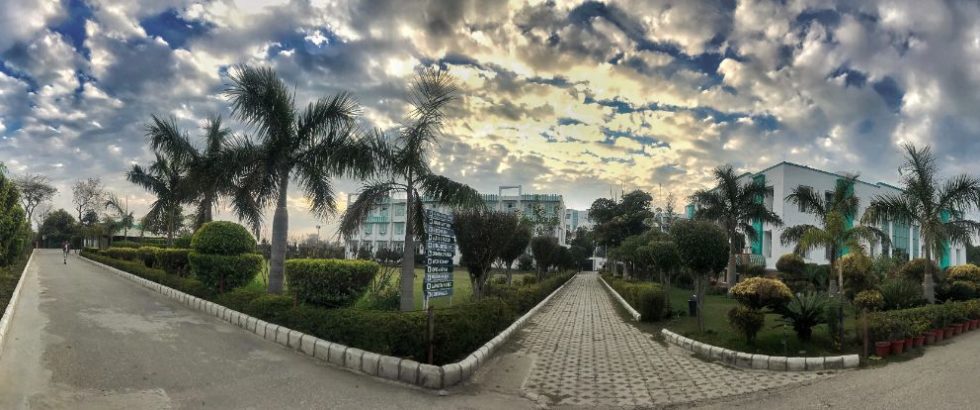
The Bachelor of Computer Applications (BCA) and Master of Computer Applications (MCA) are undergraduate and postgraduate programs or courses that follow the AICTE, or All India Council of Technical Education's rules and eligibility requirements (AICTE). Typically, these are four and two-year programs respectively, with four to eight semesters.
They're made to bridge the gap between computer science and its applications. While the bachelor's program at the best BCA colleges in Haryana introduces students to the fundamentals, the master's program aims to mold computer professionals with the appropriate moral and ethical values, as well as prepare students to face the challenges and opportunities that the Indian IT industry has to offer by laying strong foundations.
What are the topics covered in the BCA course?
• Core courses in programming with C, algorithm and data structures, advanced programming with C, computer organization and network fundamentals, relational database management systems, Web programming, software engineering, and visual programming are usually included in a Bachelor of Computer Applications program.
• Some of the key course objectives include increasing technological knowledge, training students to become industry professionals, providing research-based training, and encouraging software development.
• The course is designed to educate students more than just theory and applications; it can also help them develop professional and communication skills.
• Each semester includes six topics to cover, for a total of 36 topics covered over the course's duration.
How important is it to study further after BCA?
Even after completing your degree from the best BCA college in Haryana, you can continue to study further. There are several reasons for this, the most important of which is that it gives you a larger platform from which to launch a successful career. It will undoubtedly set you on the way to a successful career.
• Course selection: After BCA, you have a lot of options. Whether it's an MBA that fits your management goals or an MCA that you prefer, you'll have plenty of options to keep you pleased.
• More options: You will have a lot more options than if you just stop with a BCA degree. Higher education will ensure that you have more chances, whether you want to be a web developer or a systems administrator.
• Higher pay packages: Another reason why getting a higher education is a good option is that it allows you to seek and receive greater wage packages from major corporations. Big companies are always on the lookout for people with advanced degrees from reputable universities, and the perks are numerous.
What benefits does an MCA offer?
After BCA, you have a plethora of alternatives. After your BCA, you have the option of getting professional employment or continuing your education. You can, however, be significantly better off with an MCA.
Computer applications is a very active and ever-growing industry. There's no reason why this degree won't lead to more opportunities in the future. With a master's degree, you can rest comfortably that your qualifications are excellent. A degree like this will provide you access to more information and expertise. This will help you advance in your career.
Your results ultimately rely on your long-term professional goals. An MCA may be the ideal choice for you if financial stability and a decent job are crucial to you.
What courses can be chosen after a BCA?
Following your BCA, you can pursue a variety of degrees, such as enrolling in the best MCA college in Haryana. It is entirely dependent on your objectives. Do you wish to continue your education and advance your career? If so, the following are some excellent courses for you to take:
• MCA
• MCM
• IT master's degree
• MBA
Any of the aforementioned degrees can help you achieve your career goals, whether you want to work for the government or in the private sector. The Master of Computer Applications program at PIET, one of the best MCA colleges in Haryana, seeks to equip students with the skills necessary to not only learn existing programming languages but also to create new ones.

Project centers in Chennai provide year-wise projects 2021 2022 IEEE data mining projects in Chennai, all types of projects for B.E, M.E, BSC, BCA,iee MCA, etc.