Key Learnings:
- What is Enneagram
- A Brief History of the Enneagram
- Enneagram Is A Non-Denominational System
- Understanding Personality and Essence with Enneagram
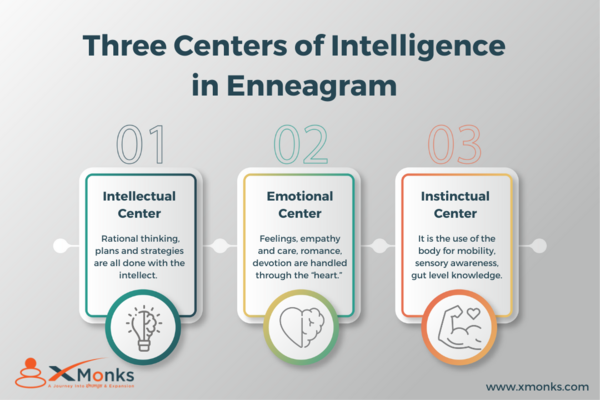
- Three Centers of Intelligence In Enneagram
- Your Basic Personality Type With the Help of Enneagram
- Identifying Your Basic Personality Type
- The Enneagram Personalities With Riso-Hudson Type Names
- Are You Just One Enneagram Type?
- At the End
We are quite different yet very similar in many ways. Every person has a distinct personality. If you’ve learned about the Enneagram, you’re probably trying to figure out who you are. We’ve all come to Enneagram for a variety of reasons. The Enneagram is a growing tool for self-discovery and helps foster empathy and compassion for others, whether it’s to achieve better confidence, self-awareness, to aid us in our profession and career, to enhance our relationships, or all of these and more.
What is Enneagram?
The Enneagram is a nine-type personality system that combines traditional knowledge and modern psychology to provide a powerful tool for understanding ourselves and the others in our lives. It has three key applications:
- Spiritual and personal development
- Relationships that work at home and at work
- Business leadership development, team building, and communication abilities
Through the practice of self-awareness, the Enneagram provides a technique to control personality. It helps us become more effective in our daily lives by guiding us down a path of opening our hearts and cultivating personal presence.
One of the most practical applications of the Enneagram is in our personal and professional relationships. We can become more flexible and skilled with the people in our lives by knowing our own habits, protective reflexes, and blind spots. We become more tolerant and sympathetic when we comprehend how others think and feel. We also don’t have to take it so personally when we run into the edges of other people.
The Enneagram can reveal what prevents us from responding in a more natural and appropriate way to what happens in our lives by giving us insights into the core motivations that drive our actions. We can begin to unravel the habits that keep us stuck as our awareness of our thinking, feeling, and behaving patterns grows. We can start to develop a clear way forward by recognising how our habitual acts and behaviours hinder our genuine nature and objectives.
Our higher potentials as well as our limits are described by the Enneagram. It offers precise advice on how each personality type can improve their love and job skills.
However, knowing your type is only the beginning. This is only the beginning of your Enneagram adventure. There are many ways it can help you reflect, develop, and evolve your thoughts, habits, and relationships once you get into it.
A Brief History of the Enneagram
This nine-pointed figure (Ennea is Greek for nine) has reportedly been utilised as a map of human consciousness and archetypes in esoteric Christian and Sufi traditions for millennia.
George Gurdjieff, a philosopher and teacher who employed it in his human development programme, first introduced it to the public in 1915 in Moscow. The founder of the Arica School, Oscar Ichazo, then added nine personality types to the Enneagram in the late 1960s. Claudio Naranjo, MD, and other psychologists in Berkeley soon blended the Enneagram with modern psychology’s most recent findings.
While each personality type can be found in psychological literature, the Enneagram brings them all together in one framework and demonstrates how they interact. Psychologists, business consultants, educators, and spiritual leaders are still working on this blend of old symbols and modern psychology.
Enneagram Is A Non-Denominational System
With over a million volumes published and Enneagram programmes or institutes in most nations in Europe and East Asia, as well as sections of Africa and South America, the modern Enneagram has spread around the world from its early origins in Berkeley. While the Enneagram does not prescribe a certain ideology, theology, or set of procedures, it can be used by both secular practitioners and religious clergy in their work with clients or congregants.
Unlike other psychological systems and diagnostic instruments, which focus on a person’s neurotic or issue side, the Enneagram identifies not only the challenges that people experience, but also their strengths and potentials. There is no such thing as a better or worse personality type, and all personality types experience the highs and lows of human development.
While most people are familiar with the Enneagram as a powerful method for personal or spiritual growth, it has recently been adapted for use in the classroom and in the workplace. The Enneagram not only provides important “people skills,” but it also promotes self-awareness, sound decision-making, and lifelong learning, all of which are critical for success in today’s business.
Understanding Personality and Essence with Enneagram
The Enneagram is based on the premise that persons have two distinct aspects: essence and personality. Each person has a distinct “essential self” that cannot be categorised or reduced to a number. The Enneagram, on the other hand, identifies nine patterns or themes through which people develop a personality and a social persona in order to face the problems of love and work. Personality, in theory, is an effective way for us to express ourselves in the world. However, issues develop when our personality masks our true nature, or when our point of view becomes fixed and dogmatic.
Three Centers of Intelligence in Enneagram