





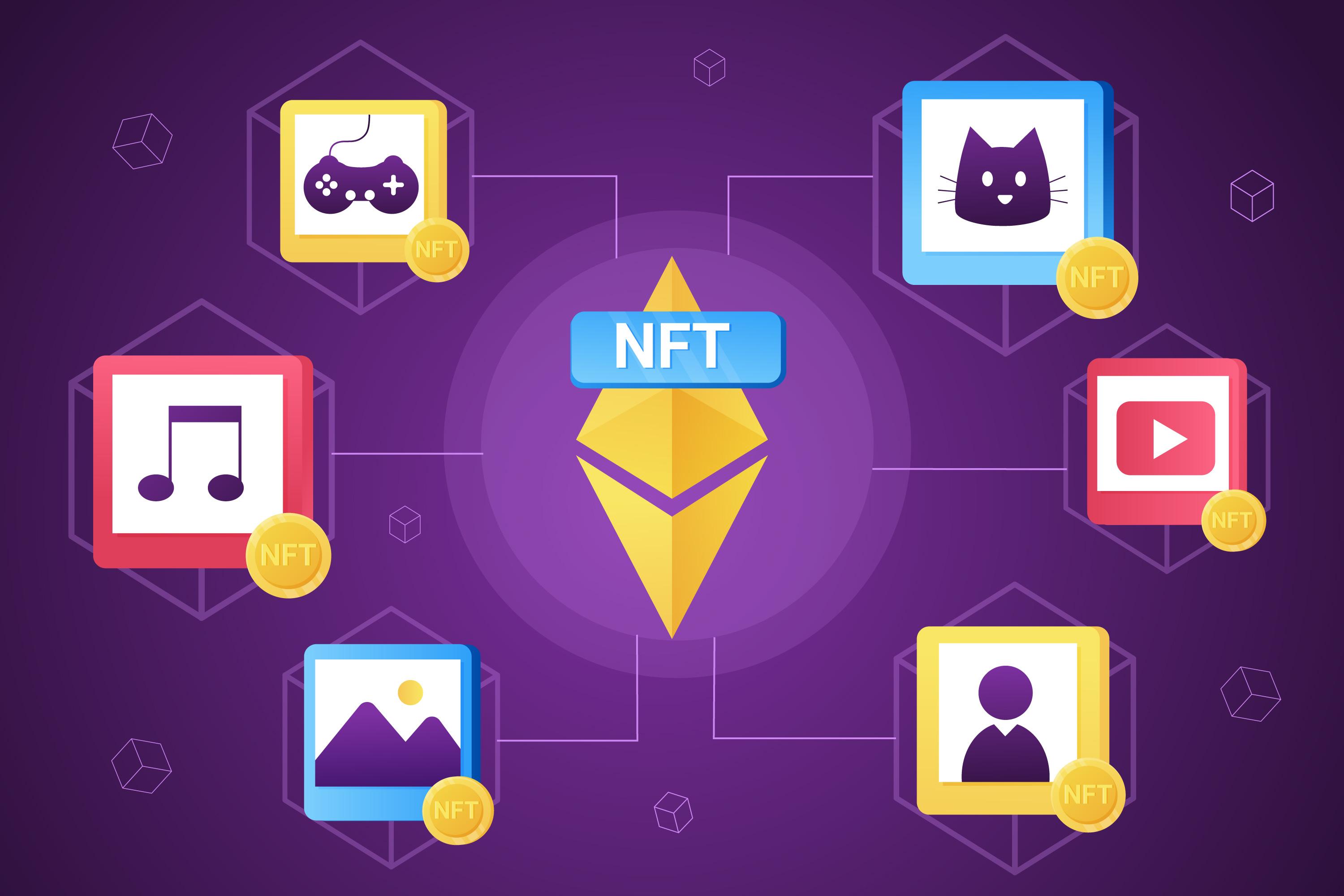
Art has always been a way for people to express themselves, and with the rise of technology, new ways of expression have surfaced. One such example is non-fungible tokens or NFTs. These tokens are pieces of digital art that can be bought and sold like any other asset, but they come with their own set of rules and quirks.
It’s important to know the myths and truths before investing in NFTs. In this blog post, we'll dispel some of the myths surrounding NFTs and take a closer look at what they could mean for the future of digital art.
1. NFTs have no value
NFTs are not a new concept. They have been around for many years, but their popularity has grown recently. The number of NFTs on the market has increased by more than 300% in the last year.
Some people think that NFTs have no value because you cannot trade them in a centralized marketplace. However, this is not true. NFTs can still be traded and exchanged in secondary markets, just like other commodities and currencies.
NFTs have value because of their scarcity and uniqueness. The more rare an NFT is, the more valuable it will become over time as people want to collect them like trading cards or stamps. There are also other ways to help you determine the value of an NFT.
2. NFTs are a get-rich-quick scheme
NFTs are not a get-rich-quick scheme. They are a new form of digital asset that you can exchange for other digital assets, such as cryptocurrencies.
While NFTs are still in their early stages of development, the potential for this technology is huge. It has the potential to disrupt the way we think about ownership and property rights. It has the potential to change how we interact with each other daily. They are a new form of digital asset that enables developers to create digital scarcity.
This means that you can't just duplicate an NFT or make copies of it. The only way to acquire the digital asset is by buying it from the developer, which can be prohibitively expensive in some cases.
3. Creating NFTs is just too harmful to the environment
NFTs themselves are not as harmful to the environment as they may seem. It's about the blockchain and how they get minted that can have environmental effects. Storing an NFT does not consume energy, but mining does. Since not all NFTs are created equally, we can say that NFTs aren't equally bad for our environment.
Sustainable NFTs are in work now because of the new version of Ethereum, popularly known as Ethereum 2.0. The team behind Ethereum 2.0 says that it will use 99.95% less energy when it is complete.
4. NFTs are a type of cryptocurrency
NFTs are not a type of cryptocurrency, but they can be used to represent something that has value. Tokens are digital representations of an asset or utility, and NFTs are digital representations of ownership. The difference is that NFTs have a visual representation and the ability to be traded on secondary markets.
They are a type of digital collectible that is stored on the blockchain and can be traded with other users in exchange for cryptocurrency or fiat money.
5. NFTs are used for money laundering
A widespread myth suggests that Cryptocurriencies and NFTs are only used by criminals or tax dodgers for money laundering. However, that's not true because cash is more dangerous than NFTs and Crypto when it comes to crime.
Everything on the blockchain is completely transparent and traceable, which means that a person can track wallet addresses easily and recover the stolen funds as soon as they try to cash out. The way the asset transfers work, it doesn’t make sense for NFTs to be used for money laundering because of how difficult it is to perform large transfers on the Ethereum blockchain.
It’d be much easier just to use a bank. Plus, there aren’t very many privacy coins out there, and even if you do have one, you can still be tracked by international and local authorities.
6. NFTs are a bad investment
NFTs are an excellent investment and a good way to acquire cryptocurrency. The popular narrative is that NFTs offer no value or return on your money, but it’s simply not true.
In fact, NFTs have consistently outperformed the stock market and have had an impressive return rate over time. We think that NFTs are a great way to find unique items that you love and gift them to people close to you.
7. NFTs are not secure nor transparent
NFTs are often more secure than traditional methods of ownership transfer because they use blockchain technology. Every NFT uses a unique serial number generated via blockchain, and because of that, it cannot be exchanged. That's the reason they are called non-fungible tokens.
Conclusion
There is a lot of talk about NFTs (non-fungible tokens) these days, with people either hailing them as the future of digital art or bashing them by saying they are the cause of the problems in our world. So the next time you see someone attacking NFTs, make sure you help them bust their myths by giving them knowledge about these facts.
It's time for you to build a nft marketplace that generates a million-dollar profit by utilizing nft's potential in a number of industries.
If you have any plans for your marketplace, please join us and visit: Feel free to contact our subject matter experts at +91 98783 62625 (India) , +1 (315) 825 4466 (US)Also, Visit: https://www.antiersolutions.com/how-to-create-an-nft-marketplace-platform-like-opensea/

R u looking for NFT marketplace development services?.
If you want to create own NFT marketplace, we align our services with your needs to build NFT marketplace as per your requirements.
Additionally, we can guide you on how much does it cost to create an NFTVisit us :- https://bit.ly/3mLlocP
Explore this article to know about how to create NFT on rarible in detail with step-by-step guidance.