





Introduction
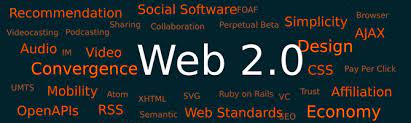
The most popular topic of conversation regarding the evolution of the internet right now is web 2.0. It is a procedure that makes use of internet technology in which websites are moved to a platform that offers an interactive user experience to the final customer. Because of web 2.0, the utilisation of software is rapidly approaching obsolescence. End-users of computers can now send and share information in the form of images and documents by attaching them online via the web browser. This capability was previously unavailable. According to Solomon and Schrum, the technologies of "social bookmarking, podcasts, weblogs, RSS feeds and wikis" are utilised in web 2.0 portents.
Principles of Web 2.0
The data, which is always being provided by the users, is the primary driving force behind the perpetuation of this contemporary technology. When a person checks in, they provide additional data, which ultimately results in the development of the technology. Web 2.0 technology relies on the platform that is provided by the World Wide Web (www) network. Users are granted access to the technology using browsers, which are made possible through the World Wide Web. Platforms on the internet such as Skype and Wikipedia have been extremely important contributors to the development of web 2.0 technology (Hosie-Bonar and Waxer 36). In terms of end-users, the technology has attracted millions of participants, all of whom now have a choice regarding what they can access. The presence of a wider variety of participants brings together a wider variety of skills and ideas, which ultimately leads to websites that are more innovative and have even more powerful applications. Websites are continually being improved to become more user-friendly and interactive through the process of updating and redevelopment.
The Design Aspects of Web 2.0
It is essential to keep in mind that web 2.0 is an advancement that was produced on top of web 1.0. The term "limited number of developers would develop web and transmit them to many viewers" best describes the technology known as "Web 1.0." (Hosie-Bonar and Waxer 29). People now have the opportunity to not only consume information but also take part in the scripting of the material they view thanks to Web 2.0. Blogging, for instance, which allows users of the information to become creators of additional information by conducting research, has made this possible.
Blogging enables a large number of people to contribute information online, which ultimately results in an enormous expansion in the amount of knowledge available on the web. This knowledge has the potential to be broken down into a large number of distinct themes and distributed across a variety of information worlds. Web 2.0 features technologies that make it possible to select the content that is pertinent from among the many subjects that have been generated. The RSS aggregator and the internet search engine both play a significant part in the selection of pertinent information from the larger body of information that an individual could be looking for (Hosie-Bonar and Waxer 29). The development of new applications for the internet, such as Google Maps, has been further revolutionised as a result of Google's involvement. End users also can modify the information that is displayed on a website to better suit their requirements.
Web 2.0 Services
As a result of the unabated expansion of data, the management of data is rapidly becoming the primary focus of concern. Businesses now have the opportunity to display information on their internal operations on the internet, although in an unreliable manner (Sankar and Bouchard 36). Through the use of a web browser, the information can be made available to people all over the world. XML is the language used for communication on the web; it is highly adaptable in terms of the presentation of information. The information stored in XML is given its final format by the web service definition language, which also publishes the data so that it may be viewed by everyone.
Application of Web 2.0 in Business
The new technology of web 2.0 has been rather slowly accepted and implemented by businesses due to its slowness. This has arisen as a result of the perceived financial burden associated with the purchase of new hardware and the acquisition of the updated skills necessary to successfully implement the new technology. Because of this, the only businesses that have been quick to adopt the new technology are those that are already at the forefront of their respective industries. However, time is running out for commercial enterprises that have decided to continue being irrelevant regarding this matter.
As a result of the expansion of the digital market, having a website for your business is rapidly becoming one of the standard contemporary company assets. According to the findings of Lytras et al., just a pitiful 10% of the "500 fortune corporations use blogs and wikis to sell their products and services" (43). This is a resounding sign that Web 2.0 technology has not been adopted by as many people as it should have. It is however possible that by the end of this decade, technological means of information exchange will have assumed a dominant role. As a result of this, it is the sort of product and service advertising mechanism that businesses that want to be at the forefront of their industry should prioritise using the most. Despite this, a large number of online businesses have immediately shifted their focus to web 2.0 to take advantage of the newly developed technological platform.
Wikis, in particular, are becoming increasingly popular as a means of knowledge sharing by a variety of authors over the internet. The creation of blogs, for instance, on a company website can assist to improve traffic to the website, which in turn creates more awareness of the company among prospective clients. Wikis are a kind of knowledge storage that can also assist businesses in maintaining healthy levels of contact with their clientele (Lytras et 46).
Application of Web 2.0 in social media
The use of social media as a platform for networking between people who share similar perspectives is the latest trend. The elimination of distance as a barrier to forming new social relationships is one of the many benefits of social media. The dissemination of social information to millions of users in a very short amount of time is now made possible thanks to syndication (Shelly and Frydenberg 57). Because of this technology, it will be far more difficult for institutions to maintain their monopoly on knowledge or power in the future. Because the internet is capable of connecting millions of people from different parts of the world, no one person or institution can control the flow of information on the internet. These days, there are millions of blogs, each of which contains billions of entries that are updated daily and cover a wide range of subjects. The relatively recent development of YouTube has made it possible to upload and share videos as well as podcasts. This was previously impossible. Now that internet connections are so much faster, it is possible to download whole videos in a couple of minutes and stream them in their entirety. According to data provided by Google Trends, an increasing proportion of movies are currently being seen online (Sankar and Bouchard 16). Every single day, several thousands of videos are published to YouTube to be shared for free. As a result of its role as a platform that enables users to upload, share, and view videos as well as podcasts, YouTube has gradually taken on many of the features of a social media network. Visit Essay Writing Services for more interesting blogs.


So to overcome this context Web 3.0 were made and its tool became very valuable for users in an organised form.
It was marked by centralisation of the content production such as gateways, yahoo, AOL and more
Many users produces content and many consume example Wikipedia, blogs, social networks and YouTube.
This version brings no longer the consumer but also producer/co-producer of the content.
It is a semantic-web which combines the virtues of Web1.0 and Web2.0 and adds machine intelligence.
In Web3.0 the machines get along with the user in the content production and help in taking decision making, transforming traditional role of internet infrastructure and more.