It is possible to act daily with simple actions to reduce the risk of onset of foot complications when you have diabetes.
How to watch your feet?
Check your feet daily, especially:
The appearance of the foot, looking for any lesions (wounds or ulcers, blisters, cracks), signs of infection or deformities of the toes;
The nails, to check if they are not too long and thus avoid hurting the other toes, or too short, which can favor an ingrown nail; it is important to cut them straight with straight pliers and file the sides with a cardboard file.
The skin, to identify any dryness and fineness of the skin which weakens it, the presence of redness or horniness (sign of friction or marked pressure).
As it is difficult to examine the underside of one's feet, it is possible to use a mirror, or to get help from a loved one. If you detect the slightest lesion, or an element that seems abnormal to you, in your feet, it is recommended to consult your doctor quickly.
Have your feet examined by your doctor at least once a year:
The doctor checks the sensitivity of the diabetic's feet and legs, tests reflexes and muscle strength, checks blood circulation in the legs and feet. He also looks at how this diabetic foot positions itself when walking. He looks for any deformations or the appearance of lesions.
It is important to check that the shoes are suitable. If necessary, the doctor can also prescribe insoles or orthopedic shoes (or another type of device) to facilitate movement.
During the consultations, the doctor advises on the care to be given on a daily basis.
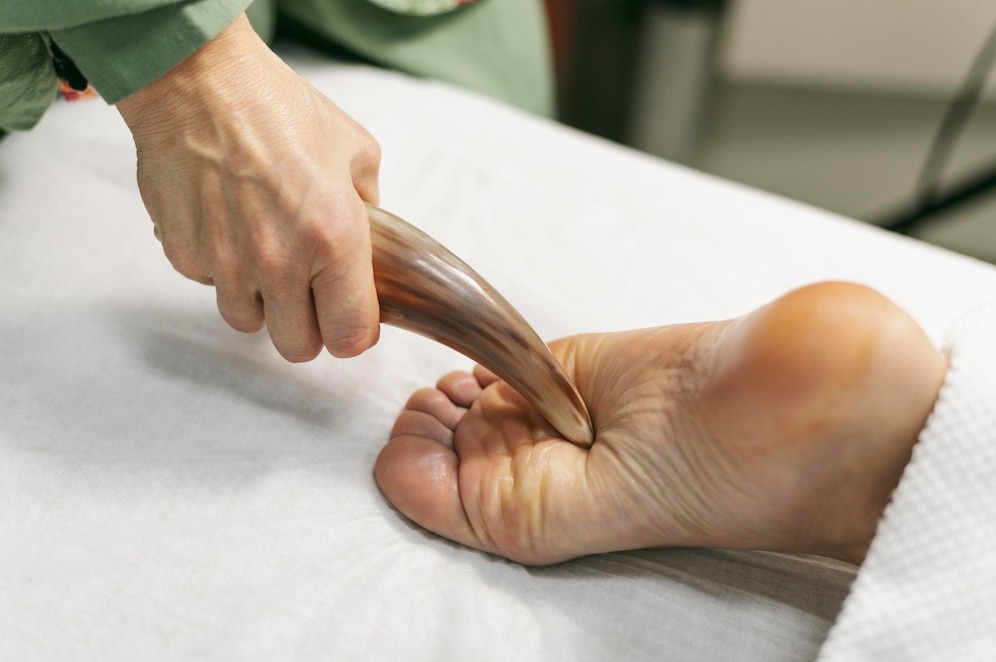
The doctor can also refer the diabetic to a podiatrist. He is a health professional specializing in foot care, trained in monitoring diabetes. He performs the necessary care and explains what you can do to protect your feet well.
How to take care of your feet on a daily basis?
It is possible to act on a daily basis to reduce the risk of onset of foot complications. In particular, it is recommended to:
Carry out a very careful toilet of the feet:
It is recommended to wash your feet every day with lukewarm water, using a mild neutral soap, and to dry them well, in particular between the toes, with delicacy.
Do not sand your feet with each wash and use a soft pumice stone (consult the doctor or diabetic foot & wound care if there is significant keratosis)
To avoid ingrown nails, you can cut (or have cut) your nails (in a square, with the angles filed gently with a cardboard file).
After each foot wash it is essential to moisturize the feet with a cream that can reduce the dryness of the skin. Consult your pharmacist
Protect your feet from injuries, temperature variations and friction:
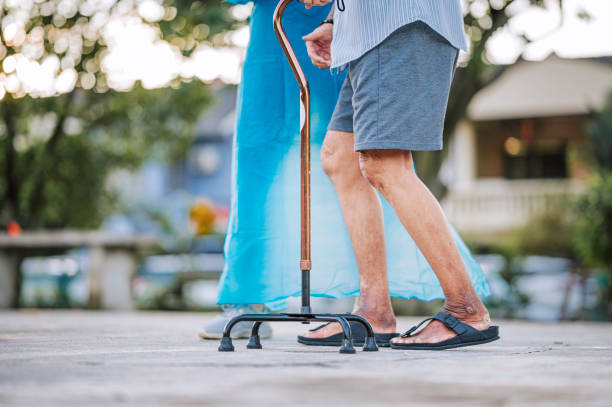
It is recommended that you never walk barefoot (including on carpet, by the pool or on the beach). Sandals do not always protect the feet sufficiently.
It is essential that the shoes of the diabetic are adapted: the doctor or the chiropodist advise the purchase of comfortable, flexible and broad shoes. Better to buy your shoes at the end of the day when your feet are swollen.
Wool slippers at home and good shoes lined with sheepskin outside are advised if the diabetic's feet are cold.
Shoes should be spacious, preferably made of soft leather, perfectly adapted to the anatomy of the foot. It is necessary to avoid open shoes which facilitate the intrusion of foreign bodies.
Closed shoes that respect the curve of the arch of the foot (without high heels) are recommended.
Before putting on the shoes, run your hand inside to check that there are no pebbles or objects that could hurt your feet.
If the shoes are new, it is best not to wear them for too long the first few days.
The choice of socks is also important. Natural fiber socks (cotton, wool, Scottish thread) are preferred. Thick socks provide good foot protection, especially when it's cold (including at night). To avoid impeding blood circulation, it is best not to wear tights or stockings that are too tight around the toes, choose soft rubber socks that do not tighten the calf or ankle, and avoid seams on the toes.
Change socks daily. Watch out for stockings with seams that could be irritating.
Watch out for burns
It is advisable to avoid putting the diabetic's feet in direct contact with a heat source (hot water bottle, radiator, etc.). In case of decreased sensitivity, the risk is not to feel the burns.
If the feet are exposed to the sun, do not forget sunscreen to avoid sunburn.
What to do in case of injury ?
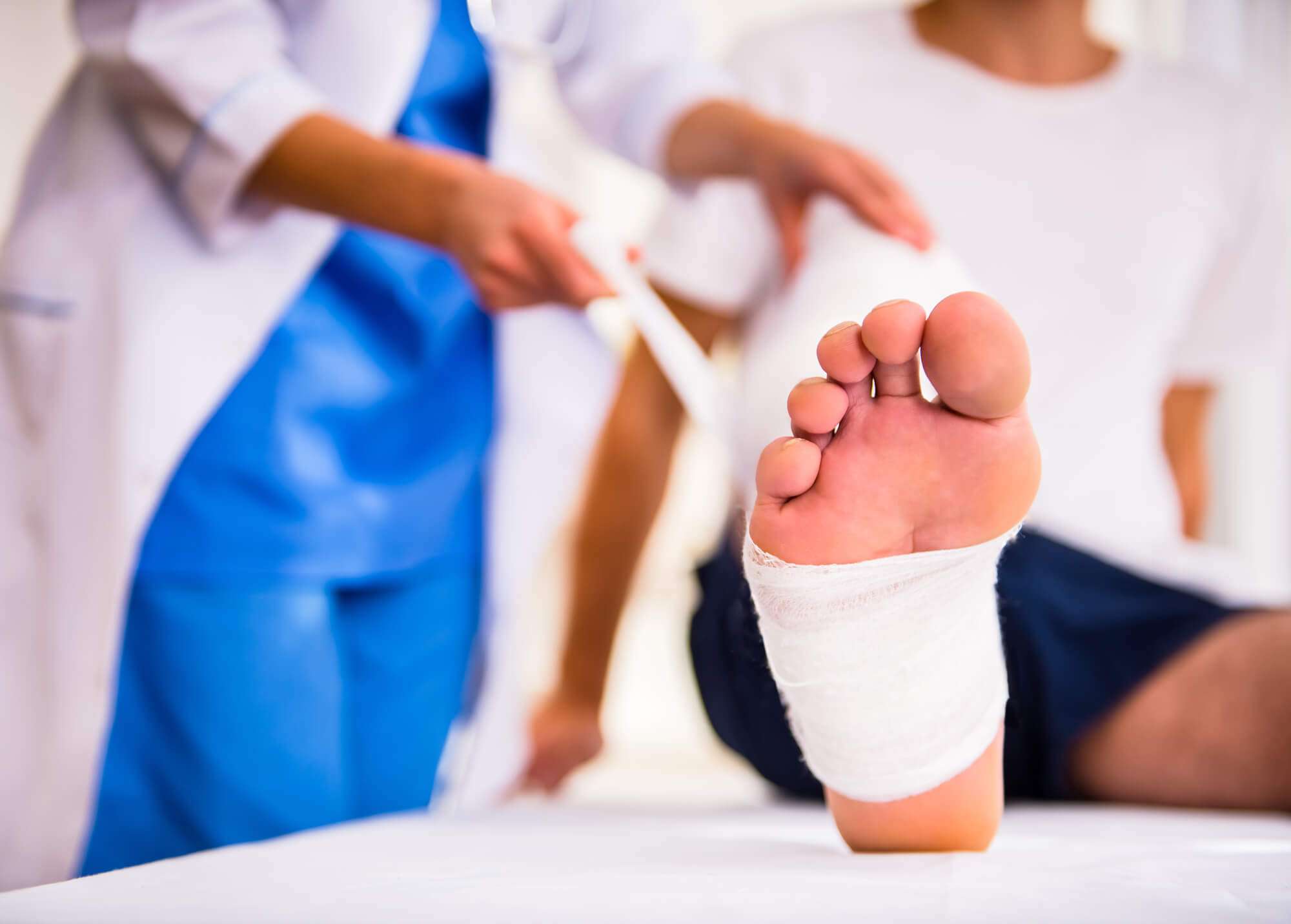
In the event of an injury, it is advisable to wash the injury with clear water, to disinfect with a sterile compress and to apply a colorless disinfectant which reveals the appearance of the wound.
Due to the fragility of the skin, a low-adhesive dressing is preferred (dry sterile compress, paper plaster, non-elastic fabric bandage).