

Important Features Your Logistics App Should Have!
Three panels need to be designed and developed during logistics app development, therefore pay attention to these features. Let’s look at each of them individually and discuss the qualities that a logistics application needs.
User Panel
✔ Registration
Registration can be constructed in one of two ways. The first method is by opening a brand-new account. The second technique involves creating an account using preexisting social media identities. Giving users this option will enhance the user experience.
✔ Vehicle selection
It is an essential component for integration with on-demand logistics systems. It helps users select the ideal vehicle such as a van, truck, trailer, container ship, etc.
✔ Planning and managing your reservation
Here, customers can place a tentative order by indicating the day, time, and place of pickup as well as reserve a car to begin using the services immediately.
✔ Numerous payment gateways
The more options you give users, the better their experience will be. It is also true in this situation. If you give users the option to pay for services using credit/debit cards, online wallets, and other means, they’ll use your app more frequently.
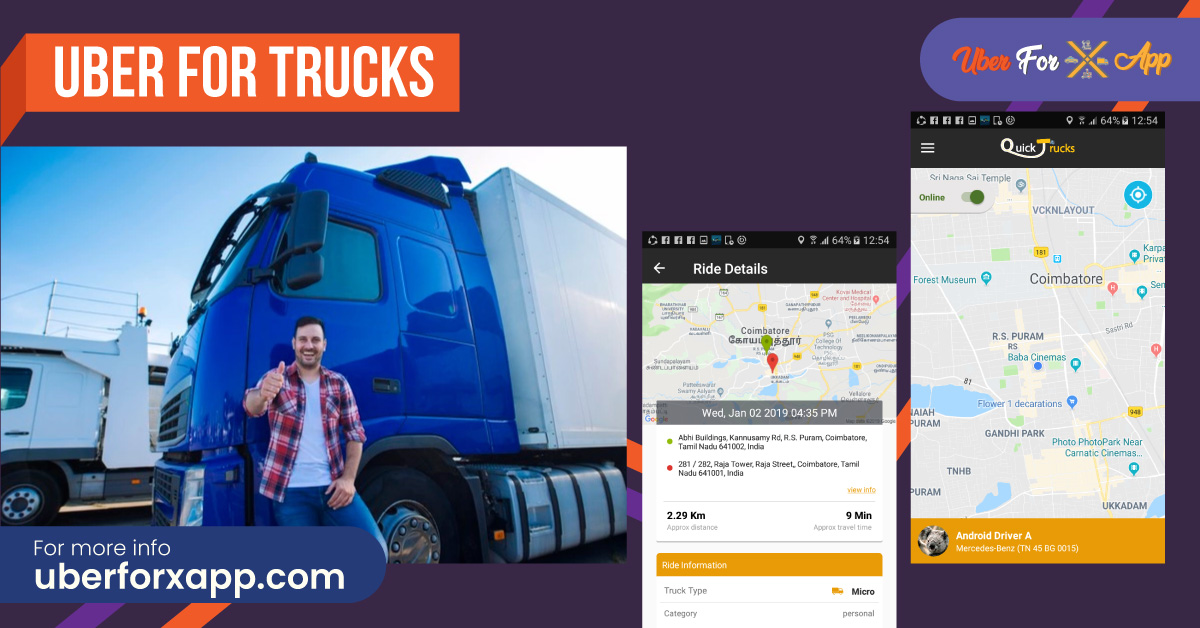
✔ Tracking the shipment
A tracker is an important feature that users have come to anticipate from your logistics and transportation application. So make sure to incorporate this in your final product.
Dispatch/Driver Panel
✔ Login/Register
Like users, drivers can sign up using their current email addresses or social network accounts.
✔ Managing requests
Drivers and dispatchers can decide whether to accept or reject any requests or orders using this function.
✔ Make available or busy
It will help drivers or dispatchers indicate their availability or unavailability for services by using a variety of methods, such as marking their availability, etc.
✔ Departure details
A important element that will, if you are recruited, make your application stand out is learning information about the delivery of a shipment.
✔ Profile Management
One of the most basic functions is undoubtedly allowing drivers to update the data on their profiles.
✔ Navigation
This is a critical job for the driver/distributor side of the logistics application. It provides information on the quickest way to reach client addresses to ensure rapid delivery.
✔ Indicate delivery
The dispatcher will be able to inform the customer and the administrator of the package’s delivery if they are given access to this capability.
Admin Panel
✔ Dashboard
It gives all necessary information to drivers and passengers. The administrator has access to current information on both pending and finished orders.
✔ Fleet/Vehicle management
The administrator will be able to transmit new vehicles using this capability and even upgrade existing components with fresh images, etc.
✔ Manage invoices and payments
Using this account management tool, the administrator will be able to create and edit accounts. The administrator may also be responsible for managing payments, including approving driver payments and checking other transactions of a similar nature.
✔ Driver monitoring
With the help of this feature, it is simpler to oversee and assign tasks to drivers and dispatchers, as well as to keep track of their movements, activities, and unfinished requests.
✔ MS Features
The administrator performs this duty by recording and managing all user requests for drivers or services, as well as any requests for user-requested enhancements.
Special Features
✔ Get a quote
To get a sense of the cost and turnaround time for the service, customers can ask the service provider for an estimate based on the offers and services supplied.
✔ In-app chat
Even though this feature is optional, it is still very important. Because they won’t have to look for another location to contact the service provider, your users’ task will be made easy.
✔ Chat support
Chatbots are currently widely used in both B2B and B2C industries. Most apps that provide any kind of good or service have chatbot app development. At Apptunix, we highly recommend doing this.
✔ Multilingual assistance
The process of localizing mobile apps, also known as multilingual support, can increase your app’s popularity on a global scale.
✔ Link and upload documents
Dispatchers would greatly benefit from this feature because it will enable them to upload important shipping-related documents like insurance documentation, etc.
Now that we’ve covered the fundamentals of the logistics sector and application development, let’s move on to the phases of creating logistics apps.
How To Create A Logistics App?
We have outlined the essential steps in developing a logistics application to help with application development process clarity.
Stage #1. Select the type of logistics application
Because it combines many distinct departments, logistics apps have a variety of functions, target audiences, and feature sets. As a result, you must decide on the type of application you will develop.
Stage #2. Quote from the developers of mobile applications for logistics
It’s critical to consider both the technical expertise of the team and your communication requirements as a customer in the second stage. But why does it matter? Even though there are hundreds of thousands of talented programmers, the success of a project depends mostly on the team members’ capacity for effective communication, which necessitates soft skills.
Stage #3. Sign the NDA and explain your business idea
In response to your inquiry, the sales manager will arrange a call to further discuss the project. You also don’t have to tell those who aren’t yet your friends all the details of your logistics application. If a sales manager values your business concept in this way, they will issue you an NDA. However, if you have to because you have a tight timetable, request that they sign the NDA before the first call. Tell the sales manager what kind of logistics program you intend to build, as well as its features and intended user base. The sales manager will provide this information to the business analysts, who will roughly estimate the cost of your app.
Stage #4. Get a rough estimate of the app
The estimated cost of the application does not represent the full cost of your project because there are still many technical requirements and nuances that must be established. Avoid companies that advertise unreasonably low prices for a complete logistics application they assert to have developed.
After evaluating timelines, technologies, team members, and hourly rates from mobile app developers select the most accurate estimate.
Stage #5. Begin the research phase.
This time frame lasts for one to three months. Your development team will need your assistance at this phase to establish the project specification as they will need to know about the business logic, features, users, and how they interact with the Program.
Stage #6. Build and run the MVP of your logistics app
A minimum viable product (MVP) will be created by the team before a fully functional application is built. A version of an application known as a minimal viable product (MVP) has the basic functions you’ll need to test your business idea.
Stage #7. Expand the capabilities of your logistics application
Following user feedback, you and your development team will decide which extra features to add.
Conclusion
The sector of logistics will eventually prosper as more and more on-demand logistics apps become available due to the many benefits of a logistics application. If there was ever a good moment to spend money on logistics app development services, it is now. Contact a reliable logistics application development company to hire a dedicated crew. Given the anticipated cost of constructing a logistics app, it would therefore be simpler to make a firm and informed decision.