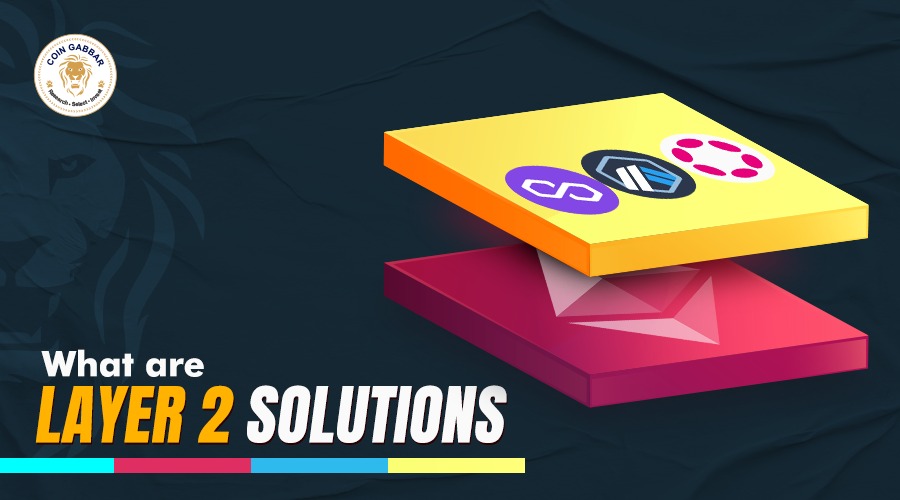
Scalability has always been an issue for the mass adoption of blockchain and distributed ledger technology. Often, the network cannot handle an excess number of users, sometimes security is compromised, and sometimes the fee is too high for everyone to use the network.
Here, the Layer2 solutions come into the picture; these are built on top of the existing blockchain with cheaper gas fees or faster transaction speed, often both, without compromising the blockchain security. Thus, this can be considered an update to the existing blockchain infrastructure.
Most blockchains are open-sourced in nature, meaning it allows other people from the community to improve them; developers can suggest changes to the DAOs or even go on with a hard fork. But instead of waiting around for all these, developers can develop their own layer 2 solutions on top of the original blockchain, which will be called Layer 1 blockchain.
Why are they so important?
The current focus of the blockchain community is global adoption, both institution, and retail. Scalability is one of the issues the industry needs to tackle, or the whole infrastructure might collapse. This is where Layer 2 solutions come into the picture; they help simultaneously increase the scalability and throughput of blockchains like the Ethereum network. Layer 2 solutions boost the throughput, allowing complete decentralization, transparency, and security.
Let us take an example; Ethereum is one of the biggest, busiest, and arguably the most secure blockchain out there; but that does not mean that it has no flaws. For instance, Ethereum transactions are slower than traditional finance instruments like Visa and Mastercard, and the gas fees are terribly high. Layer 2 solutions like Polygon(previously known as Matic) are built on the sidechain to facilitate faster transactions with lower gas fees, making them swift and scalable, simultaneously protecting the integrity of the concept of blockchain technology.
Even these Layer 2 solutions have their own pros and cons; some might have to compromise security while others might have to compromise functionality. Users can select the transaction medium according to their own needs and preferences.
But how would they work?
For successfully deploying and operating on the mainnet, a link is established between the mainnet and Layer 2 blockchain solutions where transactions are regularly uploaded on the Layer 1 ledger in specific periods. It is important to note that only successful and confirmed transactions are published on the Layer 1 ledger since they are immutable in nature, theoretically speaking.
Think of Layer 2 solutions as a side infrastructure built to unload the traffic from the existing infrastructure, where the majority of processing is accomplished. Then, the sidechain reports back to the central infrastructure to complete the process.
To conclude, Layer 2 takes off the load from Layer 1 infrastructure while ensuring the transparency and security of the blockchain are maintained.
Types of Layer 2 solutions
Layer2 solutions mainly focus on diverging the traffic from the mainnet or the Layer1 network; over the years, many Layer2 solutions came up with different solutions; but only a few succeeded in managing to perform. We can map these network solutions into categories based on their work. Read More...