Point of sale is referred to as POS. Every time a transaction is completed at your retail location, your POS software gathers data. Data from a customer's checkout is fed into numerous categories, including inventory, sales, products, customers, and personnel.
When combined with ecommerce data, pos data analysis reveals insightful information that can improve the cost-effectiveness of your inventory purchases, measure the influence of your store on online sales, customer loyalty, and lifetime value, and even recommend the best time (and locations) to grow your network of retail stores.
Why is POS sales data useful?
You can gain both macro- and micro-level insights from sales data. POS sales data reveals your gross and net sales as well as the overall quantity of units you sold over a specific time period at the macro level. The average order value, average goods per order, and net sales for the day are all displayed in your store's sales data at the micro level. The three types of product data in your point-of-sale system are cost, sales, and profit. You may learn which products have the highest profit margins, how many of a particular product or variant you've sold, and how much money each product brings in by combining the data mentioned above.
POS customer data
The customer information in your POS system tells you the duration of a client's relationship with you, how frequently they make purchases, how much they spend, and precisely what products they purchased. But when client data is linked to your ecommerce data, that's when it really starts to get interesting. The frequency of repeat business from loyal consumers, together with their purchases, average order value, and lifetime value, are all visible to retailers both in-person and online. These data have made it easier for brands to comprehend how their omnichannel strategy has benefited overall revenue and client loyalty.
POS staff data
Each time a store employee uses your POS software to process a sale, that sale is associated with their user profile. Store managers who wish to monitor the teams' productivity in the sales department and make sure everyone is helping the company meet its sales targets will find this to be of particular value. Store managers may track each store associate's average order value, products per order, gross and net sales, and even how many returns or discounts they've handled using the point of sale device, thanks to staff data collected from the POS. They may identify those who might benefit from additional sales training and award top-performing retail personnel using the information they collect.
How to use POS and ecommerce data together
Understand better customer acquisition
Merchants that are new to physical retail may find it difficult to measure the impact of their establishments, other from the sales per square foot and net sales they produce. But in order to gauge their influence, direct-to-consumer firms also consider total internet sales and net-new customers in the vicinity of their physical stores. Consider examining how your business affects local internet sales rather than focusing just on how your retail location affects local sales.
Improve customer retention and lifetime value
Customers that use your brand both online and in-store also have a tendency to use it more frequently, spend more each time they use it, and stick with it for a longer period of time. Some brands analyse the value of customers who visited a store or shop online alone with customers who visit both their website and retail stores using data from their POS and online store. They discovered that consumers who use both channels spend more than those who just use one.
Know when (and where) to expand your network of retail stores
Examine the postal code, city, area, and delivery nation for your online sales. Are a large quantity of sales originating from one location, statistically speaking? If so, you may want to think about setting up a pop-up store to research the market. If the pop-up shop is successful, you may want to think about setting up a permanent retail space to continue expanding in that area.


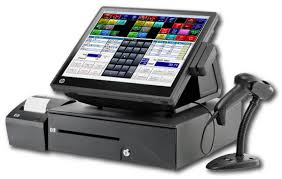
Global Point Of Sale System Market Research Report - Industry Analysis, Size, Share, Growth, Trends and Forecast Till 2027 – DecisionDatabases.comThe comprehensive value chain analysis of the market will assist in attaining better product differentiation, along with detailed understanding of the core competency of each activity involved.
The market attractiveness analysis provided in the report aptly measures the potential value of the market providing business strategists with the latest growth opportunities.
The report classifies the market into different segments.
These segments are studied in detail incorporating the market estimates and forecasts at regional and country level.
The segment analysis is useful in understanding the growth areas and probable opportunities of the market.
Final Report will cover the COVID-19 Impact and Recovery on this industry.Browse the complete Global Point Of Sale System Market Research Report – Industry Analysis, Size, Share, Growth, Trends and Forecast Till 2027 @ https://www.decisiondatabases.com/ip/39877-point-of-sale-system-market-reportThe report also covers the complete competitive landscape of the global Point Of Sale System market with company profiles of key players such as: EpsonHPIntuitSamsungHoneywellPayPalAldeloAlexandria ComputersBankServBixolonCloverDascomElo TouchWells FargoGoVentureInformaticsNCH SoftwareQuickBooksStar MicronicsTopaz SystemsVeriFoneWasp Barcode The detailed description of each has been included, with information in terms of H.Q, future capacities, key mergers & acquisitions, financial overview, partnerships, collaborations, new product launches, new product developments and other latest industrial developments.
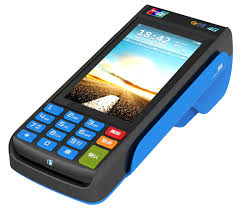
Global Smart POS Market Research Report - Industry Analysis, Size, Share, Growth, Trends and Forecast Till 2027 – DecisionDatabases.comThe comprehensive value chain analysis of the market will assist in attaining better product differentiation, along with detailed understanding of the core competency of each activity involved.
The market attractiveness analysis provided in the report aptly measures the potential value of the market providing business strategists with the latest growth opportunities.
The report classifies the market into different segments.
These segments are studied in detail incorporating the market estimates and forecasts at regional and country level.
The segment analysis is useful in understanding the growth areas and probable opportunities of the market.Final Report will cover the impact of COVID-19 on this industry.Download Free Sample Report of Global Smart POS Market @ https://www.decisiondatabases.com/contact/download-sample-18005The report also covers the complete competitive landscape of the global Smart POS market with company profiles of key players such as: IngenicoVeriFoneClover NetworkAccuPOSPosandroPAX TechnologyEmobileposSZZT ElectronicsNewland PaymentBitelXinguoduFlytechThe detailed description of each has been included, with information in terms of H.Q, future capacities, key mergers & acquisitions, financial overview, partnerships, collaborations, new product launches, new product developments and other latest industrial developments.SEGMENTATIONS IN THE REPORT: By TypePortableDesktopOtherBy End UsersRetailRestaurantHospitality IndustryOthersBy GeographyNorth America (NA) – US, Canada, and MexicoEurope (EU) – UK, Germany, France, Italy, Russia, Spain & Rest of EuropeAsia-Pacific (APAC) – China, India, Japan, South Korea, Australia & Rest of APACLatin America (LA) – Brazil, Argentina, Peru, Chile & Rest of Latin AmericaMiddle East and Africa (MEA) – Saudi Arabia, UAE, Israel, South AfricaBrowse the complete Global Smart POS Market Research Report – Industry Analysis, Size, Share, Growth, Trends and Forecast Till 2027 @ https://www.decisiondatabases.com/ip/18005-smart-pos-market-reportThe Global Smart POS Market has been exhibited in detail in the following chapters –Chapter 1 Smart POS Market Preface Chapter 2 Executive SummaryChapter 3 Smart POS Industry AnalysisChapter 4 Smart POS Market Value Chain AnalysisChapter 5 Smart POS Market Analysis By TypeChapter 6 Smart POS Market Analysis By End UsersChapter 7 Smart POS Market Analysis By GeographyChapter 8 Competitive Landscape Of Smart POS CompaniesChapter 9 Company Profiles Of Smart POS IndustryPurchase the complete Global Smart POS Market Research Report @ https://www.decisiondatabases.com/contact/buy-now-18005Other Reports by DecisionDatabases.com:Global Smart Cards Market Research Report – Industry Analysis, Size, Share, Growth, Trends and Forecast Till 2026Global Smart Watch Market Research Report – Industry Analysis, Size, Share, Growth, Trends and Forecast Till 2026Global Smart Locks Market Research Report – Industry Analysis, Size, Share, Growth, Trends and Forecast Till 2026About-Us:DecisionDatabases.com is a global business research reports provider, enriching decision makers and strategists with qualitative statistics.
DecisionDatabases.com is proficient in providing syndicated research report, customized research reports, company profiles and industry databases across multiple domains.Our expert research analysts have been trained to map client’s research requirements to the correct research resource leading to a distinctive edge over its competitors.