


Network management coordinates network traffic, and data flow across an organization using network monitoring, security, network automation, and other tools hosted on-premises or in the cloud. Delivering a safe, dependable, and high-performing network to end users, including business users within the firm and end customers, is the primary goal of network management. The list of IT tasks always includes Network Management as a top priority; in the wake of COVID-19, this has only increased. Network management is generally used by distributed businesses to maintain communication across various business units and teams. Data flow into and out of different host environments, such as on-premises servers, private clouds, and public Cloud Platforms, are managed by network management.
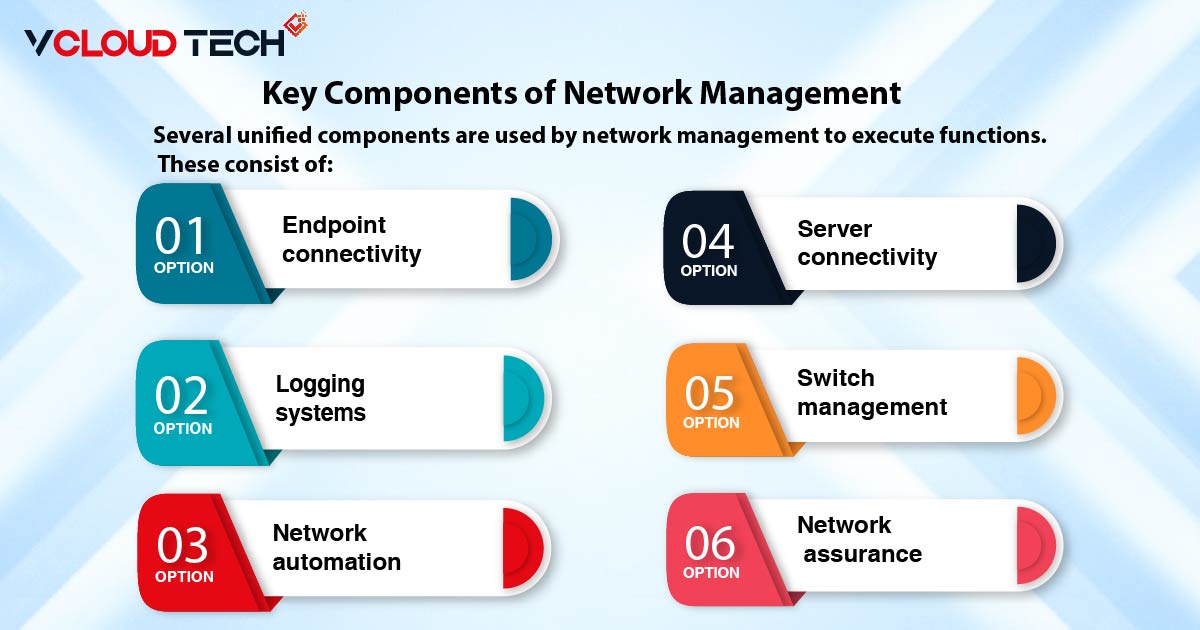
Key Components of Network Management:
Several unified components are used by network management to execute functions.
These consist of the following:
Endpoint Connectivity
Logging Systems
Network Automation
Server Connectivity
Switch Management
Network Assurance
1. Endpoint Connectivity
The primary purpose of network infrastructure is to connect enterprise endpoints. That could be a local workstation, lobby kiosk, conference room system, etc. It can also include distributed landscapes that help connect remote employees and multiple branch offices. The type of endpoint also depends on your business needs. Network management ensures that the required endpoint nodes are always connected and allows network administrators to see the performance of each node in real time. IT teams can also use centralized network monitoring tools to monitor endpoint connectivity across distributed sites from a single interface.
2. Logging Systems
A logging system is essential to network management as it helps you monitor network performance according to industry-standard KPIs and maintain comprehensive records. Logging systems connect to both Network hardware appliances and software components. The logging system records all activity for later reference. One of the most common network management mechanisms is the ubiquitous Syslog option. This protocol allows you to generate and maintain a record of all network events in a data format such as JSON. But it doesn’t help much by itself. Therefore, modern Network Management combines logging systems with network analytics to visualize data, identify trends, and receive alerts on anomalies.
3. Network Automation
Network automation reduces the manual work of managing five different types of networks. It helps automatically correct common problems based on predefined network error management protocols. When managing network configurations, automation can automatically provision new users. Network account management enables you automatically deploy cost-saving measures when certain thresholds are crossed. Automatically adjust the performance of Network Management Application policies to support your business. Automation helps you learn about different types of threats and spot them with minimal manual intervention for network security management. According to a Report Linker report, network automation is projected to grow from $3.4 billion in 2021 to more than $8.3 billion in 2026.
4. Server Connectivity
The Server Connectivity component of Network Management handles the connectivity status of non-end-user devices. For example, if a company relies on virtual machines or a set of privately hosted servers to run application-related processes, they must be kept online. Therefore, network management requires maximizing the uptime of server devices and Endpoints. Unfortunately, that can be difficult because server problems are hard to find and only become apparent when the issue spreads throughout the organization. For this reason, most network administration teams use server-specific network monitoring tools to maintain and Manage Network components.
5. Switch Management
A network switch is a hardware appliance, that helps connect endpoints to the leading corporate network while enforcing the required IT protocols. Enterprises can use multiple layers of network switches, from floor switches to aggregation switches to main switchgear. Switch management gives you visibility into traffic entering and leaving the control so you can diagnose upstream problems, ensure consistent speeds, and anticipate bottlenecks. Switch management components are very sophisticated today. Monitor and coordinate complex landscapes with switch Management Software. It helps you create a visual floor plan of your business environment and control the switches connected to your endpoints.
6. Network Assurance
The network security component of network management includes policy enforcement to control risk, ensure internal compliance, and keep security threats at bay. The purpose of network backup is to provide a safe and reliable experience for all users. Therefore, all five types of network management must work together for this component to function smoothly. Network Security also uses analytics as a critical component to monitor dynamic risk levels and alert necessary stakeholders before serious problems occur. These components are part of three network management architectures, including management entities, managed devices, and management protocols. Management entities include the people and technologies responsible for managing the landscape and IT administrators or automation scripts. A managed device is on the receiving end of a network connection. Endpoints, Switches, and Servers. Management protocol refers to the mediation rules and policies that govern the relationship between management entities and managed devices.