

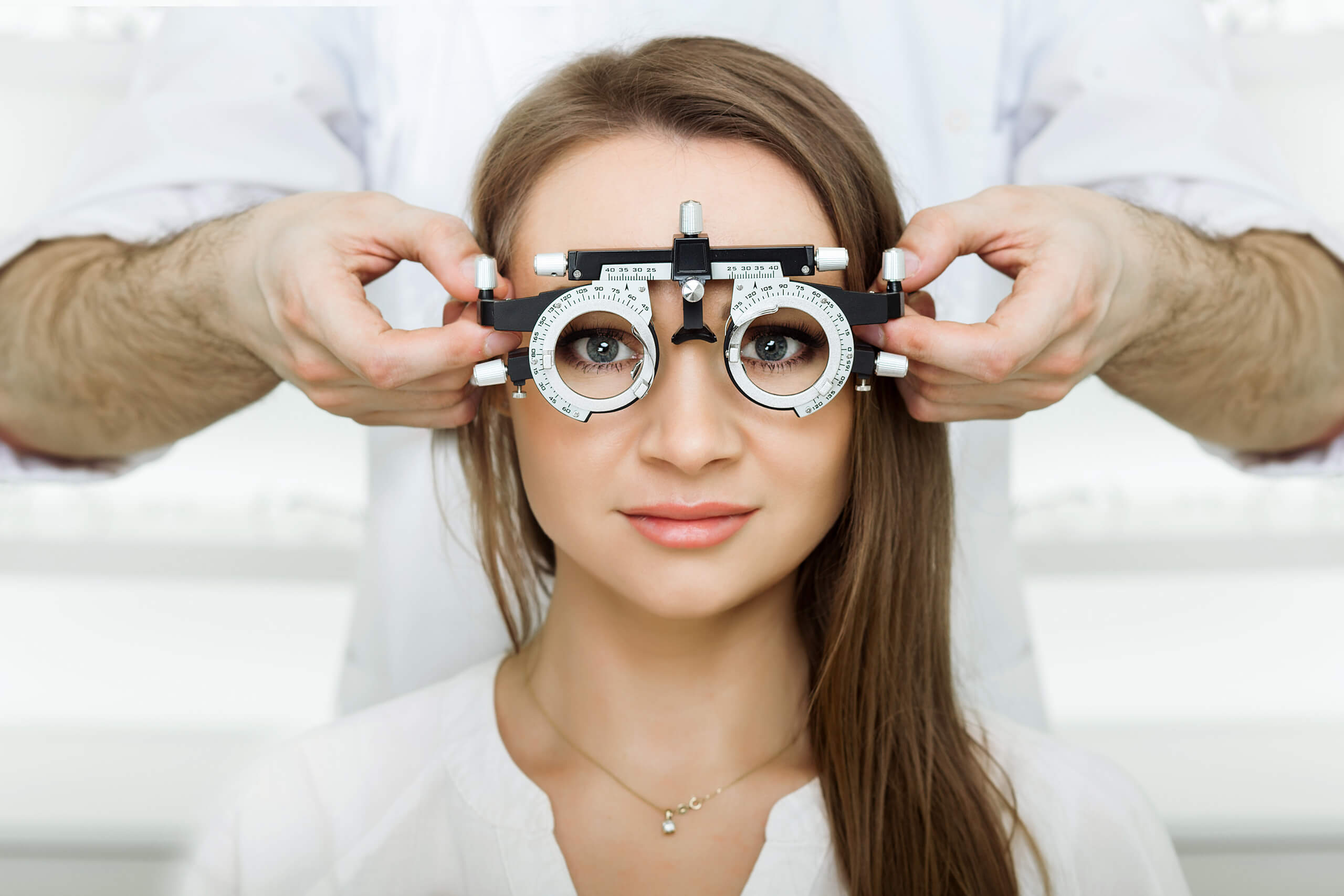
As you grow from a child to an adult, your eyesight changes. So, if you wear glasses or contacts to fix refractive errors or another problem with your eyes, your eye prescription often changes. But how often this happens depends on a number of things.
In this blog, the My Optical team talks about what these things are and when an eye doctor should look into them.
Vision Changes with Age
You found out early last year that your child needed glasses, so you bought them a brand-new pair. The glasses worked well for months, but now your child is having trouble seeing again. They say they have headaches or that they have to sit too close to the TV to watch their favorite show. Why did their prescription change so quickly? Is that usual?
Yes, that's the answer. If your child has nearsightedness (also called "myopia"), it can get worse as they get older, so it's not unusual for them to need new glasses more often.
The eyesight of adults also changes as they get older. When you reach middle age, the lenses in your eyes start to harden, which makes you see farther away (hyperopia). When this happens, you might need to start using reading glasses.
Eye problems that can make it hard to see
Other than nearsightedness and farsightedness, there are a number of eye conditions that can make it harder to see. They can be helped, which is good news. Examples include:
Amblyopia, or "lazy eye," is caused when the nerve pathways that connect your brain to one of your eyes don't work right. Strabismus is a condition in which your eyes are not in the right place. Your eye doctor may tell you to wear an eye patch or have surgery to fix your vision.
Astigmatism is a condition in which the eye curves in a different way in one direction. This will probably make it hard to see, but you can fix it with glasses or contacts.
If your eyesight suddenly gets worse and worse, it could be a sign of one of the following serious eye diseases:
Cataracts happen when the lens of your eye gets cloudy and makes it hard for you to see clearly. Cataracts can happen slowly, so you might not notice anything wrong right away. If you start to see cloudiness, though, you should see an eye doctor.
Glaucoma is a disease that happens when fluid builds up in the eye and hurts the optic nerve. It can cause blindness if it is not treated, so if you have blurry vision or are losing your sight, you should see an eye doctor right away.
Retinal degeneration is when your retina starts to break down, which can cause tunnel vision, night blindness, or even loss of vision. Even though it can't be cured, medication and laser therapy can help.
Any time your vision changes, you should always look into it.
If you or your child's vision gets worse, it could be a normal part of getting older or a common, easy-to-treat eye problem. But in some cases, it could mean that a bigger problem is starting to happen. Please call opticals near me if you have any questions about your eyesight.

There has been a great deal speak over the years on a way to revitalise the older a part of the Pialba enterprise district.
I personally agree with there's one essential problem that desires addressing.
We need to have a suburb known as Hervey Bay City which includes the how old do you have to be to buy cbd area.
At gift the CBD lies within the suburb of Pialba & fringe CBD in Uraween, consequently confusing many outsiders on where the CBD is.
It is likewise tough for organizations to brand themselves on a country, intrastate or worldwide stage when they write there address down as Pialba, this means that not anything outdoor the region.
The vicinity has spent hundreds of thousands of greenbacks branding the town as a vacation spot, but there's no actual part of the city known as Hervey Bay, we only formally have the Bay of Hervey Bay.In the new age of era it is extremely essential to get a clean brand out inside the marketplace vicinity, due to the fact clients are actually doing maximum of their research thru internet with search engines inclusive of Google.