


The intervention, application, and domain itself of Big data have been amplified in numerous diverse ways, from business to transportation to finance to education. This has further made us aware of how essential it is to daily life. Similar to how data science in medical sector is transforming, big data has also been structuring and mapping unstructured data to fundamentally alter how even the most basic health monitoring operations are carried out.
With the application of data science in medical field, Data scientists and analysts can use data to uncover patterns and trends and mine information that couldn't be found by manual analysis when data is stored with consistency (the same structural format). The management of data is no different in the healthcare sector. It offers security and privacy, and if correctly trained, it can also deter theft and attacks. Let us trace the significance of data science for medicine in this short post.
Significance of Data Science for Medicine
Let us discover how data science in medical sector is making a revolution at large by discussing the major use cases of data science for medicine.
Drug Discovery
The foundation for artificial intelligence-assisted medication synthesis is amongst the biggest contribution of data science for medicine and the pharmaceutical sector. With the application, compounds are created that address the statistical association between the attributes using mutation profiling and patient metadata.
Wearables
For data scientists, the Internet of Things (IoT), a contemporary phenomenon that ensures maximum connectivity, is a blessing. Since this technology is being utilised in the medical field, patient health monitoring is supported. People now track and manage their health with the use of smartwatches and fitness trackers. A doctor can monitor these wearable sensor devices if given access, and in chronic conditions, the doctor can remotely treat the patient.
Diagnostics
Applications of data science in healthcare can facilitate and accelerate diagnosis, a crucial component of medical services. In addition to helping with early health issue diagnosis, patient data analysis also enables the creation of medical heatmaps that show the demographic trends in disease.
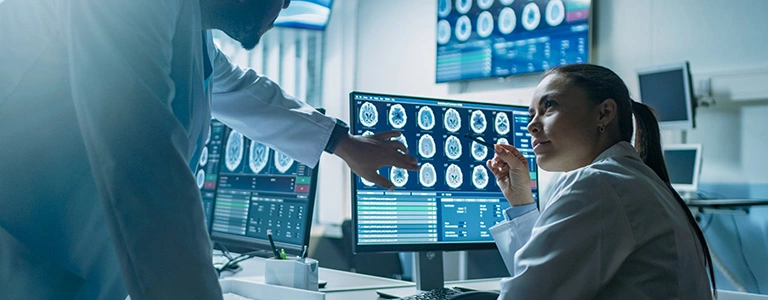
Analysis of medical images
Healthcare professionals can examine the internal organs and systems of your body using a number of imaging procedures like X-rays, MRIs, and CT scans. Medical professionals can identify minute defects in these scanned images using deep learning and image recognition technology, which aid in the development of effective treatment plans.
Healthcare Predictive Analytics
A predictive analytical model makes use of past data, analyses the data for patterns, and makes precise forecasts. The information could include everything from a patient's body temperature and blood pressure to sugar level.
Data science predictive models correlate and link every data point to symptoms, routines, and diseases. This makes it possible to determine the stage of a disease, the degree of harm, and the best course of action.
Virtual Assistance
Data scientists are already designing chatbots and AI platforms to assist consumers to learn more about their health by entering specific health information about themselves and receiving a precise diagnosis. These sites also offer health insurance plans and better lifestyle advice to their users.
The above instances signify how data science in the medical field is making enormous transformations and shaping the future of the medical and healthcare sector.


We provide the best Data Science online program with end-to-end Data Integration, Manipulation, Descriptive Analytics, Predictive Analytics and Machine Learning models training. Avail data science certification course to master all three elements of Data Science - Statistics, Tools and Business Knowledge now.