

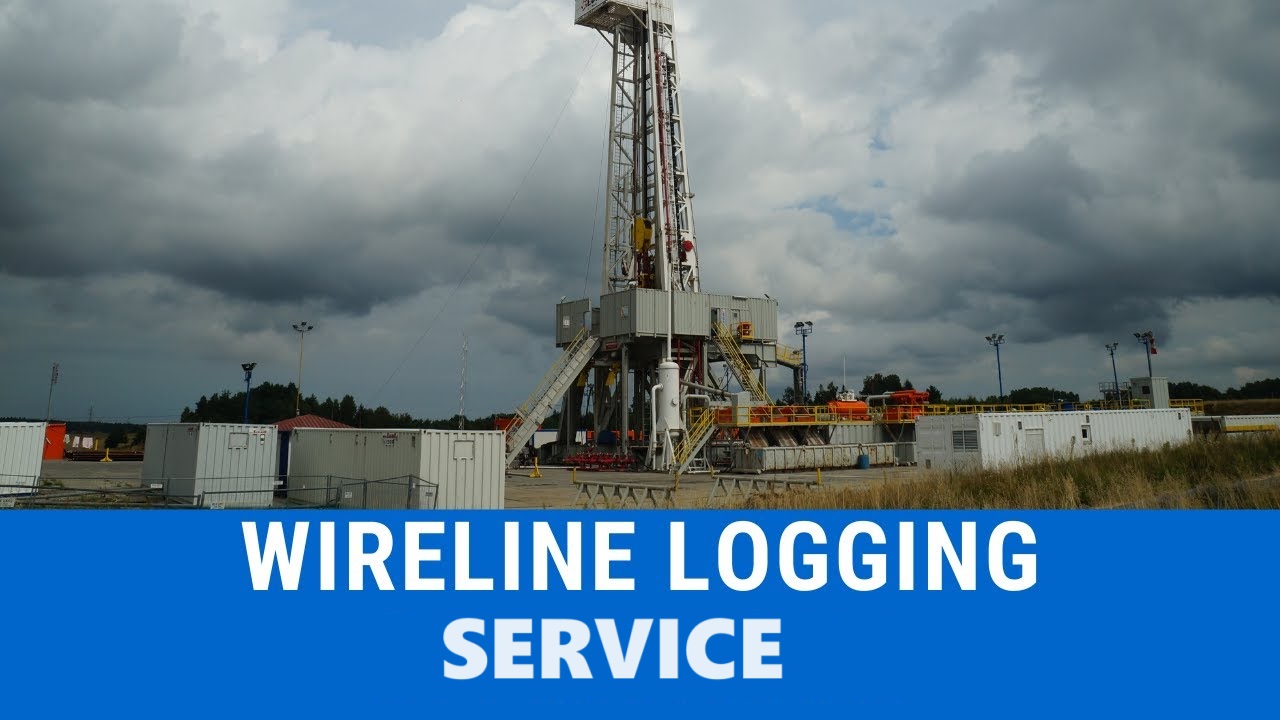
Wireline plays a quintessential role in well-logging operations to discover wellbore and other surrounding formation details. Based on the wireline used & job objectives, the downhole data gets transferred to a surface right away or stored on the wireline tool and retrieved later when it gets to the surface.
In short, wireline logging gets divided into 2 branches: cased hole and open hole. In this post, let’s understand more about these types. Want to know about Wireline Grande Prairie?
A Brief on Cased Hole Wireline Logging Types
Before learning about wireline in Grande Prairie – here’s everything to learn about the cased hole wireline operations and types:
#1 Production Logging
A tool is run inside the well that determinesthe producing zones. This tool has a few spinners to measure fluid velocity. In addition, it gets used in combination with pressure and temperature sensors to get an insightful understanding of the injection and production zones.
#2 CBL or Cement Bond Logging
CBL is performed to assess cement integrity between the formation and casing.
A Brief on Open-Hole Wireline Logging Types
Before learning about wireline Grande Prairie – here’s a list of open-hole wireline logging types:
#1 Gamma Ray Logging
It gets used for detecting radiation emitted naturally by a formation. The data distinguishes between reservoir rocks & factors in the overall reservoir thickness. Most importantly, it is also used for correlating other logs.
Formations like clay and shale with high potassium usually tend to be more radioactive than limestone or sandstone. But note that gamma rays may penetrate the casing. So, gamma-ray logging gets performed in a cased hole too.
#2 Sonic Logging
Sonic logging measures the speed of the sound traveling through a formation. The data gets used for calculating the type of rocks and porosity in a formation.
#3 Spontaneous Potential Logging
It gets performed to determine electrical potential along a wellbore. Doing so will help assess the fluid and rock types accordingly. An electrode gets placed at a surface, whereas another is run inside the well.
#4 Caliper Logging
Now, this is used for measuring the hole size. A downhole tool with spring legs is used for this reason. The acquired data may get used for determining the overall cement amount needed for securing a casing.
#5 Density Logging
Density Logging occurs with the radiation emission from the tool. It measures the degree of response by the formation. This type is used in demonstrating the formation’s ultimate porosity.
#6 Resistivity Logging
The next is resistivity logging, which is performed to assess the formation rock’s resistivity.
#7 Neutron Logging
Lastly, neutron logging determines how the neutrons interact with any formation. These neutrons will be affected by hydrogen atoms in a formation.Neutron logging determines the formation’s porosity.
So, that’s everything to know about wireline logging operations and types. Seek consultation from a company for wireline in Grande Prairie.
Herry Singf is an author of this article.To know more about Wireline Grande Prairie please stay with our website:farmboysoilfield.com
The upstream oil & gas industry is cursed with high uncertainty, owing to complications involved in upstream operations.
Moreover, these uncertainties have a negative impact on the decision-making process and in order to decrease these uncertainties, operators require the acquisition of accurate field data, and hence, a good quality evaluation services plays a crucial role in the decision-making process.
Hence, the demand for evaluation services, like wireline-logging services is increasing, in turn, driving the market.Request sample copy of Grid Scale Battery Market at: http://orbisresearch.com/contacts/request-sample/2213869 Growing Upstream Activity to Drive the MarketDuring 2016-2017, the average global rig count has increased by about 27% indicating growing upstream activity.
If new significant oil production projects are not initiated, the oil demand is expected to surpass the oil supply by 2020, which, in turn, is expected to further increase the oil prices.
The increasing oil prices are expected to drive the upstream activity, in turn, driving the demand for oilfield services, such as wireline logging services during the forecast period.Read details of the report at: http://orbisresearch.com/reports/index/global-wireline-logging-services-market-segmented-by-wireline-type-hole-type-and-geography-growth-trends-and-forecast-2018-2023 Increasing Exploration and Development Activity to Drive the Middle East MarketThe proved oil reserves in Iraq and Iran have increased considerably during 2006-2016, indicating substantial discoveries.
Hence to compete, the Saudi Arabia, UAE, Kuwait, and Qatar are expected to invest heavily in exploration and development of new oil reserves as well as tertiary recovery techniques to improve the oil recovery of existing reserves in order to maintain their dominant position in the future.