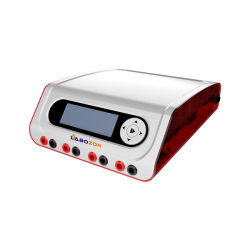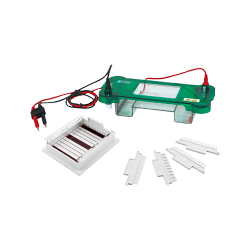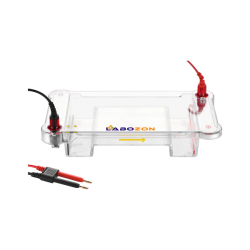
Horizontal electrophoresis is a laboratory technique used to separate and analyze molecules based on their size and charge. This technique is commonly used in molecular biology, biochemistry, and genetics research. It involves placing a gel matrix containing the sample mixture into a horizontal electrophoresis chamber and applying an electric field to the gel. The electric field causes the charged molecules to move through the gel matrix, separating them according to their size and charge.
It consists of two chambers separated by a gel casting tray. The upper chamber contains the buffer solution and the sample mixture, while the lower chamber contains the electrodes and generates the electric field. The gel casting tray is where the gel matrix is formed by polymerizing a mixture of agarose or polyacrylamide monomers and a cross-linking agent. The gel matrix is then placed onto the tray, and the sample mixture is loaded into wells created in the gel matrix. Once the gel matrix is loaded with the sample mixture, the tray is placed back into the electrophoresis chamber, and the electric field is applied. The electric field generates a charge difference between the electrodes, causing the charged molecules to move through the gel matrix. The movement of the molecules through the gel matrix is slowed down by the pores and obstacles in the matrix, resulting in the separation of the molecules based on their size and charge. The separated molecules can be visualized by staining the gel matrix with a specific dye, such as ethidium bromide for DNA or Coomassie Blue for proteins. The stained bands can then be quantified and analyzed using various techniques, such as densitometry or gel imaging. Horizontal electrophoresis is a versatile technique that can be used for a wide range of applications, such as DNA and RNA sequencing, protein analysis, and molecular weight determination. It is also a relatively simple and cost-effective technique compared to other separation methods, such as chromatography. However, it does have some limitations, such as the inability to separate molecules with similar size and charge, and the potential for distortion of the gel matrix during the electrophoresis process.
In conclusion, a horizontal electrophoresis is a powerful tool for molecular biology and genetics research, providing a reliable and efficient method for separating and analyzing molecules based on their size and charge. With its versatility, simplicity, and cost-effectiveness, it has become a widely adopted technique in the scientific community.For more information visit www.Labozon.com