Statistical Significance
One of the essential aspects of a scientific experiment is to determine whether an observed result is statistically significant or not. Statistical significance refers to the probability that the observed result occurred due to chance. In other words, it is a measure of the likelihood that the results obtained from the study are real and not just a fluke.
In in vivo experiments, control groups play a crucial role in determining statistical significance. A control group is a group of subjects that are not exposed to the treatment being tested, but all other conditions are kept the same as the experimental group. By comparing the results of the experimental group with those of the control group, one can determine whether the observed difference is statistically significant or not.
Without a control group, it is impossible to determine the statistical significance of the results obtained from the experimental group. Hence, control groups are an essential component of in vivo experiments.
Randomization
Randomization (Animal Randomization Tool) is a process by which subjects are randomly assigned to either the experimental group or the control group. The objective of randomization is to ensure that the groups are similar in terms of variables that may affect the outcome of the study. For example, if the study involves the treatment of a disease, randomization ensures that both groups have an equal number of subjects with the disease, age, gender, and other relevant factors.
Randomization helps to eliminate potential biases that may arise if subjects are selectively assigned to either group. By randomly assigning subjects to either group, the differences observed between the two groups can be attributed to the treatment being tested and not to any other factors.
Randomization is an essential component of the experimental design and helps to ensure the validity of the study.
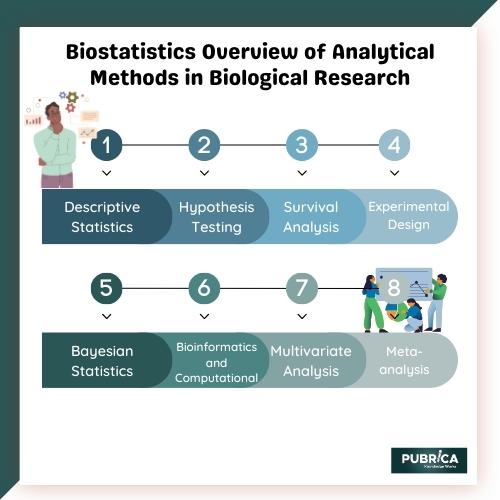
Experimental Design
Experimental design plays a crucial role in the success of in vivo experiments. The experimental design involves a systematic approach to designing and conducting experiments that minimize the potential sources of error and bias. One of the key components of experimental design is the use of control groups.
In an in vivo experiment, the objective is to test the effectiveness of a particular treatment or intervention. To achieve this goal, researchers must design experiments that allow for precise measurements of the response to the treatment. The experimental design must also ensure that the results obtained are reliable and can be replicated.
Another critical element of experimental design is the control of variables. When conducting in vivo experiments, researchers must control as many variables as possible to ensure that the results obtained are due to the treatment (Animal Dose calculator) being tested and not to any other factors.
To achieve this goal, researchers must identify all the variables that may affect the outcome of the study and control them as much as possible. This process helps to minimize potential biases that may affect the results of the study.
Experimental design is crucial in in vivo experiments as it helps to ensure that the study is valid and reliable, and the results obtained can be trusted.
Conclusion
In vivo experiments require careful planning and execution to ensure that the results obtained are valid and reliable. Control groups play a critical role in determining statistical significance, and randomization ensures that the groups are similar in terms of relevant variables.
Experimental design is essential in in vivo experiments as it helps to ensure that the study is well-controlled and that potential biases are minimized. By following the principles of statistical significance, randomization, and experimental design, researchers can generate reliable data that can inform the development of new treatments and interventions.




This is also helpful and valuable when one is working on a project involving machine learning.
Applying statistical methods to industrial, scientific, and social problems is achieved using the statistic model.Examples of statistics for machine learningSome examples are provided below.
Machine learning projects involve the application of statistical methods.In order to solve a predictive modeling problem successfully, you need practical experience in statistics.Data understandingModel evaluationData cleaningModel presentation Data selectionModel selectionModel prediction1) Data understanding:Having a cozy handle on both the conveyances of variables as well as their connections is necessary for understanding data.
Domain expertise may exist or some parts of this information require domain knowledge.2) Model Evaluation: Evaluation of a learning technique is vital to a successful predictive demonstration.
3) Data Cleaning:Space is not always a perfect vantage point.
Despite the advanced nature of the information.

Internet of Things has had an extremely important impact on the way almost every industry runs today, irrespective of whether it’s an IT company or not.
And if the statistics from IDC and SAP are too believed, Industrial Internet of Things (IIoT) has had more than half of the global manufacturers use analytical data provided by IoT apps to help them better optimize themselves.
Therefore, IoT sensors play a huge role in monitoring such machinery and taking responsibility for alerting people if any equipment shows a reading off the chart.
It’s true for every field, including that of manufacturing.
If there’s too large a time gap between the problem and the adjustment that needs to be made, one could lose out on a lot of operational costs, while already having wasted quite a lot of time.