


Introduction
Are you familiar with the concept of remote work? Well, imagine having the freedom to work from the comfort of your home or perhaps even a cosy café. That's what remote developers do! They are professionals who use their tech-savvy skills to create amazing software and websites without being tied to a traditional office space.
In this blog, we'll explore the fascinating world of remote developers and dive into an essential aspect of their work: work-life balance. We'll discover how remote developers can maintain a healthy equilibrium between their personal lives and professional commitments, ultimately improving well-being and productivity.
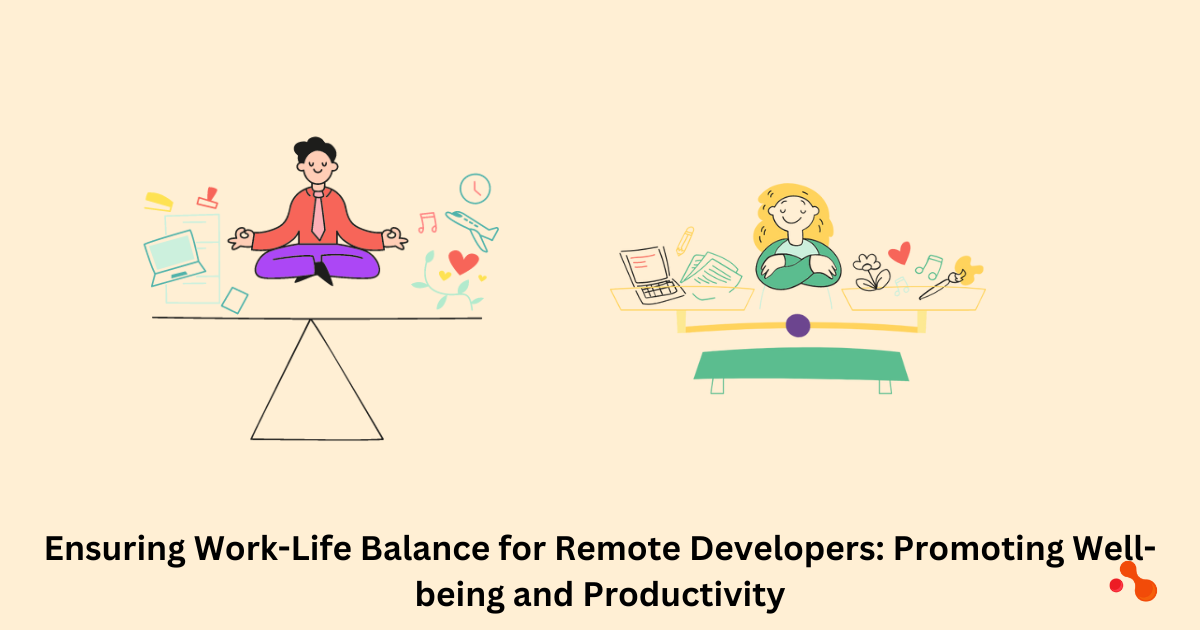
Understanding Work-Life Balance
Work-life balance refers to finding a healthy equilibrium between one's professional and personal life. It means managing work responsibilities while having time for family, hobbies, and relaxation. Achieving work-life balance is important because it helps individuals maintain their well-being and increases productivity.

Challenges faced by remote developers in achieving work-life balance:
- Blurred boundaries: Remote developers often struggle to separate their work and personal life since they work from home. This can result in working longer hours and neglecting personal time.
- Lack of routine: Without a fixed office schedule, remote developers may struggle to establish a structured routine, leading to irregular working hours and difficulty managing personal commitments.
- Distractions at home: Being surrounded by household chores, family members, or tempting distractions like TV or video games can make it hard for remote developers to focus on work.
Linking work-life Balance to Well-being and productivity:
- Improved mental health: A healthy work-life balance reduces stress and prevents burnout, leading to better mental well-being.
- Enhanced physical health: When individuals have time for exercise, proper meals, and rest, they can maintain good physical health, positively impacting their overall productivity and job performance.
- Increased job satisfaction: Having time for personal interests and relationships outside work increases job satisfaction and motivation.
Benefits of a healthy work-life balance for remote developers:
- Increased productivity: Remote developers who maintain a good work-life balance are more focused, energized, and efficient, resulting in higher-quality work output.
- Better time management: By prioritizing tasks and setting boundaries, remote developers can manage their time effectively and accomplish their work goals while still having time for personal activities.
- Stronger relationships: A balanced work-life allows remote developers to nurture relationships with family and friends, strengthening emotional bonds and a support system.
- Personal growth: Engaging in non-work activities, such as hobbies or learning new skills, enhances personal development and creativity, positively impacting work performance.
Remember, finding the right balance between work and personal life is crucial for remote developers to lead a fulfilling and successful career while enjoying a satisfying personal life.
Establishing Boundaries and Routines
It's essential to set clear boundaries between your work and personal life. Doing so, you can maintain a healthy balance and avoid feeling overwhelmed. Here are some reasons why setting boundaries is important:

- Avoiding burnout: When work spills over into your personal life, it can lead to burnout, exhaustion, and decreased motivation. By setting boundaries, you give yourself time to relax and recharge.
Example: Imagine you're a superhero with limited energy. If you don't take breaks and rest, your superpowers will disappear.
- Focusing on priorities: Clear boundaries allow you to prioritize tasks and manage your time effectively. This way, you can concentrate on important work without distractions from personal matters.
Example: Think of your favorite video game. You might lose the game if you pause it to answer a phone call or check social media. Setting boundaries helps you stay focused on winning.
To create a dedicated workspace at home, consider the following:
- Find a quiet corner: Choose a spot where you can work without interruptions. It could be a desk in your room, a cosy nook in the living room, or even a converted closet.
- Personalize your space: Make your workspace comfortable and inspiring. Add plants, pictures, or motivational quotes to make it your special area.
Establishing and following a structured daily routine is crucial for productivity and organization. Here's how you can do it:
- Set specific times: Decide when you'll start and finish your work, take breaks, and engage in personal activities. Stick to these times as much as possible.
- Plan your day: Make a to-do list or use a planner to outline tasks and goals. This will help you stay on track and complete your work efficiently.
Utilizing time management techniques like the Pomodoro Technique can boost your productivity. Here's how it works:
- Set a timer: Choose a specific time interval, like 25 minutes, and focus solely on your work during that period.
- Take short breaks: After each work interval, take a short break, around 5 minutes, to rest and recharge. Repeat this cycle several times, then take a longer break, like 15-30 minutes.
Managing Remote Work Challenges
Working remotely as a developer can come with its fair share of challenges. Let's explore some common obstacles and discover effective strategies to overcome them.

- Addressing isolation:
- Isolation can make remote work feel lonely and demotivating. To combat this, remote developers can:
- Engage in social interactions: Participate in virtual team-building activities, share personal experiences, and celebrate achievements.
- Join virtual communities: Become a part of online forums or groups where developers discuss common interests, share knowledge, and seek support.
- Combating communication issues:
- Remote work may lead to communication gaps and misunderstandings. Here's how remote developers can enhance communication:
- Regular check-ins: Schedule frequent video or voice calls with team members to discuss progress, challenges, and updates.
- Utilize collaboration tools: Leverage tools like Slack, Microsoft Teams, or Zoom to facilitate real-time communication, file sharing, and project management.
- Effective communication strategies:
- To ensure smooth collaboration within remote teams, consider the following strategies:
- Clear and concise communication: Be mindful of using simple language, providing context, and asking clarifying questions to avoid misunderstandings.
- Active listening: To foster effective communication, pay attention to others' ideas, concerns, and suggestions during team meetings or discussions.
- Strategies for managing distractions and maintaining focus:
- Remote work environments can be distracting, but there are ways to stay focused:
- Establish a dedicated workspace: Designate a specific area for work, preferably free from distractions like TV or noisy surroundings.
- Create a schedule and set goals: Plan your day by setting achievable goals and breaking them into smaller tasks. Use tools like Trello or Notion to track progress.
- Practice time management techniques: Techniques like the Pomodoro Technique (working in focused intervals followed by short breaks) can improve productivity.
Remote work can offer flexibility and freedom, but it requires discipline and effective strategies to thrive. By addressing isolation, improving communication, and managing distractions, remote developers can excel in their work while enjoying the benefits of working from anywhere.
Self-Care and Well-being
Do you know that taking care of yourself is important for remote developers? When you work remotely as a software developer, looking after your well-being is crucial. Explore why self-care is important and some cool ways to stay healthy and happy!
- Self-care is essential for your overall well-being. Here's why:
- Self-care helps you stay focused and motivated. When you take breaks and do things you enjoy, it refreshes your mind and boosts your productivity.
- It reduces stress and prevents burnout. Giving yourself time to relax and recharge prevents you from feeling overwhelmed.
- Self-care enhances your physical and mental health, making you feel better physically and emotionally.
- It improves work-life balance, allowing you to enjoy your personal life while being a successful remote developer.
- Let's talk about promoting physical well-being:
- Exercise regularly: Engaging in physical activities like walking, jogging, or playing sports keeps your body active and releases endorphins, which make you feel happy.
- Eat healthy: Eat nutritious foods like fruits, vegetables, whole grains, and lean proteins. They provide the energy you need for coding and keep you focused.
- Get enough sleep: Restful sleep is vital for your well-being. Aim for 7-8 hours of quality sleep each night.
- Strategies to manage stress and avoid burnout:
- Take regular breaks: Schedule short breaks during your workday to relax, stretch, or walk. It helps clear your mind and reduce stress.
- Practice mindfulness or meditation: Spend a few minutes each day to focus on your breathing and be present at the moment. It can help you feel calmer and more centered.
- Set boundaries: Establish clear working hours and communicate them with your team. Don't forget to disconnect and recharge during your off-hours.
- Work-life integration and pursuing hobbies and interests:
- Find a balance: It's important to find a healthy balance between work and personal life. Set aside time for your hobbies, spending time with family and friends, and doing things you love.
- Explore new hobbies: Discover new activities that bring you joy, such as painting, playing an instrument, cooking, or learning a new language. It adds excitement and variety to your life.
Remember, taking care of yourself is just as important as your work. By incorporating self-care into your routine, you'll feel happier, healthier, and more fulfilled as a remote developer. So go ahead, take care of yourself and enjoy the journey!
Conclusion
In conclusion, by prioritizing work-life balance for remote developers, companies can enhance their well-being, productivity, and successfully hire remote developers. This can be achieved by setting clear boundaries, offering flexible work schedules, and fostering a culture that values time off. By creating an environment where remote developers thrive and enjoy a healthy work-life balance, companies can attract and retain top talent in their efforts to hire remote developers. Remember, happy and fulfilled remote developers are more likely to contribute their best to the company's success. So, let's prioritize work-life balance and create an environment that not only supports the well-being of remote developers but also makes the company an attractive choice for hiring remote developers.
Do you want to hire a remote Android developer for your next project?
Then, check out the top five tips to hire the best remote engineer for seamless mobile app development.