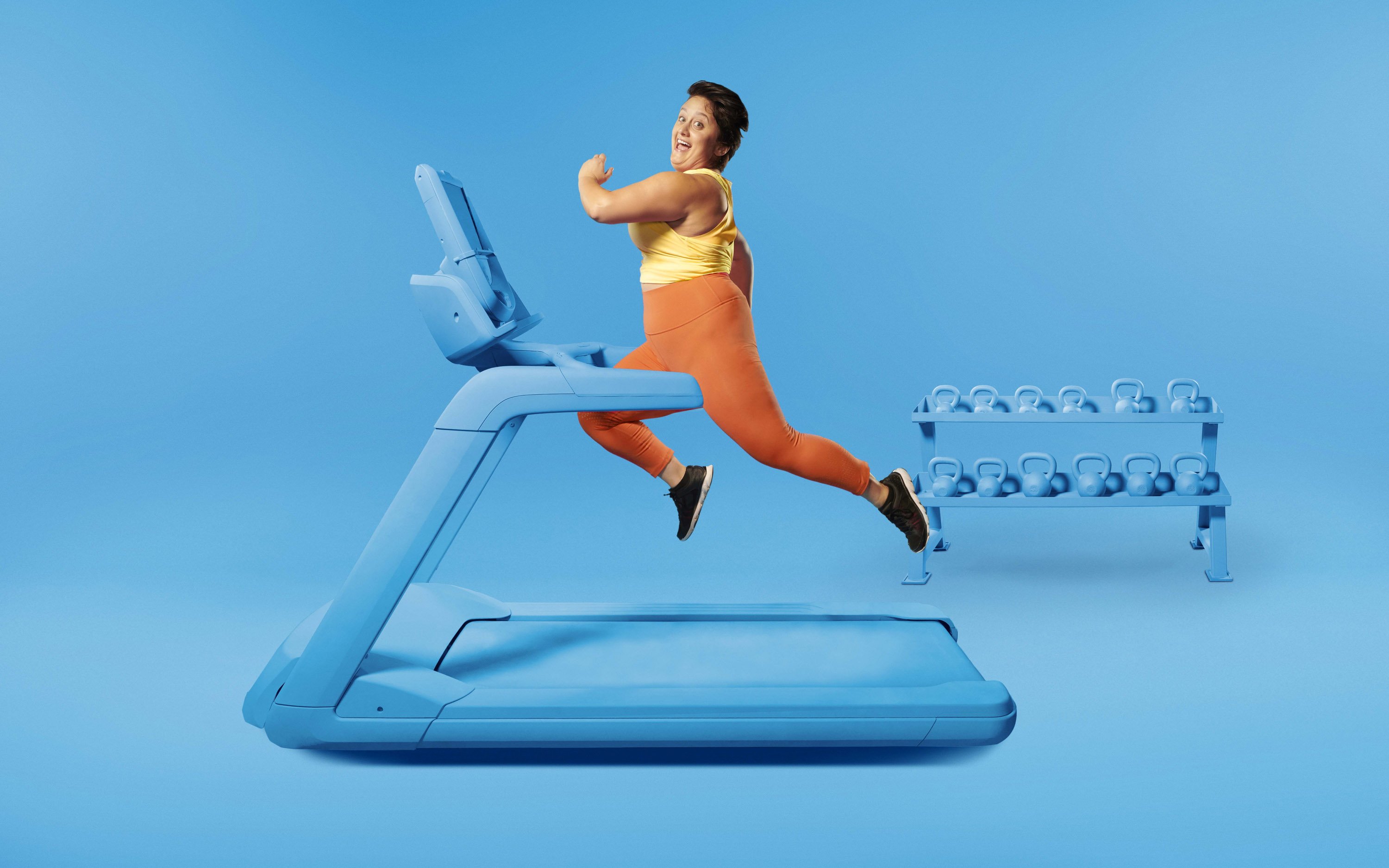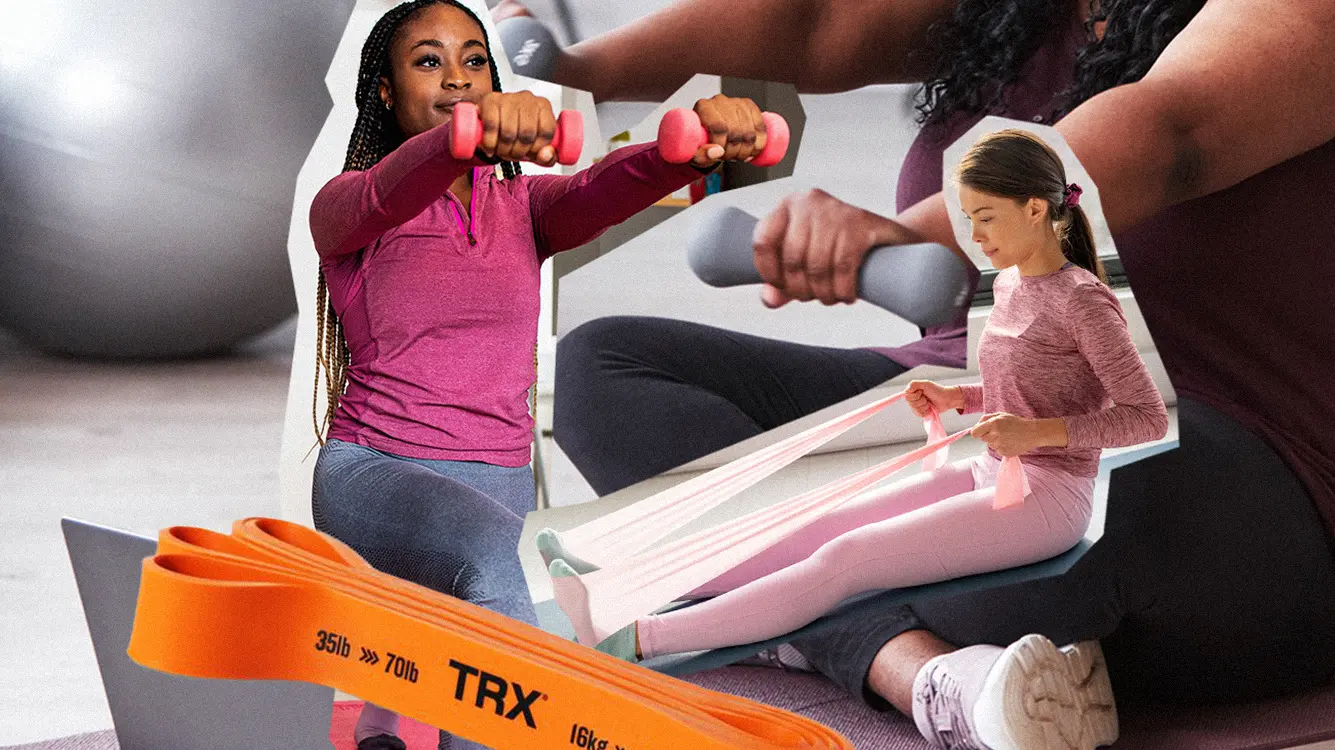
Some people have to go to the gym to work out, but others find that working out at home is more convenient and helps them stick to a plan. There are many good things about working out at home, and based on the fitness tools you buy, it can save you a lot of money (no gym membership!). Do you plan to start your own workout routine at home? These tips will help you start an exercise routine at home that fits your needs and your living area.
Finding the Right Active wear and Gear
A good workout at home starts with the right sports gear and tools, as well as useful and comfortable active wear. Here are a few things that are very important and can make a big difference:
- Athletic shoes: Check out our guide to finding the perfect pair.
- Workout pants: No matter the type of exercise, your pants need to move with you, stay in place, and be comfortable. Our guide to the best yoga pants is a great place to start.
- Sports bras: The best sports bras support you completely and don't pull, pinch, poke, or slide out of position.
Looking for some ideas for what to wear to the gym? Check out our choices of men's and women's favorite workout clothes.
Warming Up
Warming up makes working out more relaxing and lowers the risk of getting hurt. (1) Warm up for at least five minutes, especially before doing something active. When you get your blood moving, oxygen goes to your muscles, and your heart rate and core body temperature go up.
Bodyweight Workouts
If you're just getting started with fitness or don't have much room, workouts that use your own weight as support are great. Bodyweight workouts are great for your heart and muscles, and you don't need any tools to do them. (2) Plus, you can quickly change them to fit your exercise level. Some common physical workouts are:
- Sit-ups to target your abs and core.
- Planks to strengthen your core and target deep abdominal muscles (this exercise is easier on your neck and spine than a crunch machine).
- Push-ups to build arm and back muscles and engage your entire core.
- Pull-ups to strengthen arm, back, and shoulder muscles while improving your grip strength.
- Single-leg squats to strengthen and tone your legs and glutes while also engaging your core and improving your balance.
Want to get your heart beating faster and burn more calories? You can get a good cardiac workout at home by doing jump squats, walking lunges, taking the stairs, or running in place. Circuit training is a good way to do physical workouts. You do a certain number of reps of one exercise and then move on to the next one right away.
High-Intensity Interval Training (HIIT)
HIIT workouts can vary in speed and intensity, and they are a good way to work out your whole body in a short amount of time. (3) You can do these workouts using your own body weight or exercise tools. HIIT has several reps that switch between short bursts of all-out effort and slower, easier rest times. For instance:
- On a stationary bike, pedal with high resistance as fast as possible for 30 seconds, then switch to slow, easy cycling with lower resistance for several minutes.
- On a run, alternate between an easy jog for several minutes and a full-out sprint for 15-30 seconds.
Because of the intensity, it's important to keep the following in mind:
- Be sure you're thoroughly warmed up before any HIIT workout.
- Don't do a HIIT workout if you're injured.
- Consult your doctor before beginning a HIIT activity if you have heart disease or other health concerns.
Cooling Down
When you cool down after a workout, your heart rate and blood pressure can slowly return to their normal levels. Stretching and a regular cool-down routine may also help keep you from getting tired and speed up the time it takes for you to heal between workouts. A yoga practice that focuses on stretching can be a great way to cool down. Here are some ideas for what to wear to yoga.
Workout Recovery Tools
If you experience sore muscles and knots, foam rollers and massage guns can help. These tools are designed for self-myofascial release (the fascia is the layer of tissue that connects your muscle groups).
- Foam rollers and massage guns can:
- Help you recover from exercise.
- Release tight muscle groups and sensitive trigger points in your fascia.
- Relieve pain and reduce soreness.
- Significantly increase your flexibility and range of motion when paired with stretching.
- Provide some of the same myofascial release you'd get from a professional massage.
Fitness-Tracking Gadgets
Wristband fitness trackers are one of the most cost-effective investments for anyone wanting to improve their physical fitness and overall wellness. Depending on the model you choose, a fitness tracker can:
- Help you set personalized goals.
- Monitor and illustrate your progress.
- Motivate you to exercise every day.
- Track your steps.
- Monitor your heart rate.
- Track calorie intake and calories burned.
- Help you make healthy food choices.
- Monitor your sleep quantity and quality.


Sonic Yoga offers yoga training from beginners to advanced levels in Yoga Classes workshops, and yoga teacher training in New York for all age groups.
We began our journey in 2001 in the heart of New York City’s bustling Hell’s Kitchen & quickly blossomed into a mecca for eclectic souls looking for a super-friendly place to come together to practice yoga.
Now on the edges of Hell’s Kitchen & Columbus Circle we serve our loving community with expert teachers, diverse classes & workshops, & a supportive environment to grow at whatever level they are at.
We have welcomed more than 30,000 students into our family and trained over 1,000 teachers.
Explore the wide range of women's fitness apparel and workout clothes like gym clothes, footwear, leggings, t-shirts, tracksuit, yoga sets at fitlabshop to boost your workout sessions.