



Understanding Custody Laws: A Guide for Parents
As a parent going through a divorce or separation, understanding custody laws is crucial. Custody laws define the rights and responsibilities of both parents and determine how the care and upbringing of the children will be handled. This guide will provide an overview of custody laws, focusing on sole custody and how to create a parenting plan.
Sole Custody
Sole custody is a legal term used to describe a situation where one parent has full legal and physical custody of the children. In this case, the other parent may have visitation rights but does not have decision-making authority over the children. The parent with sole custody is responsible for making all major decisions about the children's upbringing, including healthcare, education, religion, and extracurricular activities.
In order to obtain sole custody, the court will consider various factors such as the children's best interests, the parent's ability to provide a stable and safe living environment, and the relationship between the parent and the children. It's important to note that the court will also consider the parent's willingness to cooperate with the other parent and facilitate a positive relationship between the children and the non-custodial parent.
If you're seeking sole custody of your children, it's important to work with an experienced family law attorney who can help you navigate the legal process. Your attorney can help you present a strong case to the court, highlighting the best interests of your children and your ability to provide a stable and safe environment for them.
Parenting Plan
A parenting plan is a written agreement between parents that outlines how they will share custody and parenting responsibilities. This plan typically addresses several key areas, including:
1. Custody and visitation schedules
2. Decision-making authority for the children
3. Communication between the parents
4. Financial support for the children
5. Educational and extracurricular activities for the children
Creating a comprehensive parenting plan is critical for ensuring a smooth transition for both parents and children in the wake of a divorce or separation. A well-written plan can help minimize conflict and support healthy co-parenting.
When creating a parenting plan, it's important to be realistic about your schedule and your ability to meet the children's needs. Consider factors such as work schedules, school schedules, and extracurricular activities when developing a visitation schedule. It's also essential to establish clear communication channels between you and the other parent, particularly when making major decisions about the children's wellbeing.
Whether you're pursuing sole custody or creating a parenting plan with your co-parent, working with an experienced Mohajer Law Firm family law attorney can help ensure that your rights and the rights of your children are protected. With the guidance of an attorney, you can navigate the legal process more effectively, ensuring the best possible outcome for your family.

The term “Custody” of children in the context of a separation, involves the right of a parent to make decisions related to the welfare or best interest of their children.
These rights relate to either parent’s’ right to make decisions about a child’s education, religious upbringing, medical decisions, and the extracurricular activity a child takes part in.Visit Us:- https://create.piktochart.com/output/54342697-custody-and-parenting-parenting-plans-separylaw
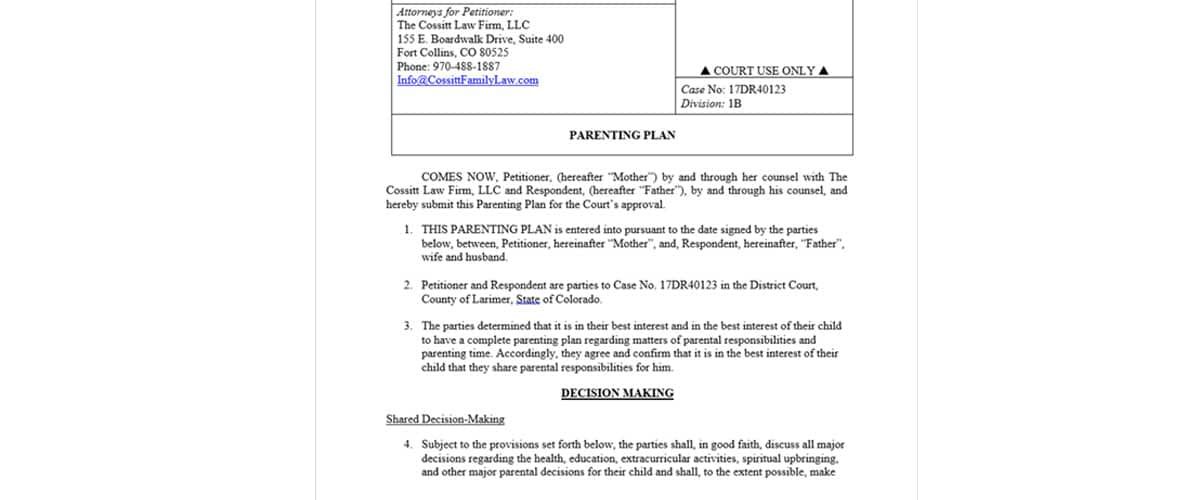
Creating and modifying a Colorado parenting plan including parenting time and scheduling, decision making, and child support, etc can be overwhelming.
We can help you with that.
Call us at (970) 488-1887 for a quick response.

What is a Parenting Plan?A parenting plan is a plan which puts the best interests of the child first.
It is your and your partner’s commitment to your children and their future.
A parenting plan is a written agreement between parents under practical issues of parental responsibility.What Happens if a Party breaks Parenting plan or arrangement and Does Not Return the Child?If you are concerned that your child may not be returned to your care after spending time with the other parent, there are some simple things you can do to try and avoid this situation, or, make it easier for yourself to recover the child in the event this does occur.Make Parenting Arrangements in WritingIf you have not yet agreed to a parenting plan with the other parent, or are awaiting mediation, you should try and make arrangements in writing which specify the date, time, and where changeovers will occur.When putting this information in writing, not only does it become easier for the parties to follow, but it also provides concrete evidence in the event the other party does not comply with the original agreement.This also has an added bonus of demonstrating to the Court that you have intentions of co-operating with the other party in the parenting plan of the child.What Happens if the Child Is Withheld?If there is an agreed parenting arrangement, or if the other party simply withholds the child from your care, you can then proceed with a Recovery Order.
The Court does not look favourably on parties who unilaterally change the child’s living arrangements without the prior consent of the other party.This is where written agreements and evidence can make this process easier.
Depending on whether it is urgent recovery order qld, the process of returning the child to your care can take between one or two weeks.Often times the mere filing of a Recovery Order is enough to make the other parent realise they are unnecessarily withholding the child and return them to your care.However, if the child continues to be withheld from you, the Court has the power to make an Order which provides authority to the police to recover your child from the other party.Importantly, cases that require police involvement are extremely rare and usually, the situation is defused before this occurs.If you require any advice regarding the above information or seeking to apply or defend Recovery Orders, call us today to speak with one of our accredited family law specialist or email your query to reception@jamesnoblelaw.com.auArticle Source: Parenting Plan