





Running quickly is an objective shared by lots of professional athletes and physical fitness enthusiasts. Whether you're a competitive runner or just aiming to improve your speed and performance, comprehending the crucial concepts and strategies of running can assist you achieve your goals. In this article, we will check out the various elements that contribute to running quickly and offer practical suggestions to improve your speed and effectiveness.
Incorporating strength training exercises into your exercise routine can improve your running speed. Concentrate on workouts that target the lower body, such as squats, lunges, and calf raises, to develop leg strength and power. Furthermore, workouts like deadlifts and plyometric drills can assist improve explosive power, which is important for generating speed during sprints.
Related: How To Run A Faster Mile
Plyometric exercises include explosive movements that establish power and improve muscle elasticity. Jumping workouts, such as box jumps, bounding, and depth dives, can boost your ability to generate force and improve your stride length and frequency. Include plyometric drills in your training routine to boost your running speed.
Integrating sprint periods into your training can help you establish speed. Short, intense bursts of running followed by brief recovery durations can improve your anaerobic capability and teach your body to perform at faster speeds. Gradually increase the period and strength of your sprint intervals gradually for ideal outcomes.
Improving Running Technique
Preserving proper posture and positioning while running is important for optimizing speed and efficiency. Engage your core muscles to keep stability and promote efficient movement.
Discovering the right balance between stride length and frequency is essential for running fast. Strive for a slightly longer stride without overreaching, as this can cause inefficient mechanics and increased danger of injury. Go for quick, turnover of the legs, making sure that your foot lands under your center of mass.
Use your arms to produce momentum and preserve balance. Keep your arms bent at roughly 90 degrees and swing them forward and backward in a regulated way. Prevent extreme side-to-side motion, as it can waste energy and disrupt your running rhythm.
Endurance and Conditioning
Include period training sessions into your training strategy to enhance your endurance and endurance. Alternate between periods of high-intensity running and active recovery. This type of training helps increase your cardiovascular fitness, allowing you to sustain faster speeds for longer periods.
Routinely consist of long terms in your training schedule to improve your total endurance. These runs need to be done at a comfy speed that allows you to cover longer distances. Gradually increase the period and distance of your long runs to construct psychological and endurance toughness.
Take part in cross-training activities, such as cycling, strength, or swimming training, to match your running workouts. Cross-training helps prevent overuse injuries, enhances total physical fitness, and improves muscular balance, all of which contribute to better running performance.
Mental Preparation and Focus
Visualize yourself running fast and crossing the goal with self-confidence. Psychological imagery can assist boost your focus, motivation, and belief in your capabilities. Take a few minutes prior to your go to picture effective, hectic performances.
Set specific, quantifiable goals to track your development and remain inspired. Break down your bigger goals into smaller, attainable turning points. Commemorate each milestone reached, and utilize them as stepping stones towards your supreme goal of running faster.
Keep a positive frame of mind and use affirmations to construct self-esteem. Change self-doubt and unfavorable thoughts with favorable declarations about your abilities as a fast runner. Encourage yourself throughout challenging workouts and races to push through mental barriers.
Conclusion:
Running fast requires a combination of physical training, appropriate strategy, endurance, and mental focus. Develop endurance through interval training, long runs, and cross-training activities. With constant practice and commitment, you can achieve your running goals and experience the adventure of running quick.

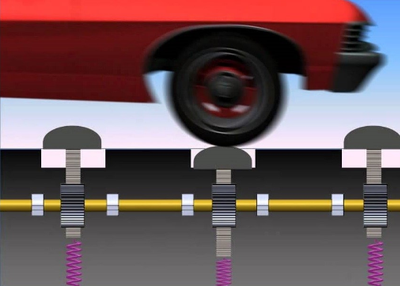
Project on electricity generator from speed breakers
Creating power for the quickly developing world is a major test and which makes us think and think about the other conceivable approaches to produce control.
As we probably are aware by the law of protection of vitality, vitality can nor be made nor be crushed however can be changed over starting with one structure then onto the next, and that is the thing that the vision of this Electricity Projects is going to.
Piezoelectric precious stones are somewhat gem material which produces an electrical flag when they go under the impact of the outside weight either a contractive or stretched.
Piezoelectric Crystal: Piezoelectric gems can produce the electrical flag when get connected outer weight because of the vitality exchanged from the internal atoms of firmly stuffed precious stone so when the layer of particles get squeezed or pulled by the outside power the vitality discharged by those atoms to ingest the outside weight that discharged vitality is in type of electrical flag and that can be put away to utilize later.
Battery: A battery is a putting away gadget which stores the electric vitality in the type of concoction vitality and supplies the electric vitality with the turn around of a similar substance process occurring amid putting away.
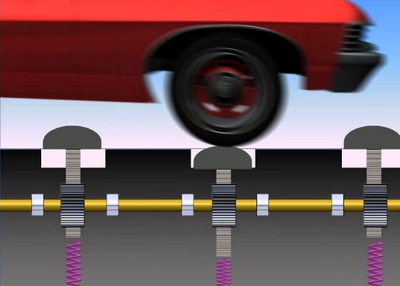
Project on electricity generator from speed breakers
Creating power for the quickly developing world is a major test and which makes us think and think about the other conceivable approaches to produce control.
As we probably are aware by the law of protection of vitality, vitality can nor be made nor be crushed however can be changed over starting with one structure then onto the next, and that is the thing that the vision of this Electricity Projects is going to.
Piezoelectric precious stones are somewhat gem material which produces an electrical flag when they go under the impact of the outside weight either a contractive or stretched.
Piezoelectric Crystal: Piezoelectric gems can produce the electrical flag when get connected outer weight because of the vitality exchanged from the internal atoms of firmly stuffed precious stone so when the layer of particles get squeezed or pulled by the outside power the vitality discharged by those atoms to ingest the outside weight that discharged vitality is in type of electrical flag and that can be put away to utilize later.
Battery: A battery is a putting away gadget which stores the electric vitality in the type of concoction vitality and supplies the electric vitality with the turn around of a similar substance process occurring amid putting away.
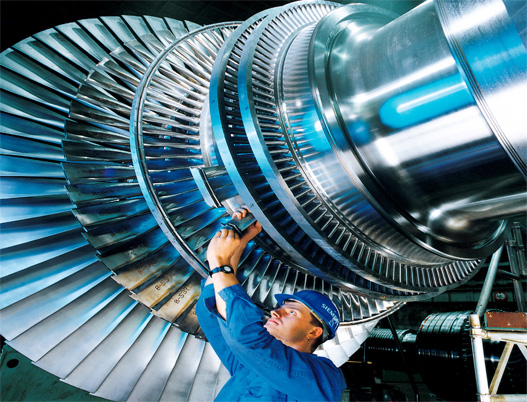
Latin America Factory Automation Market Largely Driven by the Growing Demand from the F Processing and Manufacturing Industries While the Booming Automotive, Packaging, and Oil & Gas Industries Increasing the Sales of Electrical Components Required in Automation FacilitiesThe contemporary era of the industrial revolution is bringing a radical shift in the way factories operate, and with the advent of artificial intelligence (AI) and robotics, machine replacement and factory automation have become a ubiquitous phenomenon in multifarious industries.
This lack of skilled workforce has a perceptible effect on the factories in Latin American countries that are inculcating technology, which in turn, is creating a myriad of opportunities in the Latin America factory automation market wherein the electrical component segment of the market is at the most advantage.
While the lack of skilled workforce is setting a profitable pricing environment for the Latin America factory automation market companies, the fact that a significant proportion of working personnel has barely routine work to do that can be replaced by automation is further creating revenue sources.
World Economic Forum evinces this fact with research, according to which 40% of Latin Americans are in jobs that have a minimal amount of routine work.
The current economic boom in Brazil is leading to the F industry growth, which is creating opportunities in the factory automation market of the country.
The new regulations regarding labor safety and ergonomics in factories is also spurring the processing industries to leverage technology for a better and safety-driven working environment, which is supporting the factory automation market players.