


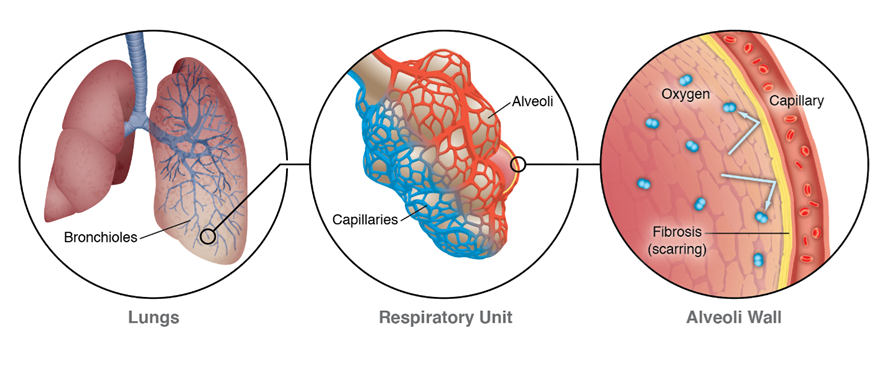
Interstitial lung disease (ILD) is a complex and often perplexing group of respiratory disorders that can significantly impact the lives of those affected. This comprehensive guide aims to demystify ILD by exploring its various forms, potential causes, diagnostic methods, and treatment options.
Understanding Interstitial Lung Disease: ILD refers to a collection of lung disorders that share a common characteristic: inflammation and scarring of the interstitial tissues that support the alveoli (air sacs) of the lungs. The scarring, known as fibrosis, can lead to reduced lung function and impaired gas exchange, causing breathing difficulties.
Types of Interstitial Lung Disease: ILD encompasses a diverse range of conditions, each with its own unique characteristics and underlying causes. Some of the most common ILDs include idiopathic pulmonary fibrosis (IPF), sarcoidosis, hypersensitivity pneumonitis, connective tissue disease-associated ILD, and occupational lung diseases like asbestosis and silicosis.
Potential Causes and Risk Factors: The exact cause of ILD can be elusive in many cases. However, exposure to certain environmental factors, such as asbestos fibers, silica dust, and bird droppings, can trigger ILD in susceptible individuals. Autoimmune disorders, genetic factors, and certain medications are also known to contribute to the development of ILD.
Diagnosis of Interstitial Lung Disease: Diagnosing ILD requires a comprehensive evaluation of the patient's medical history, physical examination, imaging tests (chest X-rays and CT scans), and lung function tests. In some cases, a surgical lung biopsy may be necessary to obtain a tissue sample for further analysis and definitive diagnosis.
Treatment Approaches: Treatment for ILD aims to slow down the progression of the disease, alleviate symptoms, and improve the patient's quality of life. The choice of treatment depends on the specific type and severity of ILD. Corticosteroids and immunosuppressive drugs are commonly used to reduce inflammation and delay fibrosis. Other medications, such as antifibrotic agents, may be prescribed for certain types of ILD.
Oxygen therapy is often recommended for patients with advanced ILD to help maintain adequate oxygen levels in the blood. Pulmonary rehabilitation programs can assist patients in managing their symptoms and improving their lung function through exercise and education.
The Importance of Support and Research: Living with ILD can be emotionally and physically taxing for patients and their families. Support groups and counseling services can provide much-needed emotional support and help patients cope with the challenges they face.
Ongoing research into Interstitial Lung Disease is crucial for gaining a deeper understanding of its causes and developing more effective treatments. Clinical trials are constantly exploring new therapies and interventions that may offer hope to those affected by this challenging condition.





Global Cattle Feed Mixers Market Growth (Status and Outlook) 2019-2024 provides an effective study of varied sections of industry such as opportunities, size, growth, technology, demand, and trend of high leading players.
This study consists of market segmentation by product types, applications and Cattle Feed Mixers market division based on geographical regions.
The report investigates regional market scope, product-market various applications, market size according to a specific product, sales and revenue by region, manufacturing cost analysis, industrial chain, market effect factors analysis, market size forecast for 2019 to 2024 time-period, and more.DOWNLOAD FREE SAMPLE REPORT: https://www.mrinsights.biz/report-detail/191616/request-sample People will find this report easily accessible document as it contains key industry data in the form of graphs, tables, charts, and numbers.
The forecast is based on data from 2014 to the present date and forecasts until 2024.
The report specializes in development trends, competitive landscape analysis, and key regions development status.
Moreover, the report revises the market share held by the key players and forecast their development in the upcoming years.

Market Research Future (MRFR) report on the Global Fire Truck Market addresses the COVID-19 analysis of a critical factor affecting the market growth.
We will provide covid-19 impact analysis with the report, offering an in-depth review following the coronavirus disease outbreak.COVID-19 AnalysisThe novel coronavirus has disrupted almost every industry across the globe, including the automotive sector.
The automotive industry is grappling with the aftereffects of the COVID-19 outbreak, issues such financial crisis combined with the weakening of the supply chain networks around the world.
Key Boosters and Main Barriers The increasing need for fire safety in developed economies along with the mounting demand for superior quality firefighting apparatus can benefit the fire truck market in the long run.
Governments are progressively deploying fire trucks for rescue operations and medical emergency services.
Further, product advancements and technological innovations in the fire apparatus field and the consequent reduction in the fatality rate during fires also induce significant business growth across the globe.