Key Skills From CFSD Certification
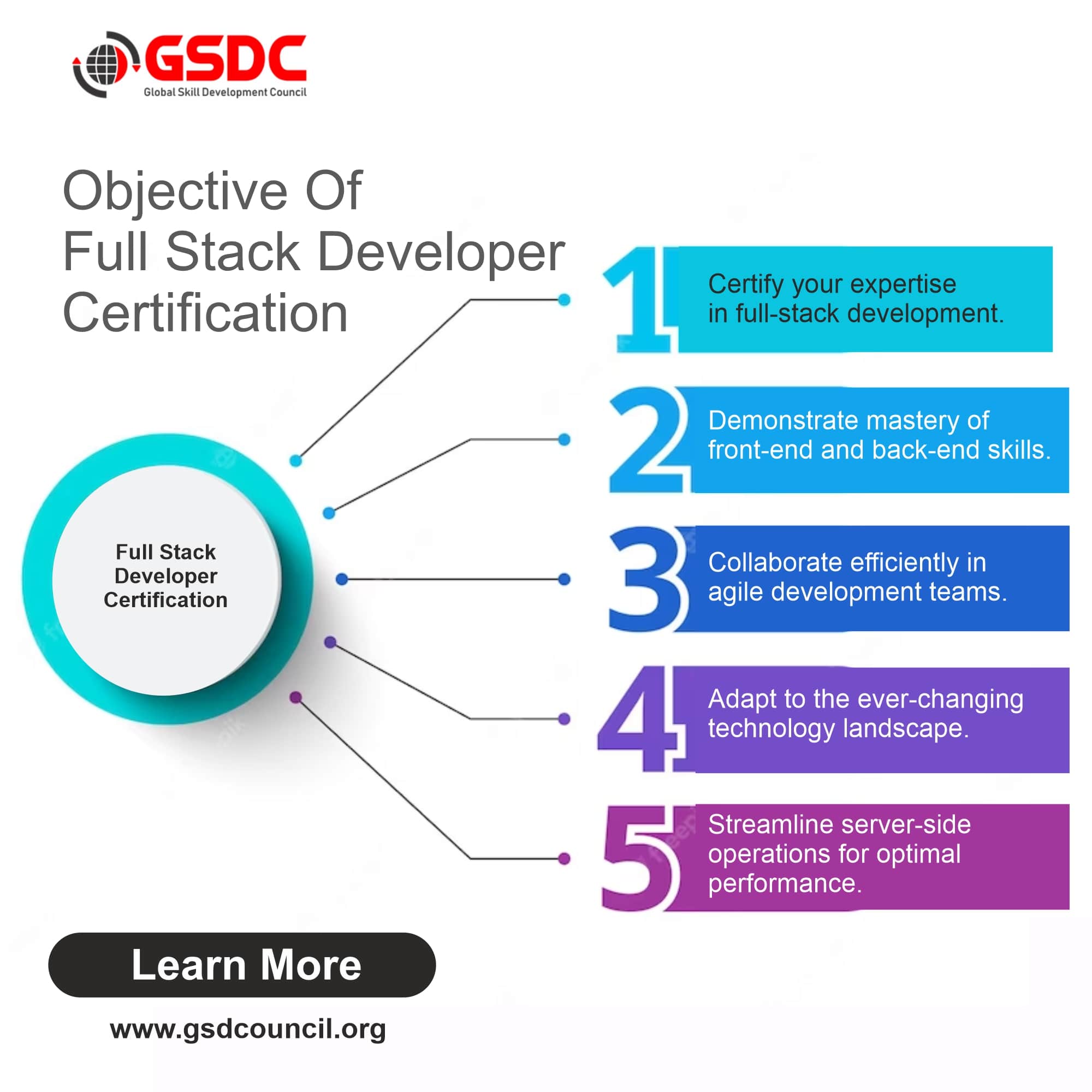
CFSD Certification empowers experts to address the ever-changing requisites of the technology sector.
Full Stack Developer Certification is designed to validate a developer's ability to work with various technologies, frameworks, and tools
Full Stack Certification can enhance a developer's job prospects, career advancement opportunities, and overall credibility in the field of web development.
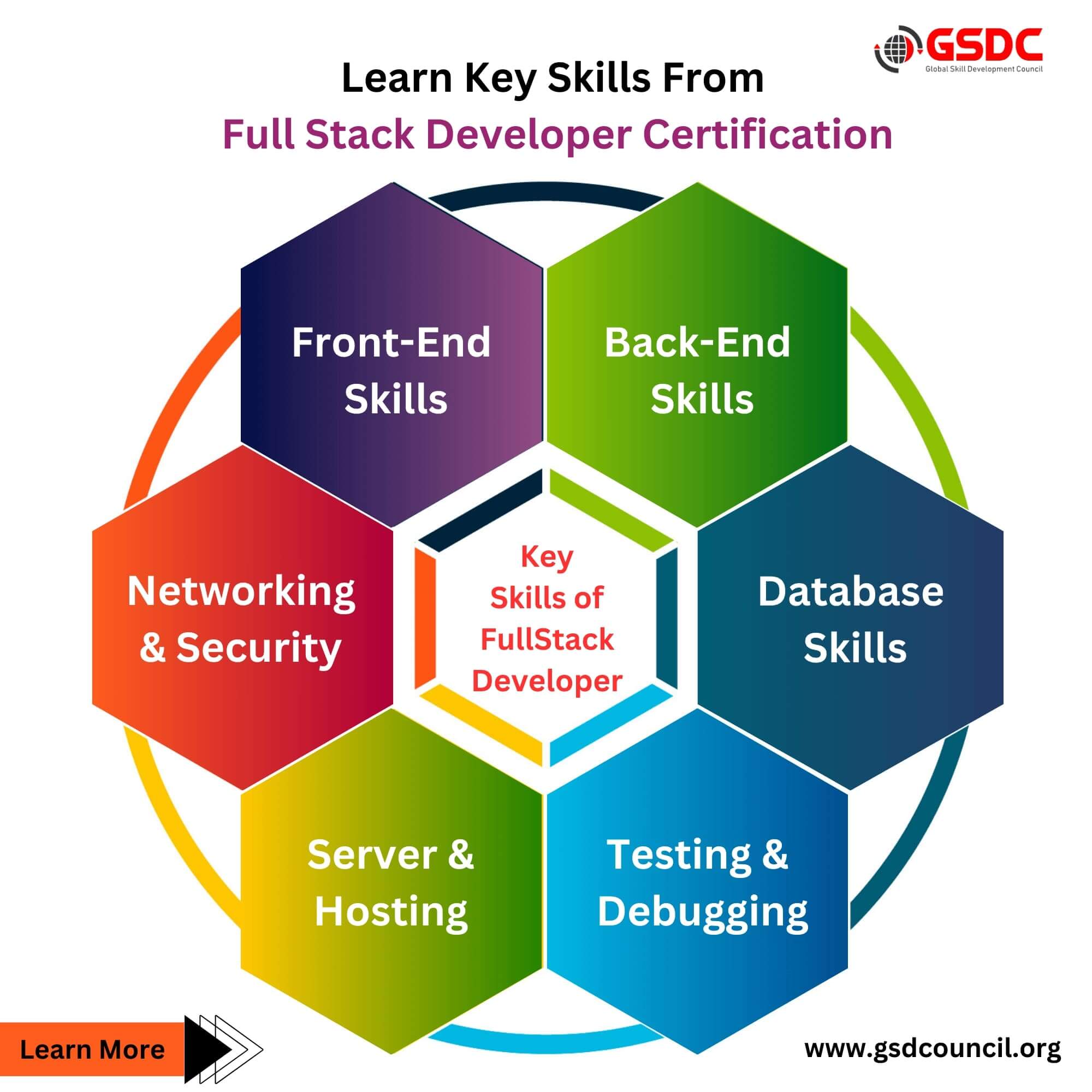
Here's a more detailed explanation of each of the key skills of a Full Stack Development Certification:-
1. Front-End Skills: Front-end skills involve creating the visual and interactive aspects of a website or application that users interact with directly.
This includes:
- HTML (Hypertext Markup Language): Building the structure of web pages using elements like headings, paragraphs, lists, and links.
- CSS (Cascading Style Sheets): Styling and formatting web pages to create visually appealing layouts and designs.
- JavaScript: Adding interactivity and dynamic behavior to web pages, such as animations, form validation, and responding to user actions.
- Responsive Design: Designing web interfaces that adapt smoothly to various screen sizes and devices, ensuring a consistent user experience.
2. Back-End Skills: Back-end skills involve managing the server-side components and logic of a web application that handle data processing, business logic, and server communication.
This includes:
- Programming Languages: Learning languages like Python, Java, Ruby, or Node.js to build server-side functionalities.
- Server Management: Setting up and configuring web servers, handling server-side scripting for dynamic content.
- API Development: Creating Application Programming Interfaces (APIs) to facilitate communication between the front end and back end.
- Database Interaction: Connecting to databases, performing database operations like creating, reading, updating, and deleting data.
3. Database Skills: Database skills revolve around managing and storing data efficiently, ensuring its accessibility and security.
This includes:
- Database Design: Designing well-structured databases that organize data effectively while minimizing redundancy.
- SQL (Structured Query Language): Writing and executing queries to retrieve, modify, and manage data in relational databases.
- Data Modeling: Understanding data relationships and structuring data to fit the needs of the application.
- NoSQL Databases: Exploring non-relational databases like MongoDB, which store data in formats like documents or key-value pairs.
4. Testing & Debugging: Testing and debugging are essential to ensure that the application functions as intended and to identify and fix issues.
This includes:
- Unit Testing: Writing and running tests on individual components of the application to verify their correctness.
- Debugging Techniques: Using tools and methodologies to locate and fix errors and bugs in the code.
- Testing Frameworks: Familiarizing yourself with testing libraries and frameworks to automate testing procedures.
5. Server & Hosting: Server and hosting skills involve managing the infrastructure that the application runs on, ensuring its availability and performance.
This includes:
- Cloud Platforms: Learning to deploy and manage applications on cloud platforms like AWS, Azure, or Heroku.
- DevOps Principles: Understanding basic DevOps practices for automating deployment processes and ensuring collaboration between development and operations teams.
- Server Scaling: Exploring strategies for scaling applications to accommodate increased traffic and demand.
6. Networking and Security: Networking and security skills focus on maintaining the application's communication and protecting it from vulnerabilities.
This includes:
- Web Protocols: Understanding how HTTP, HTTPS, and other protocols enable communication between clients and servers.
- Web Security Principles: Learning about security best practices, like protecting against common vulnerabilities such as Cross-Site Scripting (XSS) and Cross-Site Request Forgery (CSRF).
- Secure API Development: Implementing security measures in API design to protect sensitive data and prevent unauthorized access.
Completing a Certified Full Stack Developer Certification program will equip you with these skills, enabling you to effectively build and manage both the front-end and back-end components of web applications while ensuring their security and functionality.
For more info visit at - https://www.gsdcouncil.org/certified-full-stack-developer
For more inquiry call: +91 7796699663