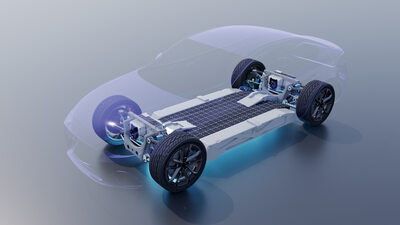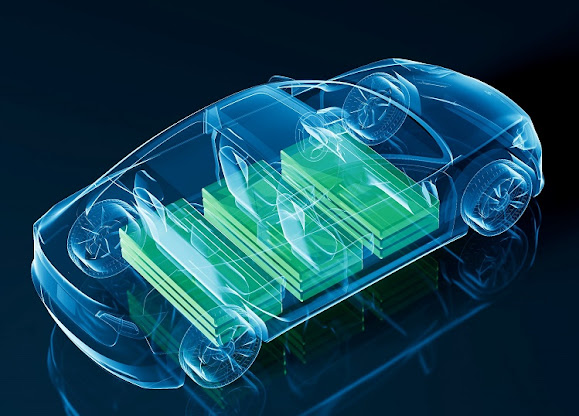


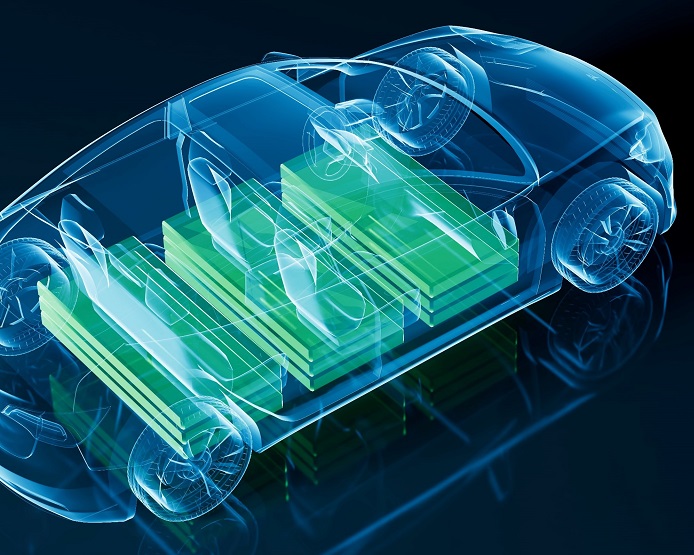
Electric vehicles (EVs) are changing the landscape of the global automotive industry. Automotive manufacturers, as well as policymakers, are prospering in their focus, goals, and actions related to electric vehicles. EV technologies in the form of battery EVs and plug-in hybrid EVs have gained significant traction to achieve environmental and societal objectives. EVs are two to four times more efficient compared to conventional internal combustion engine (ICE) models. They can drastically reduce the over-reliance on fuel-based vehicles and significantly decrease greenhouse emission levels. Moreover, EVs are very well-suited to resolve the rising air pollution issues owing to zero-tailpipe emissions. Rapid advancement in EV battery technology is likely to facilitate the smooth transition to clean energy in the near future.
The global electric vehicle insulation market is projected to reach $30.90 billion by 2032 from $2.96 billion in 2022, growing at a CAGR of 27.83% during the forecast period 2023-2032. The growth in the electric vehicle insulation market is attributable to the ongoing demand for innovative, lightweight, and efficient insulation materials for electric vehicles.
Rising concerns over environmental awakening, increasing carbon dioxide emission levels, stringent government regulations, and increasing oil prices are expected to augment the growth of the global market for electric vehicles (EVs) in the coming years. The EV industry will sustain and increase its growth manifold due to the progress in battery technology, which unequivocally would increase the performance of batteries, constrict the charging time of batteries, and reduce the overall cost of battery modules.
The application for insulation materials for electric vehicles is primarily divided into four areas of an EV that include passenger compartment, rear compartment, under the hood and battery pack, and exterior. The application of electric vehicle insulation is dominant in the passenger compartment. This is due to multiple locations inside a passenger cabin where insulating materials are applied, including inside door panels, underneath floors, on roofs, on seats, and on dashboards. The fact that a large quantity of insulation materials is needed to cover the insides of a passenger vehicle cabin leads to the high usage of insulation materials for this application. The amount of insulation material used inside a passenger vehicle varies according to vehicle type (passenger vehicle or commercial vehicle), electric vehicle manufacturer’s insulation needs, and model of various electric vehicles.
The electric vehicle insulation market encompasses three major types of electric vehicles, which are hybrid electric vehicles (HEVs), plug-in hybrid electric vehicles (PHEVs), and battery electric vehicles (BEVs). These vehicle types are present in the form of both passenger and commercial vehicles. While HEV and PHEV models have been present in the market for many years, the development of battery technology, along with government norms for increased vehicle efficiency, has led to an increase in the adoption of BEVs as they are powered solely by the battery systems in the vehicle. The sales of BEVs are anticipated to increase as compared to HEVs and PHEVs due to the decreasing cost of such pure electric vehicles and the development of EV infrastructure in various countries. The rise of BEVs makes it more crucial for automotive OEMs to ensure that electric vehicle insulation can optimize the thermal management and driving system.
Thermal Insulation Type Widely Used in Electric Vehicle Insulation Market
The most widely used insulation type is thermal insulation. Thermal insulation plays a crucial role in the design and performance of electric vehicles. With the increasing adoption of EVs, effective thermal management has become essential for ensuring optimal efficiency, range, and longevity of vehicle components, especially battery packs. In an electric vehicle, various components generate heat, including the battery, electric motor, power electronics, and charging systems. Excessive heat can lead to reduced battery performance, accelerated degradation, and even safety concerns. Therefore, implementing effective thermal insulation is paramount to regulating temperatures and maintaining optimal operating conditions.
China Expected to Dominate the Electric Vehicle Insulation Market
The demand for electric vehicle insulation materials varies according to various geographical regions. The electric vehicle insulation market holds a prominent share in various countries of North America, Asia-Pacific and Japan, and China. China is indeed expected to dominate the electric vehicle insulation market in the coming years. The region has witnessed significant growth in the electric vehicle industry, driven by supportive government policies, increasing environmental concerns, and advancements in technology.
Empower Your Strategies: Receive Your Free Sample on Electric Vehicle Insulation Market
Competitive Landscape
To gain market share, major oil and gas companies and lubricant manufacturers are making various kinds of strategic moves. Some key highlights from BIS Research w.r.t. manufacturers of the electric vehicle insulation market are:
- Adler Pelzer, Autoneum, Armacell, Toyota Boshoku, and Sika Automotive are some of the leading players globally in the electric vehicle insulation market.
- CYG Tefa, Pritex Limited, and Tecman Specialty Materials are some of the emerging private companies that have remained in the limelight for the last few years in the field of the electric vehicle insulation market.
- Some of the strategies adopted by electric vehicle insulation material manufacturers are new product launches, business expansions, mergers and acquisitions, partnerships, and collaborations.
- New product launches have been the most preferred strategy in the market.
- Apart from product launches, expanding business and sealing new partnerships and collaborations are the other strategies being implemented.
- Most of the acoustic and thermal insulation material manufacturers have numerous tie-ups with various electric vehicle OEMs and Tier-1 suppliers. The industry landscape is competitive because of the large number of players in the market. Therefore, innovation and development have been the key factors for large-scale growth in this market.
- To increase their overall global footprint, insulation material manufacturers are expanding their businesses and are also entering into strategic partnerships to increase their sales through newer electric vehicle models.