





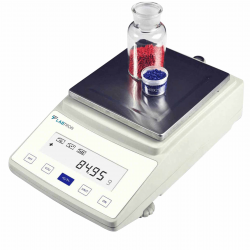
An electronic balance, also known as a digital balance or electronic weighing scale, is a precision measuring instrument used to determine the mass or weight of objects with a high degree of accuracy. It is commonly found in various scientific, industrial, and commercial settings where precise measurements are essential. Here is a description of the key components and features of an electronic balance:
Load Cell: At the heart of an electronic balance is a load cell, which is a sensor that measures the force exerted on it when an object is placed on the balance pan. The load cell converts this force into an electrical signal that is proportional to the mass of the object.
Display Unit: Electronic balances typically have a digital display unit that shows the measured weight in units such as grams (g), milligrams (mg), kilograms (kg), or other units depending on the specific model. The digital display provides a clear and easy-to-read readout of the weight.
Tare Function: Most electronic balances have a tare function that allows you to zero out the weight of any container or additional items placed on the balance pan. This is useful when you want to measure only the net weight of the substance being weighed.
Calibration: Electronic balances require periodic calibration to ensure accuracy. Calibration involves applying known weights to the balance and adjusting its settings to match the expected measurements. Many electronic balances have an internal calibration feature for convenience.
Pan or Platform: The balance features a flat, level surface known as the pan or platform, where you place the object to be weighed. It should be clean and free from debris to prevent measurement errors.
Housing: The balance is enclosed in a protective housing or case to shield it from external influences such as air currents and vibrations, which can affect measurement accuracy.
Power Source: Electronic balances are typically powered by electricity through a power cord and adapter. Some portable models may use batteries for convenience when used in locations without a power source.
Weighing Modes: Electronic balances often offer various weighing modes to accommodate different measurement requirements. Common modes include standard weighing, counting, percentage weighing, and more advanced options for specialized applications.
Connectivity: Some modern electronic balances come equipped with connectivity options such as USB, Bluetooth, or RS-232 ports, allowing data to be transferred to computers or other devices for further analysis and record-keeping.
Capacity and Precision: Electronic balances come in a range of capacities and precision levels, with capacities ranging from a few grams to several kilograms or more. Precision is typically specified as the balance's readability, which indicates the smallest increment in weight that can be accurately measured.
Electronic balances are widely used in laboratories or scientific research, in pharmaceutical and chemical industries, in food production and quality control, and in various manufacturing processes where precise measurements are essential. They offer a significant advantage over traditional mechanical balances due to their speed, accuracy, and ease of use.
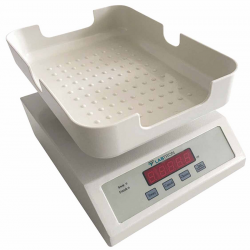
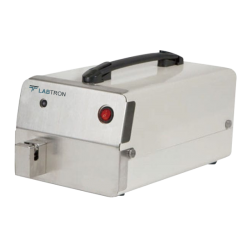

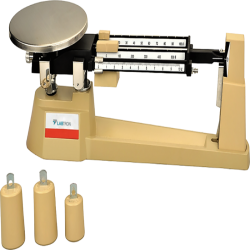

They are highly sensitive instruments with a readability range of 0.1mg – 0.01mg.
Furthermore, they have a draft shield or weighing chamber.
Thus, even the slightest hint of a breeze can have a major impact on the results.
Therefore, if you are using these balances you should make sure that you use them in a dedicated room with little or no disturbances inside where you are working.
Another useful function that these devices offer the users is that of dynamic weighing.
With this function, it becomes really easy for lab professionals to weigh unstable samples such as liquids, small animals, or insects.
