


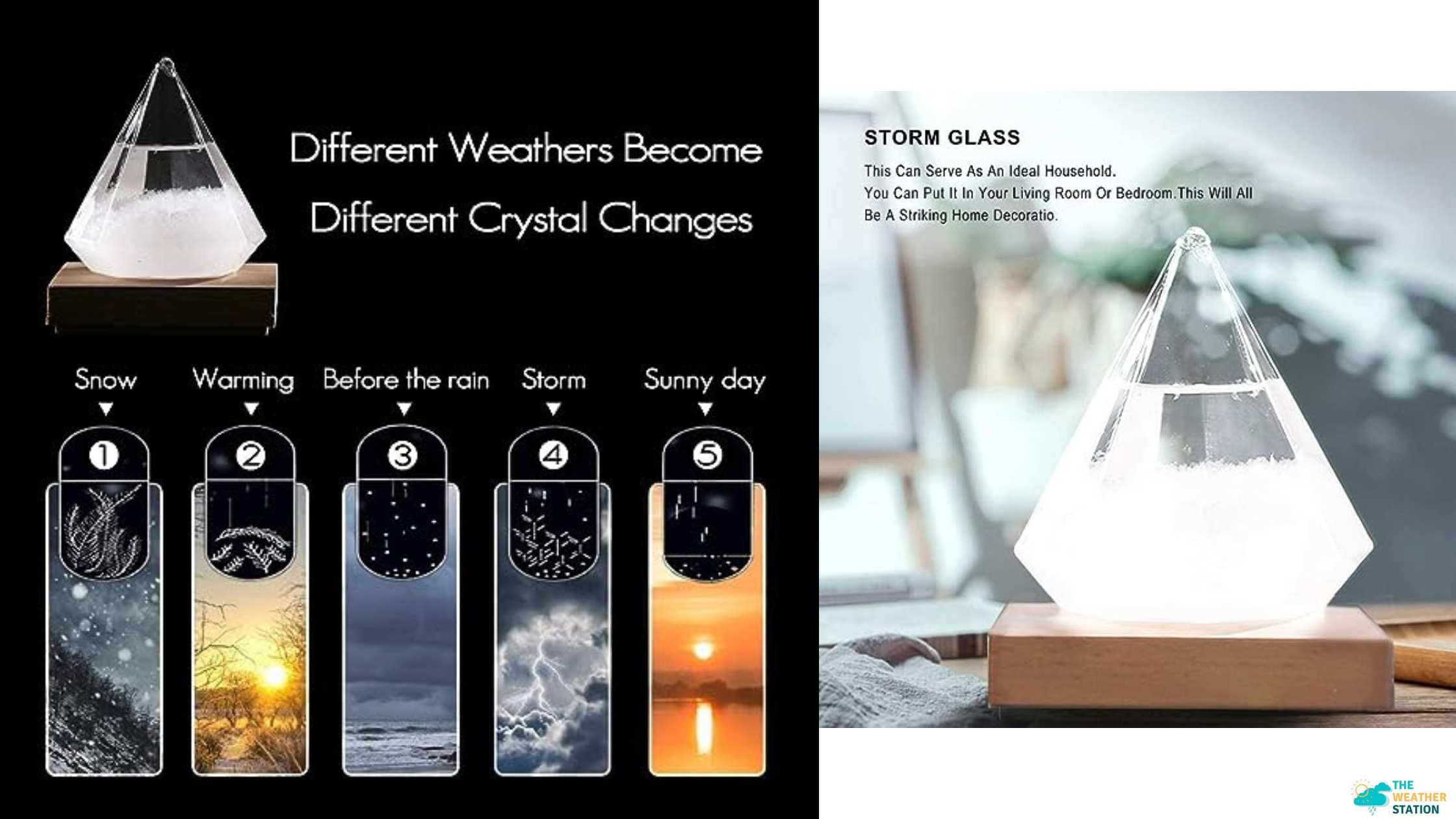
Storm glass, with its intriguing ability to predict weather changes, has fascinated weather enthusiasts for centuries. This beautiful glass container filled with liquid and crystals responds to atmospheric variations in a unique way, offering hints about impending weather conditions. In this article, we'll explore how storm glass works and how it can be used for weather forecasting.
The Science Behind Storm Glass:
Thermodynamic Principles: Storm glass operates based on thermodynamic principles, which involve the relationship between temperature, pressure, and the solubility of substances in liquids.
Temperature and Pressure Changes: Changes in atmospheric temperature and pressure cause the liquid inside the storm glass to expand or contract, influencing the formation and dissolution of crystals within the glass.
Crystal Formation Patterns:
Predictive Patterns: Storm glass crystals form distinctive patterns that correspond to different weather conditions. These patterns include stars, needles, flakes, or cloudy formations.
Temperature and Humidity: Factors such as temperature and humidity affect the rate of crystal formation and dissolution, leading to variations in the glass's appearance.
Interpreting Weather Forecasts:
Clear Liquid: When the liquid in the storm glass is clear, it typically indicates fair or sunny weather with stable atmospheric conditions.
Stars or Needles: The formation of star-shaped or needle-like crystals suggests the likelihood of frost or snow, accompanied by colder temperatures.
Flakes: Flakes or cloudy crystals in the glass are associated with overcast skies, potential precipitation, or unsettled weather conditions.
Hazy Appearance: A hazy or cloudy appearance of the liquid can indicate the possibility of thunderstorms or high humidity.
Influence of Local Conditions:
Local Weather: It's important to note that storm glass forecasts are influenced by local atmospheric conditions and might not be as accurate as modern weather instruments or forecasts.
Changes Over Time: Storm glass can take several hours or even days to respond to weather changes, so it might not provide immediate predictions.
Historical and Decorative Appeal:
Historical Relic: Storm glass was used historically by sailors and naturalists as a rudimentary weather instrument aboard ships. Today, it serves as a decorative conversation piece in homes.
Artistic Aesthetics: The ever-changing patterns and shapes of storm glass crystals have an artistic appeal, making it a unique addition to interior decor.
Educational Tool:
Science Education: Storm glass can be a fun and educational tool for teaching children and students about the principles of thermodynamics and weather patterns.
Observational Skills: Interpreting storm glass forecasts encourages the development of observational skills and an interest in weather science.
Limitations and Modern Alternatives:
Accuracy: Storm glass is not as precise as modern weather forecasting instruments, so it's best used for general weather trends rather than specific predictions.
Supplementary Tool: Many weather enthusiasts use storm glass as a supplementary tool alongside more accurate forecasting methods.
In conclusion, storm glass provides a captivating and artistic way to observe and predict weather patterns. While it may not replace modern weather forecasting technology, it adds an element of intrigue and aesthetics to weather observation. Whether displayed as a decorative item or used for educational purposes, storm glass remains a fascinating relic of historical weather forecasting techniques that continues to captivate curious minds today.