Digital Product Development
Digital product development refers to the process of creating software or digital solutions to meet specific business needs. It involves designing, building, and testing digital products such as mobile applications, websites, and software platforms. In today's fast-paced digital age, organizations are constantly looking for ways to improve their product development processes and deliver high-quality products to their customers.
The Need for Enhancements
As the digital landscape continues to evolve, the expectations of users are also increasing. Customers expect seamless user experiences, personalized recommendations, and efficient problem-solving capabilities from the digital products they use. To meet these demands, organizations need to continuously enhance their digital products to stay relevant and competitive in the market.
However, enhancing digital products can be a complex task. It requires a deep understanding of user behavior, market trends, and technological advancements. This is where machine learning comes into play.
Machine Learning Applications
Machine learning is a subset of artificial intelligence that enables computers to learn from data and make predictions or decisions without being explicitly programmed. It has become an essential tool for enhancing digital product development in several ways:
1. User Behavior Analysis
Machine learning algorithms can analyze and interpret large volumes of user data to gain insights into user behavior patterns. By understanding how users interact with a digital product, developers can identify areas for improvement and enhance the user experience. For example, by analyzing user clickstream data, machine learning algorithms can identify navigation bottlenecks or areas where users drop off, allowing developers to optimize the product's usability.
2. Personalized Recommendations
Machine learning algorithms can also be used to provide personalized recommendations to users based on their preferences and behavior. By analyzing user data such as past purchases, browsing history, and demographic information, algorithms can suggest relevant products or content, increasing user engagement and satisfaction. This level of personalization can significantly enhance the user experience and improve customer retention.
3. Predictive Analytics
Machine learning algorithms excel at making predictions based on historical data. In the context of digital product development, predictive analytics can be used to forecast user demand, identify emerging market trends, and optimize resource allocation. By leveraging machine learning, organizations can make data-driven decisions that lead to better product outcomes and more efficient development processes.
4. Automated Testing and Quality Assurance
Testing and quality assurance are critical stages in digital product development. Machine learning algorithms can help streamline this process by automating the detection of bugs, vulnerabilities, or performance bottlenecks. By training algorithms on historical bug reports and code reviews, developers can build models that identify potential issues automatically. This saves time and resources, allowing developers to focus on enhancing the product rather than spending hours on manual testing.
5. Natural Language Processing
Natural Language Processing (NLP) is a branch of machine learning that focuses on the interaction between computers and human language. NLP algorithms can be utilized to enhance digital product development by enabling products to understand and generate human language. This can result in improved usability and accessibility, as products can interpret user queries, provide informative responses, and even automate certain tasks through voice commands.
Conclusion
Machine learning offers immense advantages in enhancing digital product development. By leveraging machine learning applications such as user behavior analysis, personalized recommendations, predictive analytics, automated testing, and natural language processing, organizations can create digital products that exceed customer expectations, improve user experiences, and stay ahead of the competition in the ever-evolving digital landscape.
As technology continues to advance, the role of machine learning in digital product development will only become more prominent. Organizations that embrace these advancements and incorporate machine learning into their development processes will be well-positioned to deliver successful and innovative digital products to their customers.

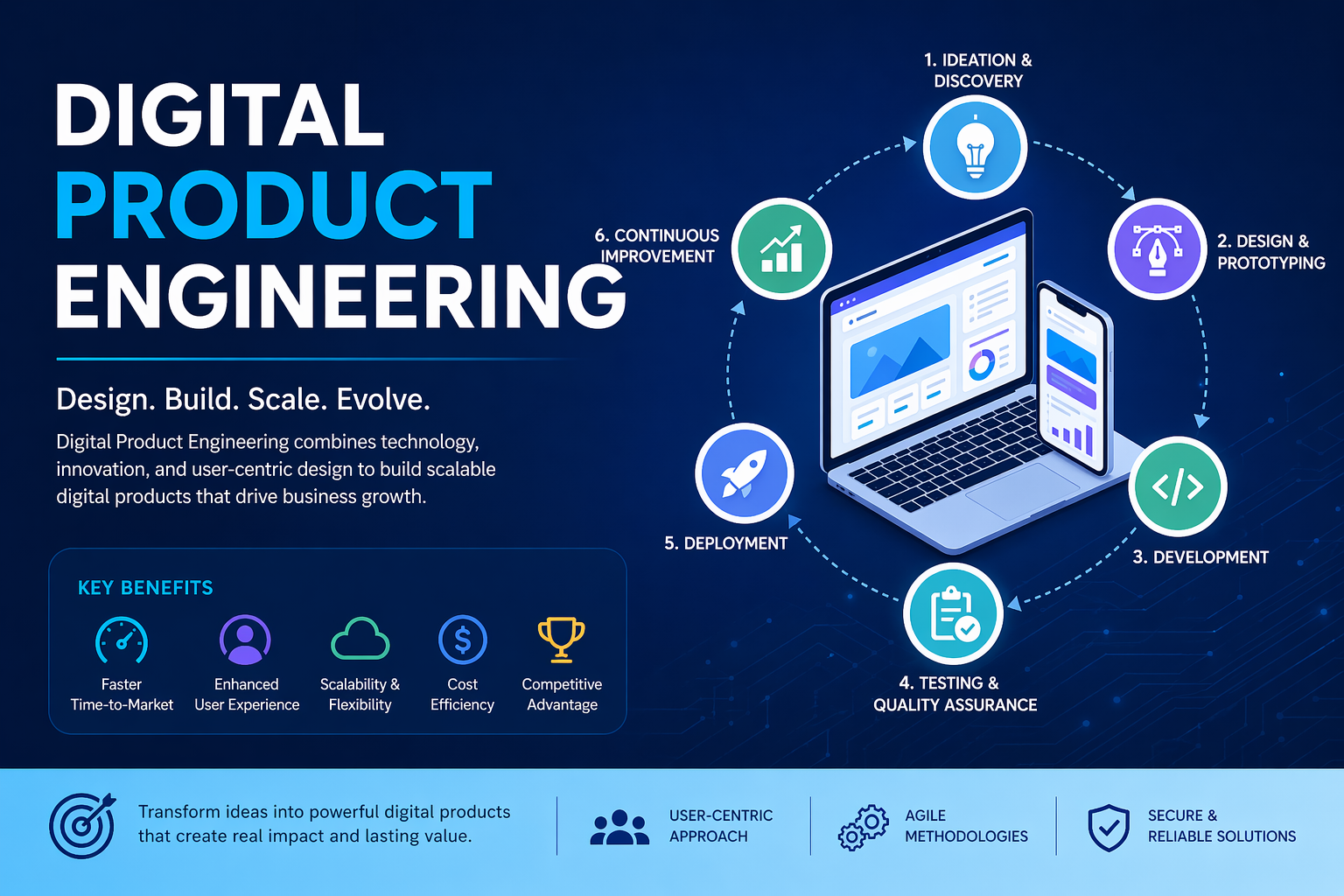
In today’s fast-evolving digital landscape, businesses are constantly looking for ways to innovate, scale, and deliver exceptional user experiences. This is where Digital Product Engineering plays