

Introduction
Welcome to the world of DevOps! If you're a developer, an IT professional, or just someone looking to understand DevOps, you're in the right place. DevOps is all about improving collaboration between development and IT operations to deliver high-quality software faster. In this tutorial, we'll break down the key concepts and practices of DevOps in plain language, without the corporate jargon, and with a focus on practicality.
1. What Is DevOps?
DevOps, short for Development and Operations, is a set of practices that aim to automate and integrate the processes of software development and IT operations. The ultimate goal is to shorten the software development life cycle and provide continuous delivery of value to the end-users.
In simpler terms, DevOps is like a bridge that connects developers and IT operations, allowing for smoother communication and faster software delivery. It's not just about tools; it's a cultural and collaborative shift.
2. The DevOps Culture
DevOps tutorial isn't just about tools and technology; it's a culture and mindset shift. It's about breaking down the silos that often exist between development and operations teams.
So, how do you embrace the DevOps culture?
Collaboration: Encourage developers and operations to work closely together, share knowledge, and build empathy for each other's roles.
Automation: Automate repetitive tasks and processes to reduce manual errors and speed up deployment.
Feedback: Continuously collect feedback from all stakeholders to identify areas of improvement.
3. DevOps Key Practices
1. Continuous Integration (CI): CI is the practice of frequently integrating code changes into a shared repository. Each integration triggers automated tests, ensuring that the codebase remains stable.
2. Continuous Delivery (CD): CD extends CI by automatically deploying code to production, staging, or other environments after passing tests. It's all about making the release process seamless and reliable.
3. Version Control: Use version control systems like Git to manage and track changes in your codebase. This allows for collaboration and history tracking.
4. Infrastructure as Code (IaC): Define and manage infrastructure in code, making it easier to replicate and scale your environments.
5. Monitoring and Logging: Keep an eye on your applications and infrastructure with monitoring tools. Logs are your friend when diagnosing issues.
4. DevOps Tools
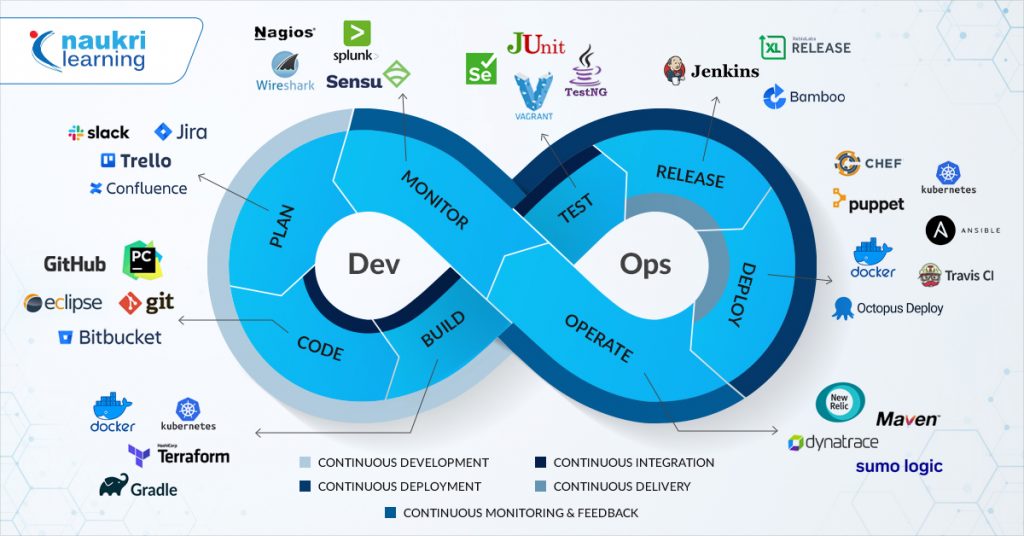
Let's talk tools, but remember, tools alone won't get you there. Here are some common tools used in DevOps:
Git: For version control, code management, and collaboration.
Jenkins: An open-source automation server for building, testing, and deploying code.
Docker: For containerization, which packages applications and their dependencies.
Kubernetes: A container orchestration platform for managing containerized applications.
Ansible: An open-source automation tool for configuration management and application deployment.
Terraform: A tool for building, changing, and versioning infrastructure efficiently.
Monitoring Tools: Various tools like Prometheus, Grafana, and ELK stack for tracking system performance and application behavior.
5. A Simple DevOps Workflow
Here's a straightforward, spartan DevOps workflow to get you started:
1. Version Control: Start with a Git repository to manage your code.
2. Continuous Integration (CI): Set up automated tests that run every time code is pushed to the repository.
3. Containerization: Use Docker to containerize your application.
4. Infrastructure as Code (IaC): Define your infrastructure in code using tools like Terraform.
5. Continuous Delivery (CD): Automate the deployment process to your staging environment when changes pass CI.
6. Monitoring and Logging: Implement basic monitoring and logging to keep an eye on your application's health.
7. Feedback Loop: Collect feedback from users and stakeholders to iterate and improve.
6. Common Challenges
While DevOps offers many benefits, it also comes with its fair share of challenges:
Cultural Resistance: Breaking down silos and changing the way teams work can be met with resistance.
Complexity: Managing DevOps pipelines and tools can become complex, especially for large projects.
Security Concerns: Automation and integration can introduce security risks if not properly managed.
Tool Overload: There are so many DevOps tools available that it's easy to get overwhelmed. Choose wisely based on your needs.
7. Learning Resources
If you're eager to dive deeper into DevOps, here are some recommended resources:
Books: "The Phoenix Project" by Gene Kim, Kevin Behr, and George Spafford and "DevOps Handbook" by Gene Kim, Jez Humble, Patrick Debois, and John Willis.
Online Courses: Platforms like Coursera, edX, and Udemy offer DevOps courses.
Community: Join DevOps-related forums, meetups, and social media groups to learn from others and share your experiences.
Certifications: Consider certifications like AWS Certified DevOps Engineer, Certified Kubernetes Administrator (CKA), or Docker Certified Associate.
Conclusion
DevOps is all about collaboration, automation, and a cultural shift. It's not a silver bullet, but it can significantly improve your software development and delivery process. Start small, embrace the culture, and gradually implement DevOps practices in your projects. The journey may be challenging, but the rewards are worth it. So, are you ready to streamline your workflow and become a DevOps aficionado? Get started today!