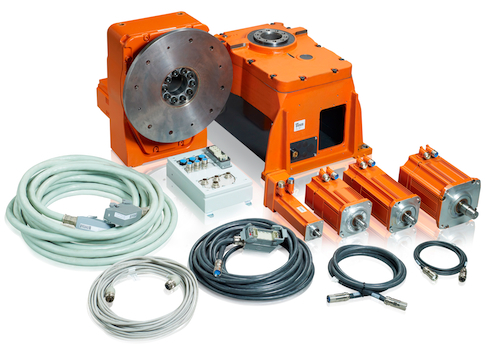



Robotic Smart Motors are specialized electric motors equipped with integrated sensors, controls, and communication capabilities. These motors are designed for use in robotics and automation applications, offering precise and efficient motion control. They can provide real-time feedback on position, speed, and torque, allowing for advanced control and automation. Robotic Smart Motors are instrumental in improving the accuracy and responsiveness of robotic systems, enabling tasks like precise positioning, pick-and-place operations, and collaborative robotics. They are a key component in the development of intelligent and adaptable robotic systems that can interact with their environment and perform complex tasks with a high degree of precision.
The global robotic smart motors market is estimated to reach $8.04 billion in 2033 from $4.61 billion in 2022, at a growth rate of 5.31% during the forecast period 2023-2033. One of the primary driving forces behind the market's expansion is the burgeoning demand for automation across diverse sectors. From automotive manufacturing and healthcare to logistics and even in people’s daily lives, smart motors are playing a pivotal role. With the advancements in artificial intelligence (AI) and machine learning (ML), robotic systems equipped with smart motors can continuously improve their performance.
The advancement of robotic smart motors has been a catalyst for the creation of highly sophisticated control algorithms. These algorithms draw upon advanced principles rooted in fields such as machine learning and artificial intelligence, facilitating robots in acquiring insights from their interactions and surroundings. This intrinsic ability to learn and adapt not only improves a robot's performance but also enhances its capacity to effectively tackle intricate and unstructured situations, offering significant value in various business applications.
24V Segment to Dominate the Global Robotic Smart Motors Market (by Voltage)
The global robotic smart motors market (by voltage) is expected to generate huge revenues from the 24V segment, followed by 12V. T The global robotic smart motors market is expected to be dominated by the 24V voltage in 2023. The 24V is expected to grow at a CAGR of 5.34% during the forecast period 2023-2033. One of the primary reasons behind this growth is the widespread adoption of 24V motors across various industries and applications. Their voltage rating aligns well with the power requirements of many automated systems and devices, making them versatile and compatible with a broad range of equipment. Additionally, 24V motors offer a balance between efficiency and power, making themselves suitable for tasks that require both precision and strength.
Request A Free Detailed Sample on Robotic Smart Motors Market!
Robotic Smart Motors by Application and Product
Robotic smart motors Industry covers the top robotic smart motors and its component manufacturers across the globe. This study has segmented the global robotic smart motors market based on application and product. Robotic smart motors manufacturers focus on developing advanced smart motors and incorporating cutting-edge technologies to enhance control, efficiency, and connectivity within automated systems. However, a few challenges continue to affect the market, including concerns related to data security and privacy, as smart motors collect and transmit sensitive information, demanding robust cybersecurity measures to safeguard against potential threats.
North America to Dominate Global Robotic Smart Motors Market (by Region)
North America is expected to witness the highest growth during the forecast period 2023-2033. The increasing adoption of automation and robotics in various sectors, including manufacturing, logistics, and healthcare, is driving the demand for advanced robotic smart motors. Additionally, North America's commitment to technological innovation and research and development ensures a continuous stream of cutting-edge solutions, further fueling the growth of the smart motor market in the region.
Competitive Landscape
The competitive landscape of the global robotic smart motors market consists of several organic and inorganic strategies followed by the key players to increase their market share. The strategies include product innovations, contracts, partnerships, acquisitions, and business expansions, among others.
Some of the key players in the global robotic smart motors market include ABB, Kollmorgen, Moog Animatics, Rockwell Automation, Fuji Electric Co. Ltd, and NIDEC CORPORATION. These companies are aiming for a wide range of partnerships, collaborations, agreements, and contracts to expand their operations and increase their market presence globally to generate revenues and attract new customers.
Key Questions Answered in this Report:
- What are the futuristic trends in the global robotic smart motors market, and how is the market expected to change over the forecast period 2023-2033?
- What are the key drivers and challenges faced by the companies that are currently working in the global robotic smart motors market?
- How is the market expected to grow during the forecast period 2023-2033?
- What are the opportunities for companies to expand their businesses in the robotic smart motors market?
- Which region is expected to be leading the global robotic smart motors market by 2033?\
- What are the key developmental strategies implemented by the key players to sustain in this highly competitive market?
- What is the current and future revenue scenario of the global robotic smart motors market?