


Credit: Media India Group
India, with its diverse cultural heritage, boasts a rich tapestry of Indian motifs that have transcended centuries, embodying the essence of its vibrant traditions. These motifs, intricately woven into the fabric of Indian art and craft, showcase the country's history, mythology, and cultural amalgamation.
Peacock Motif:
- Symbolism: The peacock, revered in Hindu mythology, symbolizes grace, beauty, and elegance. Its iridescent plumage finds its way into various art forms, textiles, and jewelry, epitomizing aesthetic brilliance.
- Artistic Expression: Peacock motifs adorn sarees, paintings, and sculptures. Their depiction in various dance forms, especially Bharatanatyam, adds a dynamic flair to the artistic narrative.
Lotus Motif:
- Spiritual Significance: The lotus, emerging pure from muddy waters, holds profound spiritual symbolism in Indian religions. Representing purity and divine beauty, it graces myriad art forms, from ancient architecture to modern designs.
- Architectural Marvels: Lotus motifs embellish temples like the Lotus Temple in Delhi, blending spirituality with architectural grandeur. The motif's symmetry and elegance evoke a sense of tranquility.
Paisley Motif:
- Timeless Elegance: The paisley, or 'ambi,' motif is a timeless element in Indian textiles. Originating from Persian art, it found a home in Indian shawls, sarees, and carpets during the Mughal era.
- Cultural Fusion: The paisley motif beautifully represents India's history of cultural assimilation. Its adaptation into Indian art reflects the harmonious blend of influences that characterize the nation's artistic identity.
Elephant Motif:
- Symbol of Strength: Elephants hold cultural significance in India, symbolizing strength, wisdom, and auspiciousness. Depictions of elephants, often adorned with intricate regalia, grace various art forms.
- Royal Iconography: In Indian history, elephants were integral to royal processions. Today, elephant motifs can be found in jewelry, textiles, and even modern graphic design, representing a blend of tradition and contemporary aesthetics.
Mango Motif:
- Cultural Abundance: The mango, or 'aam,' is celebrated in Indian culture as a symbol of fertility and prosperity. Its representation in art and design echoes the abundance of Indian traditions.
- Sari Borders and Beyond: The mango motif often embellishes the borders of traditional sarees. Its adaptability extends to various forms, from intricate meenakari work to contemporary digital art.
Mandala Motif:
- Cosmic Harmony: Mandala, meaning 'circle' in Sanskrit, is a geometric motif symbolizing the universe's cosmic order. It finds expression in Hindu, Buddhist, and Jain art, reflecting spiritual harmony.
- Art Therapy: Modern interpretations of mandalas go beyond religious contexts. They have become therapeutic tools, with intricate designs used in coloring books and as aids for meditation.

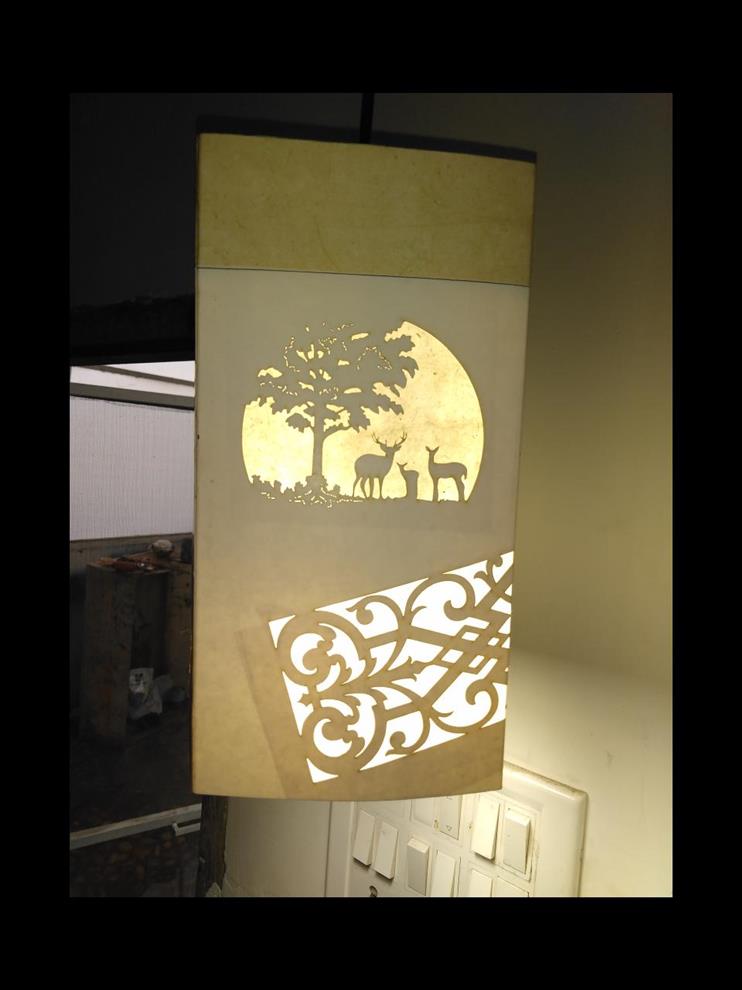
Artists and artisans embellish the design industry.
In fact, it could be said that the design industry is not quite complete without them.
Whether as independent works of art and crafts, or in using the specific skill in the built environment, their creations add value to the human living and working environments.
Welcome to The Future of Design – a place where art and design meet and are taken to the world beyond… Artists and artisans can register in any (one or more) of the categories as applicable.
They can create their own Profile and upload images (up to 400) of their work.You can visit TFOD for excellent design for Motifs Art.
For details email us at support@tfod.in
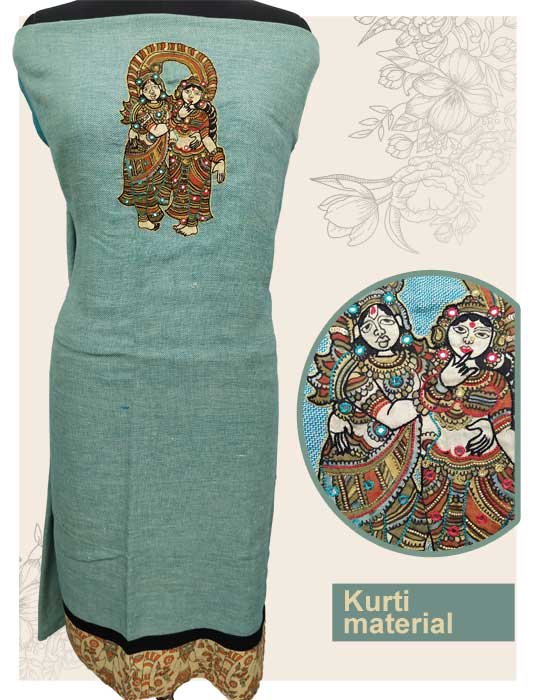
Hand block print is the most famous and trendyskill utilized in making striking designs on ethnic and traditional fabrics.
Basically, it is far-reaching in Indian states but Gujarat and Rajasthan immensely adopted this fine art.Hand Block Printing in GujaratKutch in Gujarat is popular for implementing numerous techniques to design motifs and several patterns.
A highly executed technique known as “Ajrakh print” has multiple shades like blue, white, red, and black to print appealing structures.Hand Block Printing in RajasthanSanganer and Bagru in Rajasthan still reckoned as rich places comprising different block print blueprints.
The workers’ society comes through the ancient way to make traditional designs with a huge visual impression.
The best kind of prints called “Dabu” is providing the ability of resist-printing on fabric.Significance of Hand Block Printing in IndiaIndia is popular for its cultural and traditionalfashion; therefore, the magic of Indian hand block print is spreading over several regions of the world.The most important thing about hand block print is that its execution can be accessed anywhere as this art is available in an economical range.Not just forrich artisans but also a common person can try this art as it is affordable.The techniques that are utilized to make prints are vibrant, so we can observe versatility in this art.A beautifulrange of colours can be utilized in hand block printing.
Thus, it offers a myriad ofoptions so that the consumers can put their preference according to the requirement.Cotton clothes are highly in demand during the summer season.
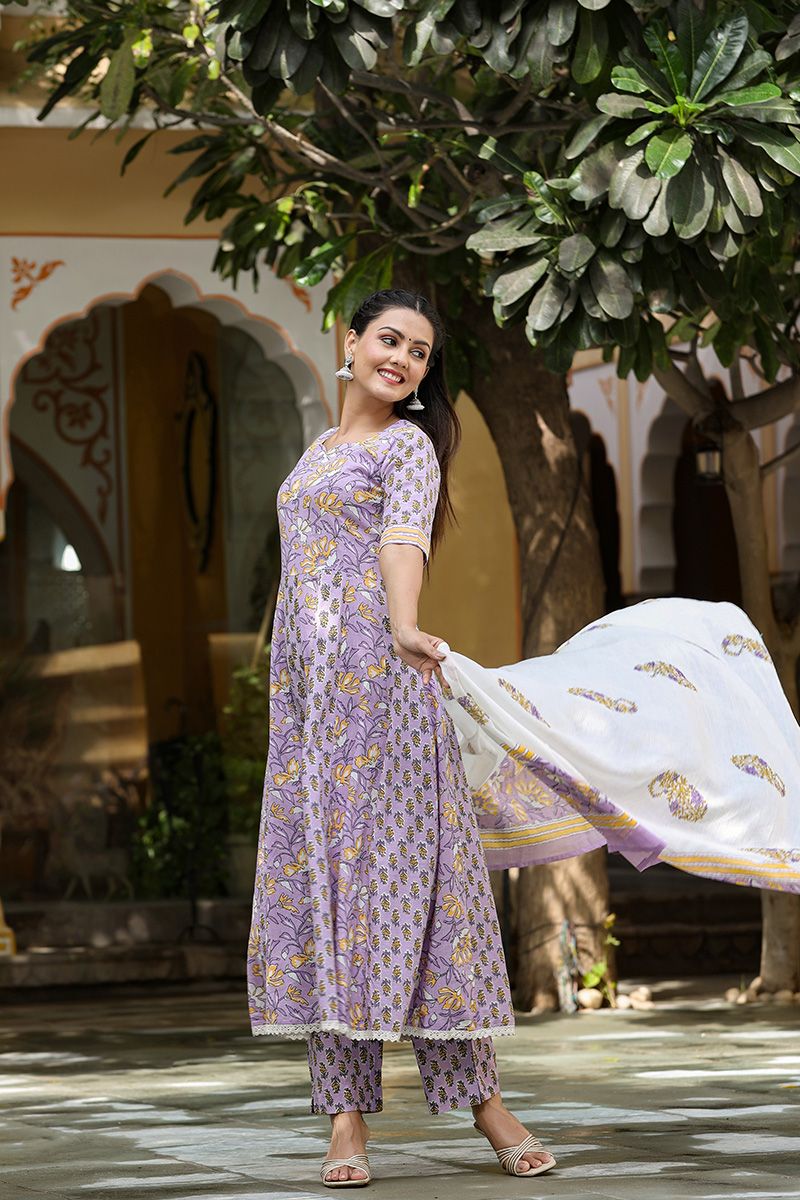
Explore Anarkali Kurta with Dupatta and shop Anarkali suits online at Ahika.
Choose from our new collection of the latest designer Anarkali Kurtis.
Visit Ahika Kurtis for more.Visit now: https://ahika.in/ahika-women-cotton-purple-ethnic-motifs-printed-anarkali-kurta-pant-dupatta-set-vkskd1090.html