AI Technology Development
In recent years, the field of artificial intelligence (AI) has witnessed tremendous growth and development. AI technology has made significant advancements in various domains, ranging from speech recognition to image classification. One area where AI has shown remarkable progress is in frame interpolation, revolutionizing the way videos are edited and enhanced.
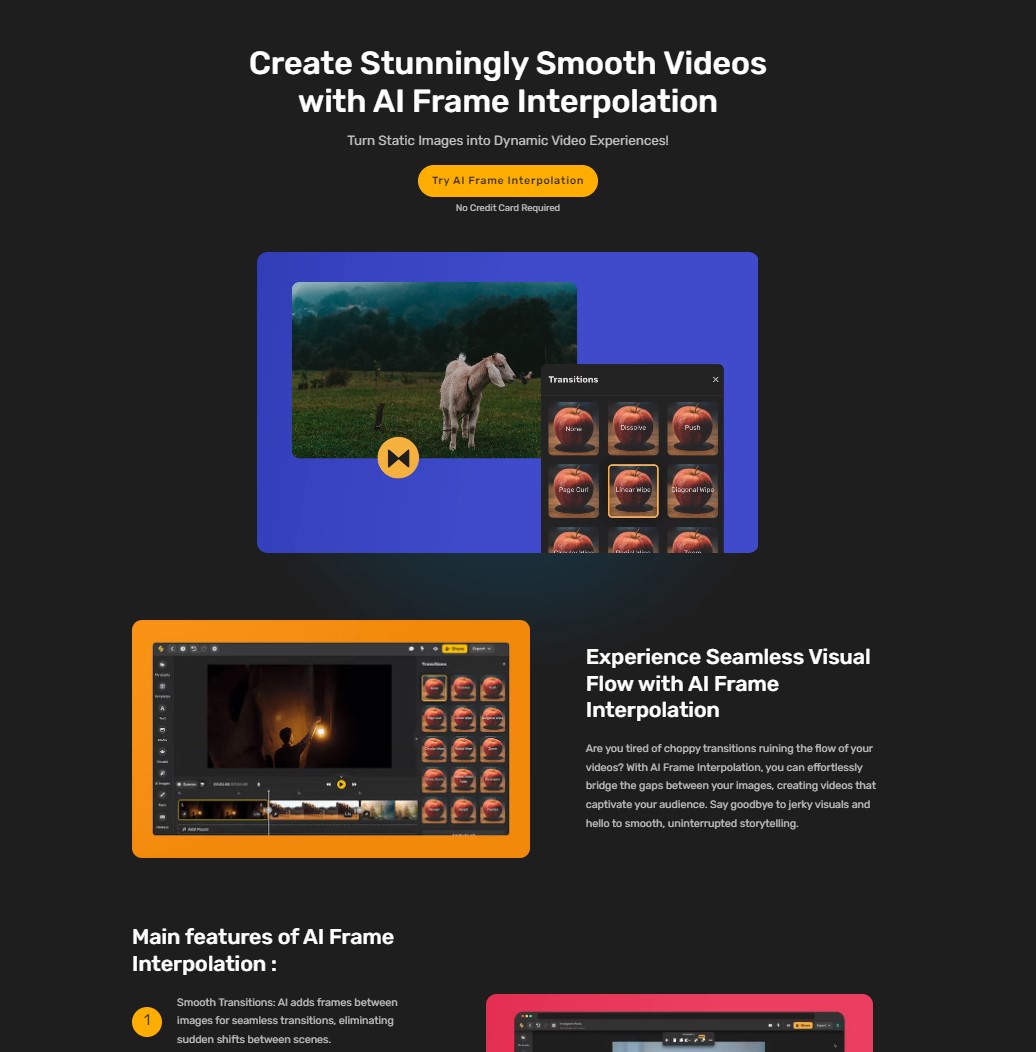
AI-powered frame interpolation techniques have the ability to generate new frames between existing frames in a video sequence, resulting in smoother and more visually appealing playback. This innovative technology has opened up a new realm of possibilities for video editors and filmmakers, allowing them to achieve seamless transitions, slow-motion effects, and higher frame rates with exceptional ease.
AI Frame Interpolation: The Basics
AI frame interpolation, also known as frame rate conversion or motion-compensated frame interpolation, is a technique that employs deep learning algorithms to predict and create intermediate frames between two existing frames in a video. By analyzing the motion and content of adjacent frames, AI models can intelligently generate new frames that fill the gaps and enhance the overall smoothness of the video.
The traditional method of frame interpolation involved simple blending or averaging of adjacent frames. However, AI-powered techniques have taken this process to a whole new level of sophistication and realism. By leveraging the power of neural networks and deep learning, AI models can understand and replicate intricate details and characteristics of the video content, resulting in highly accurate and visually pleasing interpolated frames.
Advancements in AI Frame Interpolation
The advancements in AI frame interpolation technology have been truly remarkable. With the utilization of deep convolutional neural networks and sophisticated algorithms, AI models can now generate interpolated frames that are virtually indistinguishable from the original footage. These advancements have transformed the way videos are edited and enhanced, offering video editors unprecedented control and flexibility.
One of the key advancements in AI frame interpolation is the ability to generate high-quality slow-motion effects. By generating additional frames between the existing frames, AI models can create smooth slow-motion sequences without the need for high-speed cameras or extensive post-processing. This not only saves time and resources but also opens up new creative possibilities for filmmakers and videographers.
Another notable advancement is the enhancement of frame rate conversion. AI models can intelligently predict and generate frames with higher frame rates, resulting in noticeably smoother playback. This is particularly useful when converting a video shot at a lower frame rate to a higher frame rate, improving the overall viewing experience and reducing motion judder.
In addition to these advancements, AI frame interpolation has also made significant strides in improving the visual quality and realism of interpolated frames. By leveraging deep learning and neural network architectures, AI models can better understand the content and motion of the video, enabling them to generate frames that seamlessly blend with the original footage. This level of realism allows video editors to achieve smooth transitions and eliminate visual artifacts commonly associated with traditional frame interpolation techniques.
The Implications of AI Frame Interpolation
The advancements in AI frame interpolation have far-reaching implications for the world of video editing and production. With the ability to generate high-quality interpolated frames, video editors can now create seamless transitions, stunning slow-motion effects, and enhance the overall visual appeal of their videos.
This technology also has practical implications for industries such as gaming, virtual reality, and simulation. By leveraging AI frame interpolation, these industries can enhance the realism and smoothness of their interactive experiences, offering users a more immersive and visually captivating environment.
The accessibility and ease of use of AI frame interpolation software have also democratized video editing and production. Previously, achieving professional-level frame interpolation required expensive hardware and extensive technical expertise. However, with the availability of AI-powered software, even novice video editors can now achieve stunning results without the need for specialized equipment.
The Future of AI Frame Interpolation
As AI technology continues to advance, the future of frame interpolation looks incredibly promising. Researchers and developers are constantly pushing the boundaries of what is possible, aiming to further improve the visual quality and realism of interpolated frames.
One area of focus is the development of AI models that can better understand and replicate complex motion patterns. By accurately predicting and generating frames based on intricate motion cues, AI frame interpolation techniques can produce even more realistic and captivating results.
Another avenue for future development is the integration of AI frame interpolation with other video enhancement techniques. By combining frame interpolation with algorithms for image denoising, deblurring, and color correction, video editors can achieve unprecedented levels of visual fidelity and refinement.
The future of AI frame interpolation also holds tremendous potential for real-time applications. As computational power continues to increase and AI models become more efficient, it is likely that real-time frame interpolation will become a reality. This opens up new possibilities for live streaming, video conferencing, and interactive applications.
Conclusion
The advancements in AI frame interpolation have transformed the world of video editing and production. With the ability to generate high-quality interpolated frames, AI technology has enabled video editors and filmmakers to achieve seamless transitions, stunning slow-motion effects, and enhanced visual appeal. These advancements have not only revolutionized the way videos are edited but also opened up new creative possibilities and democratized the field of video production.
As AI technology continues to evolve, we can expect further advancements in frame interpolation, leading to even more realistic and visually captivating results. The future of AI frame interpolation holds tremendous potential, from real-time applications to the integration with other video enhancement techniques. Exciting times lie ahead in the world of AI-powered video editing.