

Introduction:
Navigating the realms of BFS (Breadth-First Search) and DFS (Depth-First Search) is crucial in the world of computer science. Understanding their advantages and disadvantages can empower decision-making in algorithm design. This article delves into the intricacies of BFS and DFS, shedding light on their applications and potential pitfalls.
VISIT ALSO: Difference between BFS and DFS
Advantages of BFS and DFS
Breadth-First Search: A Broad View
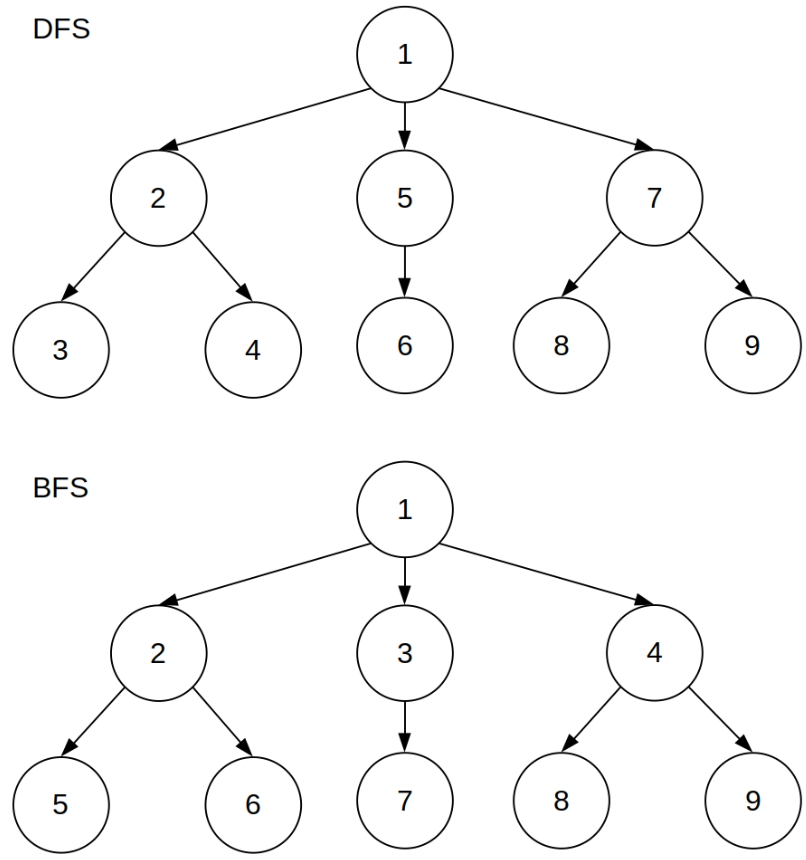
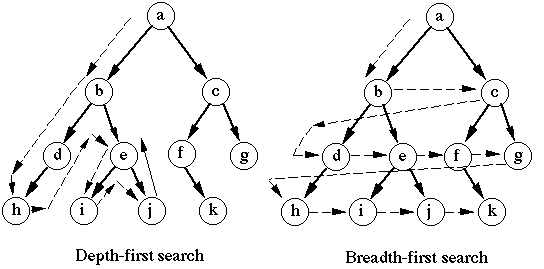
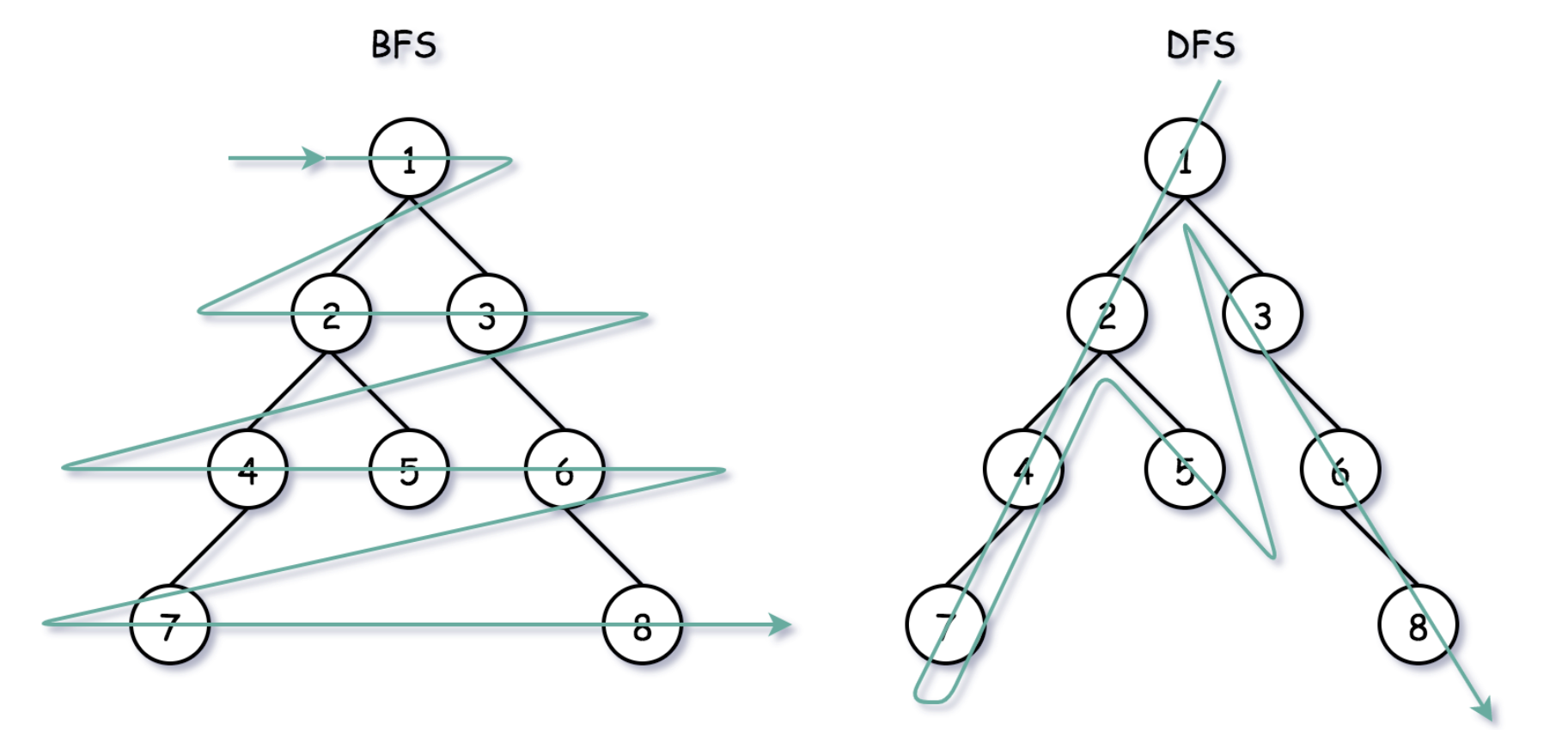
BFS sweeps through the data systematically, ensuring all neighboring nodes are explored before moving deeper. This approach proves advantageous in scenarios where the shortest path or the shallowest node is sought. The methodical nature of BFS offers clarity and efficiency in various applications.
Depth-First Search: Delving into Depth
DFS, on the other hand, plunges into the depths of a tree-like structure, exhaustively exploring one branch before backtracking. Its strength lies in tasks like maze solving and topological sorting, where exhaustive exploration is essential. The simplicity of implementation is a noteworthy advantage of DFS.
Seamless Integration in Graph Theory
Both BFS and DFS seamlessly integrate with graph theory, a cornerstone in computer science. BFS excels in finding connected components, while DFS shines in detecting cycles within graphs. Understanding their distinct contributions enhances problem-solving capabilities.
Efficient Pathfinding with BFS
One notable advantage of BFS is its prowess in pathfinding algorithms. As it meticulously explores neighboring nodes, BFS excels in scenarios where the shortest path is crucial. Applications range from network routing to GPS navigation systems.
Disadvantages of BFS and DFS
Memory Consumption in BFS
Despite its efficiency in pathfinding, BFS can be memory-intensive. The need to store information about all explored nodes can lead to resource exhaustion in large-scale applications. Careful consideration is necessary to balance functionality and resource consumption.
Lack of Optimality in DFS
While DFS is simple to implement, its lack of optimality in finding the shortest path can be a drawback. In scenarios prioritizing the shortest route, DFS might not be the most suitable choice. Evaluating the specific needs of the task is crucial.
Sensitivity to Graph Structure
Both algorithms exhibit sensitivity to the structure of the graph. BFS might struggle with irregular structures, leading to inefficiencies. DFS, reliant on stack memory, faces challenges in deeply nested structures. Tailoring the algorithm to the graph's nature is paramount.
Applications in Real-world Scenarios
BFS in Social Networks
BFS finds applications in social network analysis, efficiently uncovering connections and degrees of separation. Its ability to traverse through friends' circles makes it a valuable tool in understanding social structures.
DFS in Puzzles and Games
DFS shines in solving puzzles and navigating game trees. Its systematic exploration aligns well with game scenarios, making it a popular choice in artificial intelligence for strategic decision-making.
FAQs
Q: Can BFS and DFS be combined for enhanced results?
Absolutely. Combining BFS and DFS can leverage their strengths. For instance, BFS can identify potential paths, and DFS can refine the search for the optimal solution.
Q: Which algorithm is better for finding the shortest path?
BFS is generally preferred for finding the shortest path, given its systematic approach to exploring neighboring nodes.
Q: Are BFS and DFS limited to graph algorithms?
While they have roots in graph theory, BFS and DFS find applications in various domains, including data processing, image recognition, and more.
Q: How do BFS and DFS handle cycles in graphs?
DFS excels in detecting cycles, making it suitable for tasks where cyclic relationships need identification. BFS, however, is less effective in this regard.
Q: Can BFS and DFS be resource-intensive?
Yes, both algorithms have the potential to be resource-intensive, particularly in scenarios involving extensive memory usage.
Q: Are there scenarios where DFS is a more suitable choice?
DFS is preferable in tasks requiring exhaustive exploration, such as solving mazes or generating permutations.
VISIT ALSO: In the context of searching a tree data structure, how does BFS differ from DFS?
Conclusion
In the realm of computer science, understanding the advantages and disadvantages of BFS and DFS is akin to wielding a powerful tool. Each algorithm has its unique strengths, making them valuable in distinct scenarios. By weighing their merits and shortcomings, one can harness the true potential of BFS and DFS, ensuring efficient problem-solving and algorithmic mastery.