Introduction
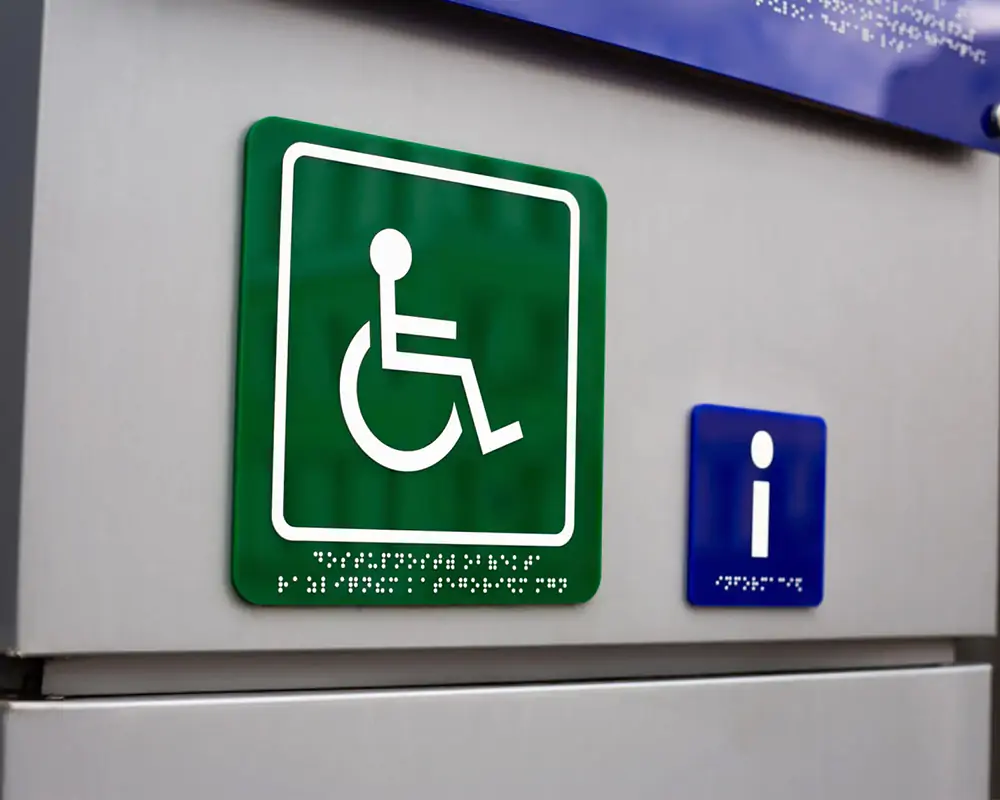
We should have all kinds of signage for our safety. Businesses and public areas are realizing the value of accessibility for people with vision impairments as part of their efforts to create inclusive environments. The use of Braille signage is a vital component of this undertaking. These tactile communication tools support inclusion and equitable access to information for all people, regardless of ability, in addition to making navigation easier.
Promoting Inclusivity and Equal Access
Encouraging inclusion begins with the installation of Braille signage in public areas and facilities. Businesses and organizations make sure that people with visual impairments navigate their surroundings independently and with dignity by offering tactile information in addition to visual clues. Removing obstacles to entry and promoting equitable involvement within the community, creates a more inclusive society.
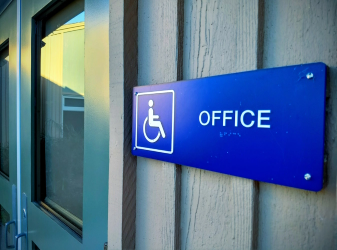
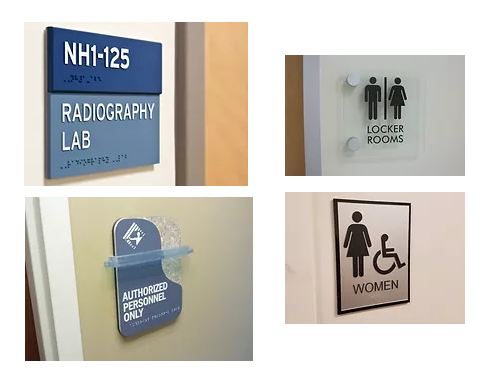
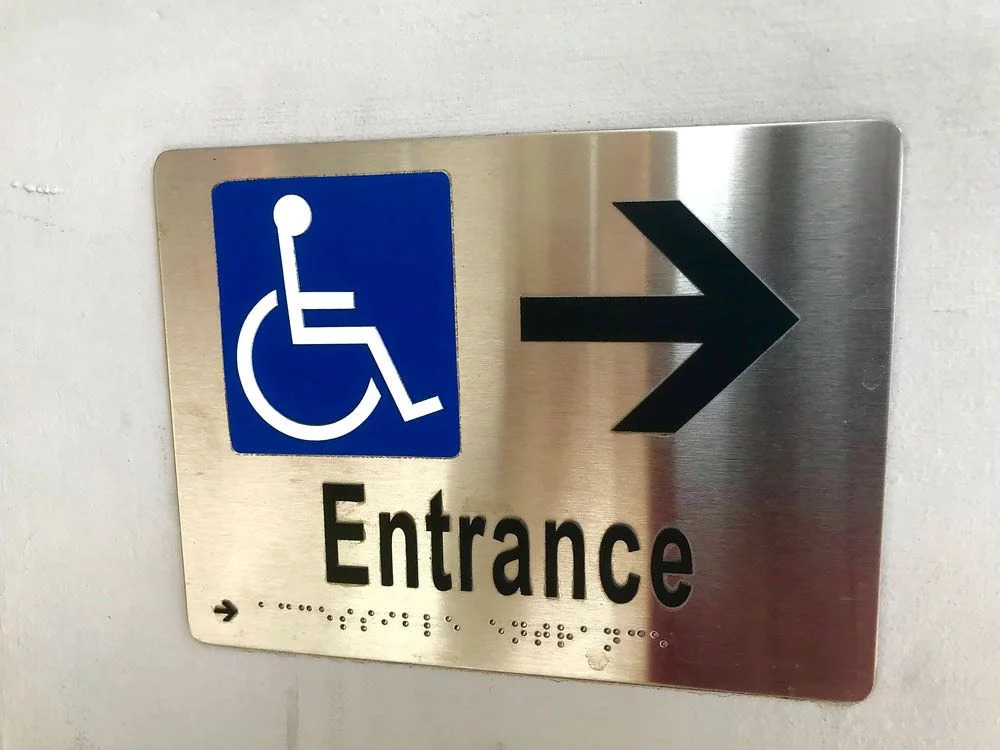
Braille and tactile signage can let the visually impaired explore a facility without assistance. Braille, a reading and writing code, is intended to be felt beneath a user's fingers and contains the same information as written text. This should be used alongside tactile lettering, which consists of embossed characters that may be read by touch. Signs with elevated letters and braille communication promote equality and help visitors who are visually impaired to walk about independently.
What is Braille?
Before we begin, a little introduction to Braille is necessary. Braille is a raised-dot method that enables blind people to read by touch. This signage provides an easy and accessible way for them to understand. It was conceived by a young guy named Louis Braille in the early nineteenth century. Braille was blind at a young age, yet he was determined to develop a writing system for the visually impaired. His system first appeared in the United States in 1860 and quickly expanded throughout the world. So the signs technique was established, and it is beneficial to all blind individuals.
Guidelines for Creating Braille Signages
1. Uncontracted and Contracted Braille
- Uncontracted Braille: Also referred to as grade 1 Braille, it uses a one-to-one relationship to represent numerals, punctuation, and letters. Braille that is not contracted is appropriate for paper documents. For instance: In uncontracted Braille, the word "stairs" would have one Braille character for each letter: Steps.
- Contracted Braille: ADAAG requires contracted Braille, or grade 2 Braille, for signage. It condenses words and phrases. Signs can only be made in contracted Braille.
2. Capitalization
- In Braille, uppercase letters are created by preceding the letters a–z with a capital indicator (dot 6). For example, ⠲R⠑E⠎S⠞T⠶R⠶O⠑O⠍ might be used to represent “RESTROOM”.
3. Spacing and Placement
- On signage, the braille should be positioned beneath the whole text.
- Give Braille a minimum of 3/8 inch (9.5 mm) of space between it and other tactile characters.
- Keep a minimum of 3/8-inch between raised borders and ornamental embellishments.
4. Unified English Braille (UEB)
- UEB, which was adopted in the US, took the place of EBAE, or English Braille American Edition. Make sure Braille signage adheres to UEB guidelines.
Conclusion
Braille signs give those who are blind or visually impaired autonomy and protection. By following the rules, we establish welcoming environments where everyone can prosper. Let's keep advocating for accessibility by using well-thought-out design and implementation.
Recall that Braille signs serve as avenues to inclusion rather than only being symbols.