Overview On One Person Company
In the realm of business entities, One Person Company Registration (OPCs) stand out as a unique and advantageous option for solo entrepreneurs. With a structure tailored to accommodate single shareholders, OPCs offer a blend of simplicity, security, and strategic benefits that can propel individual ventures to new heights.
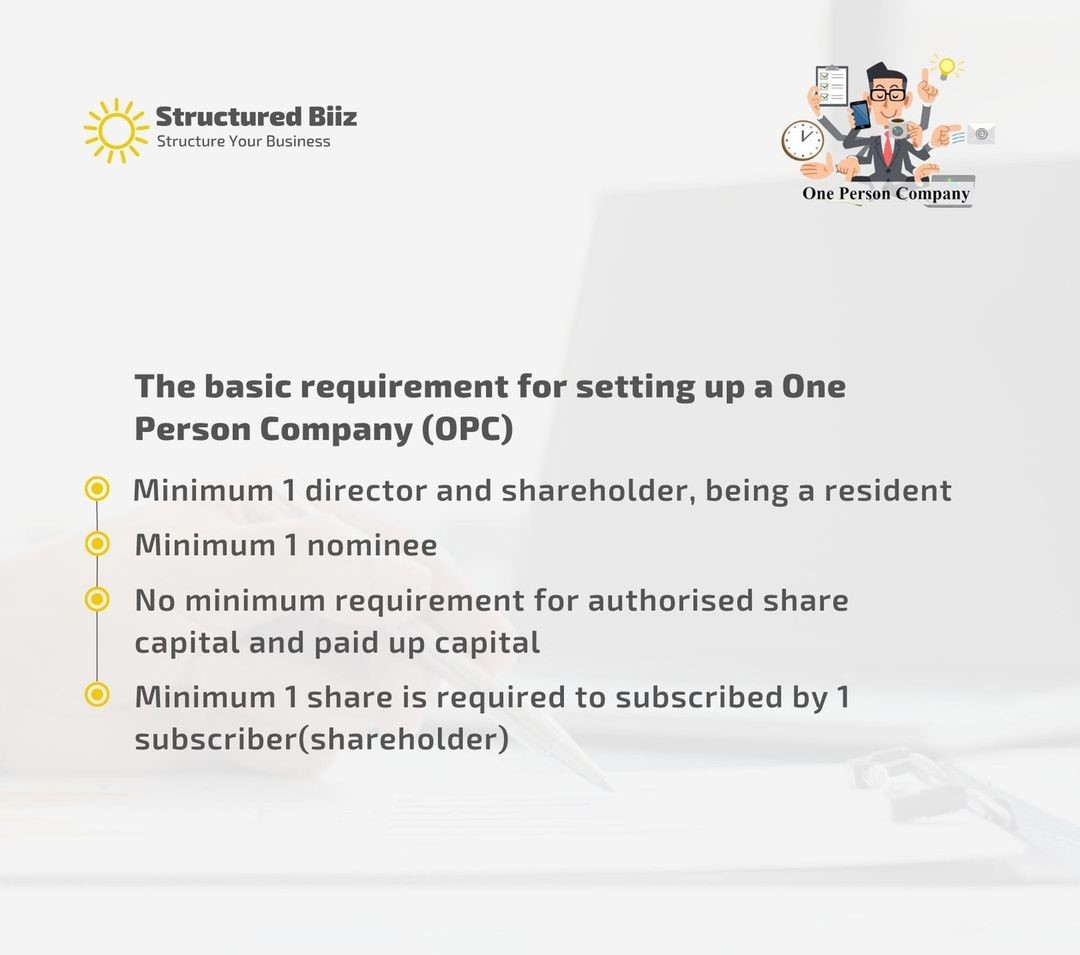
- Singular Ownership, Collective Security: At the core of an OPC lies its singular ownership structure. Unlike traditional corporations requiring multiple shareholders, OPCs operate with just one shareholder. However, to ensure continuity and protection in unforeseen circumstances such as the demise of the shareholder, OPC regulations mandate the appointment of a nominee. This nominee steps in to assume ownership responsibilities, safeguarding the company's interests and ensuring seamless operations during transitions.
- Bridging the Confidence Gap: OPCs and Private Limited Companies: The parallels between OPCs and Private Limited Companies extend beyond their operational frameworks. Both entity types offer a sense of assurance and professionalism to stakeholders. Suppliers and customers tend to prefer dealings with Private Limited Companies and OPCs over proprietorship or partnership firms. This preference arises from the corporate status enjoyed by these structures, instilling confidence in business relationships. Moreover, conferring corporate designations such as Directorship in OPCs serves as a valuable tool for attracting and retaining top talent, thereby enhancing workforce quality and stability.
- Shielding Personal Assets: The Limited Liability Advantage: Arguably the most compelling reason for entrepreneurs to opt for OPC status is the concept of limited liability. In contrast to sole proprietorship arrangements where personal assets are exposed to business risks, OPCs offer a protective shield. The liability of the shareholder is restricted to their shareholding in the company, insulating personal wealth from business-related losses or debts. This demarcation ensures that the financial consequences of business failures remain confined to the company's assets, safeguarding the entrepreneur's personal savings and assets.
- Streamlining Compliance: The OPC Advantage: OPCs present a notable advantage in terms of compliance requirements compared to Private Limited Companies. Dispensing with the need for maintaining cash flow statements and conducting Annual General Meetings streamlines administrative obligations for OPCs. Instead, OPCs are mandated to conduct only two Board Meetings annually, spaced at a minimum interval of 90 days. This reduction in compliance burden affords OPCs greater operational flexibility and efficiency, allowing entrepreneurs to focus more resources on business growth and innovation.
- Fundraising Flexibility: A Gateway to Growth: The journey of an OPC doesn't end with its formation; rather, it opens doors to diverse avenues for expansion and investment. Whether through self-funding, venture capital, or private investors, OPCs possess the flexibility to raise funds and fuel growth initiatives. Additionally, the option to convert into a Private Limited Company further enhances fundraising potential, providing access to broader capital markets and investment opportunities. This adaptability empowers OPCs to scale operations, pursue strategic partnerships, and realize their full growth potential in dynamic market landscapes.
In Conclusion:
As the entrepreneurial landscape evolves, OPCs emerge as a compelling choice for individuals seeking to establish and grow their ventures. From providing a robust legal framework for solo ownership to offering strategic advantages in compliance, liability protection, and fundraising, OPCs offer a versatile platform for entrepreneurial success. By harnessing the benefits of OPCs, solo entrepreneurs can embark on their business journeys with confidence, knowing that they have the structural support and flexibility needed to thrive in today's competitive marketplace.