Whiskey, a beloved spirit with deep cultural and historical roots, is celebrated not only for its complex flavors but also for its rich and varied aromas. The intricate and delightful scents of whiskey are the result of a sophisticated interplay of congeners and volatile compounds, which are influenced by the distillation process, aging, and ingredients. Whiskey distilleries in the USA, such as Shankar Distillers - Michigan Whiskey Distilleries, are renowned for their ability to craft unique and aromatic spirits. This article delves into the science behind whiskey aroma, focusing on the crucial roles of congeners and volatile compounds.
Understanding Congeners
Congeners are chemical compounds produced during the fermentation and aging process of whiskey. These compounds include esters, aldehydes, acids, alcohols, and sulfur compounds, each contributing to the unique bouquet of aromas in a glass of whiskey. For instance, esters often impart fruity and floral notes, while aldehydes can add a more complex and sometimes spicy character.
During fermentation, yeast converts sugars from the grain mash into alcohol and other byproducts, including congeners. The specific type of yeast and fermentation conditions, such as temperature and time, significantly influence the concentration and variety of congeners produced. This is a key area where whiskey distillers exert their expertise, fine-tuning the process to create desired aromatic profiles.
Aging in oak barrels further develops whiskey's aroma profile. The interaction between the spirit and the wood introduces additional congeners and transforms existing ones. Over time, compounds such as vanillin (from the breakdown of lignin in the wood) and lactones (which impart coconut and toasted notes) emerge, contributing to the rich complexity of aged whiskies. Whiskey distilleries in the USA, like Shankar Distillers, leverage these intricate processes to produce distinctive expressions of both Straight Bourbon Whiskey and Straight Rye Whiskey.
The Role of Volatile Compounds
Volatile compounds are another crucial element in defining whiskey's aroma. These compounds are characterized by their ability to evaporate easily at room temperature, allowing them to reach our olfactory receptors and impart their scent. Some common volatile compounds in whiskey include ethanol, methanol, acetaldehyde, and a range of higher alcohols and esters.
Ethanol, the primary alcohol in whiskey, serves as a carrier for other aromatic compounds, enhancing their volatility and thus their detectability. Higher alcohols, although present in smaller quantities, add depth to the aroma with notes ranging from floral to spicy. Esters, formed during both fermentation and aging, are particularly important for the fruity and sweet aromas often associated with whiskey.
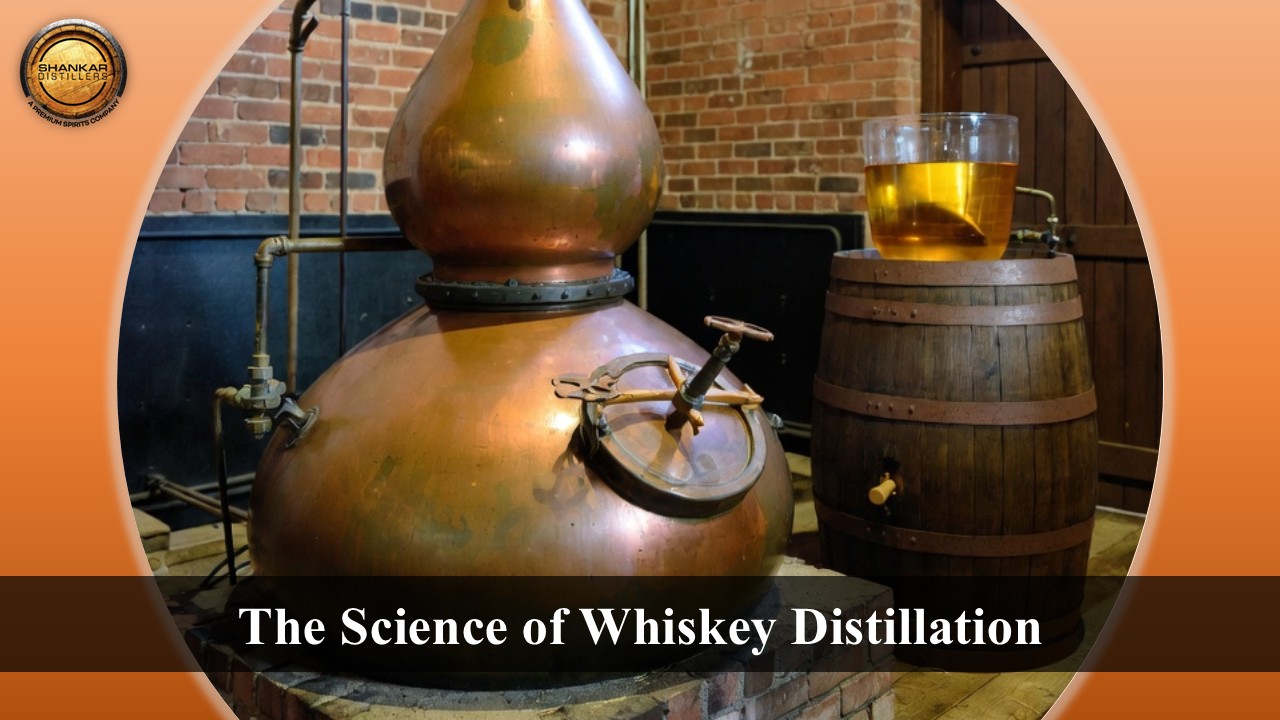
The balance and interplay of these volatile compounds are meticulously managed by whiskey distillers. By controlling factors such as the cut points during distillation (which determine which fractions of the distillate are collected), distillers can influence the concentration of congeners and volatiles in the final product. For example, a precise cut can enhance the presence of desirable esters while minimizing harsher compounds like fusel oils.
Straight Bourbon Whiskey vs. Straight Rye Whiskey
Straight Bourbon Whiskey and Straight Rye Whiskey, while both sharing the same core processes, develop distinct aromatic profiles due to their differing primary grain ingredients. Bourbon, made primarily from corn, tends to have a sweeter and fuller-bodied aroma, often featuring notes of caramel, vanilla, and toffee. Rye whiskey, on the other hand, is known for its spicier character, with prominent notes of black pepper, dill, and baking spices.
These differences in aroma are directly tied to the unique congeners and volatile compounds that each type of grain produces during fermentation and aging. Corn’s higher sugar content results in more pronounced caramel and vanilla notes, while rye’s complex starches contribute to the spicier, more robust aromatic profile.
Whiskey distillers artfully manipulate these variables, ensuring that each bottle of Straight Bourbon Whiskey or Straight Rye Whiskey delivers a harmonious and captivating sensory experience. The expertise of distillers at places like Shankar Distillers - Michigan Whiskey Distilleries is crucial in mastering these subtleties, creating spirits that are both consistent and uniquely expressive.
Conclusion
The science behind whiskey aroma is a fascinating blend of chemistry and craftsmanship. Understanding the roles of congeners and volatile compounds offers insight into how distillers create the complex and captivating scents that define whiskey. From the meticulous control of fermentation and distillation to the transformative magic of aging, every step of the process is geared towards developing a rich and unique aromatic profile. Whiskey distilleries in the USA continue to innovate and perfect these processes, ensuring that each glass of Straight Bourbon Whiskey or Straight Rye Whiskey is a testament to the artistry and science of whiskey making.
Useful Links