In the current era of the Internet, which at its core deals with critical information where personal information is stored or shared online, there is a need for identity management solutions. The previous approaches to facilitate digital identities involve authorization servers that store users’ information in centralized databases. This puts them at a disadvantage with regard to security and the use of their information. This is where blockchain technology comes into play. It has a decentralized, simple, and secure environment that can transform the environment of managing digital identity and highlights the privacy and security that shows reliability for enhancing digital identity management.
As stated in the previous section, the subject of digital identity management is complex and consists of several components. Digital identity management refers to the procedure and tools aiming at the identification and authorization of individuals or companies in computer networks. Digital identities are now a part of society’s normal use of products and services, ranging from logging into apps such as banking apps to even accessing records that involve one’s healthcare. However, the existing systems face several challenges related to Digital Identity Management.

Challenges of Digital Identity Management:
1. Centralization and Vulnerability: Discrimination between identities is usually achieved through mainframe networks, usually controlled and managed by governments, corporations, or service providers. Such central points are appealing to cyber criminals who would wish to have an individual’s privacy compromised.
2. Data Breaches and Privacy Concerns: Large-scale cyber attacks have endangered millions of people’s details and made them susceptible to identity theft and other types of fraud. In addition, the data collected, stored, and shared with, are mostly controlled by the applications with little or no input from the users.
3. User Experience and Fragmentation: Users find it difficult to deal with different usernames, passwords, and authentications when using more than one App. However, there may be compatibility problems regarding interactions between identity systems.
How blockchain addresses the challenges of digital identity management?
Blockchain technology which was mainly used in the creation of cryptocurrencies such as Bitcoin has not only been limited to the financial industry but also has solutions in numerous industries including identity management. Fundamentally it can be defined as a decentralized and distributed system of recording information which is also characterized by a distributed database shared through a network of computers. Here's how blockchain addresses the challenges of digital identity management:
1. Decentralization and Security: Blockchain is based on a distributed platform and unlike in the traditional systems where data can be stored in a centralized server, blockchain uses a distributed server network. This feature of decentralization helps in preventing any point where an attack can be easily launched or the chain modified negatively. Every transaction or change to identity information is encrypted and documented as a block within the chain. Therefore, it is nearly impossible to alter the data.
2. Immutability and Trust: Once the data is written on the blockchain, it means that it is immutable and cannot be changed without changing the information that is recorded in the next blocks. This immutability also guarantees stability in managing identity records to prevent third parties from altering information passed on to them, thus increasing the validity and accuracy of the data stored within the blockchain.
3. Self-Sovereign Identity (SSI): Among all the potential blockchain uses in digital identity, the most notable is self-sovereign identity (SSI). SSI allows every user to fully own their identity and control the identity attributes, including the distribution of the attributes without involving the centralized control mechanisms. This will allow the identity information of users to be stored in digital wallets or repositories of the user’s preference thereby eliminating the reliance on third parties and more importantly, the possibility of identity theft.
4. Privacy-Preserving Solutions: Through cryptography, blockchain gives solutions that are privacy-preserving. Individuals are able to reveal only such acts of identity verification that are necessary to the verifier or the service provider without revealing every other attribute about themselves. It achieves this by selectively releasing only what is necessary in the authentication process hence achieving the much-needed privacy with regard to personal details while at the same time ensuring that only the right persons gain access.
5. Interoperability and Seamless Integration: With blockchain the various identity systems and platforms are set to interoperate and thus provide for seamless authentication of the various domains. This capability enables user experiences to be seamless. At the same time, it meets the security requirements of identity proofing as well as accreditation in the delivery of multiple online services as well as applications.
Thus, the accuracy of digital identities on the blockchain is very beneficial in the management of the same. Nevertheless, broad implementation is possible to face some challenges.
Regulatory Considerations and Challenges
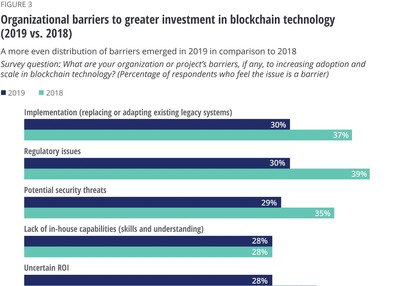
The challenges that come in the way of widespread adoption of Blockchain are:
- Scalability: The identity transactions in blockchain networks need to withstand the demand in terms of the number of transactions between users and the networks without straining the systems which is complex in blockchain networks.
- Interoperability: Seamless interaction between the different blockchain platforms, and traditional systems is difficult.
- Regulatory Compliance: One has to be very cautious while handling the data when it comes to the internet and complying with data protection laws like GDPR in European countries or CCPA in the United States.
Future Outlook and Conclusion
The future of digital identity management is promising as blockchain technology becomes more developed and widely adopted. Advancements in blockchain-based identity solutions are paving the way in the future for how identity is created, protected, and verified across the internet. Due to the focus on privacy, security, and user control, blockchain-based identity management seeks to bring back trust to digital interactions while at the same time, focusing on the user’s sovereignty regarding the use of personal information. So, for adopting the blockchain-based solution, one can consult Webcom Systems. Webcom Systems as a blockchain development company addresses the challenges of blockchain development processes to offer a secure and compliant blockchain solution. Thus, considering the control in the hands of users and compliance with regulations, they contribute to the building of confidence in interactions that entail the use of the internet while aiming at creating a safer and more efficient environment for identity linking and authentication.