The Rise of Mobile Stroke Treatment
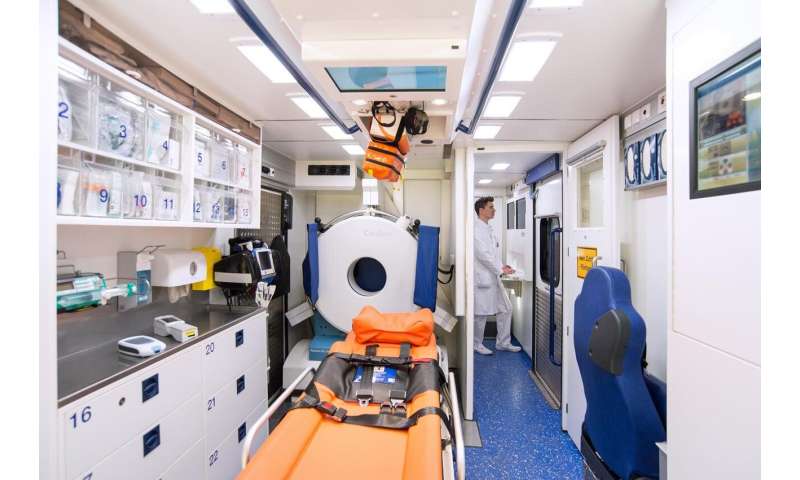
Ischemic stroke is a leading cause of disability and the third leading cause of death worldwide. However, timely administration of intravenous recombinant tissue plasminogen activator (IV rt-PA), a clot-busting drug, within 4.5 hours of stroke onset can significantly improve outcomes. Unfortunately, many stroke patients do not receive IV rt-PA due to delayed presentation to the hospital. To address this gap, mobile stroke units (MSUs) equipped with a CT scanner, laboratory, and treatment facilities have emerged worldwide to deliver acute stroke care and IV rt-PA directly in the community.
First Pilot Studies Show Promise
The first Mobile Stroke Unit pilot programs launched over a decade ago in Germany and the United States. Initial small studies consistently demonstrated shorter door-to-needle times and higher rates of IV rt-PA administration compared to standard emergency medical services. For example, a German study showed a median door-to-needle time of just 36 minutes for MSU patients versus 60 minutes for those transported by ambulance. The percentage of eligible patients receiving IV rt-PA also increased from 32% to 60% after MSU implementation. These early successes established the proof of concept for mobile acute stroke treatment.
Modern Mobile Stroke Units Expand Access
Encouraged by the initial findings, numerous hospitals and healthcare systems have since established their own MSU programs in various cities and regions worldwide using state-of-the-art ambulances. Today's MSUs feature rapid CT scanners, wireless connectivity for telestroke consultations, point-of-care laboratory testing, and integrated treatment areas staffed by stroke specialists. Some newer models even offer MRI capabilities. By bringing the CT scanner on-scene, MSUs allow for rapid diagnosis and treatment initiation prior to transporting the patient to a comprehensive stroke center. As a result, average door-to-needle times on MSUs have dropped to under 30 minutes in many programs.
Benefits Beyond Faster Treatment Times
The advantages of MSUs extend beyond just speedier delivery of IV rt-PA. They also increase access to acute stroke care for vulnerable populations who may otherwise not seek or reach emergency care in time, such as elderly patients living alone or those in rural areas far from hospitals. Furthermore, MSU evaluators can identify large vessel occlusions amenable to mechanical thrombectomy and directly transport eligible patients to endovascular-capable centers for this advanced stroke treatment. By facilitating rapid triage and transport of these patients, MSUs are emerging as an important link in creating comprehensive regional stroke systems of care.
Expanding Global Reach through Telestroke
A key to scaling mobile stroke unit programs globally has been the integration of telestroke technologies to allow remote specialists to evaluate patients and guide on-site treatment decisions when needed. Some advanced MSUs even operate without on-board physicians through telerobotic telepresence systems, expanding the possible coverage area. Telestroke has proven effective for supporting MSUs, allowing large metropolitan regions or entire countries to be covered by just a few mobile units through virtual specialty support. This makes MSU programs financially sustainable beyond serving just local communities and better optimizes limited specialist resources. With telestroke enabling around-the-clock access to expertise, MSUs show great promise to revolutionize delivery of acute stroke care worldwide.
Documented Improvements in Outcomes
As the number of MSU studies has grown, evidence for their benefits continues to mount. A systematic review found mobile stroke unit significantly improved process measures like shorter time intervals to imaging, diagnosis, and treatment initiation compared to standard emergency care. Large prospective cohort studies have also demonstrated better functional outcomes, including lower rates of disability, after MSU treatment versus usual in-hospital stroke management. Cost-effectiveness analyses typically report MSU programs to be cost-effective or cost-saving especially when accounting for long-term savings from reducing post-stroke disability. With proven gains in both clinical measures and valuation outcomes, MSUs are becoming regarded as a highly effective model for acute stroke care delivery.
Advancing Through Global Collaboration
No single healthcare system or research group can meet the enormous challenges of investigating and implementing MSU programs worldwide alone. Thankfully, an active and growing international community of specialists, engineers, and policymakers are collaborating to advance mobile stroke care through ideas and resource sharing. Annual international conferences and joint publications facilitate cross-border learning as different regions tailor promising practices to their local needs and constraints. Partnerships also boost research efforts like multi-site randomized trials with larger sample sizes needed to optimize MSU technologies, protocols, and integration within diverse healthcare systems. With continued cooperation across borders, mobile stroke care promises to evolve rapidly and deliver life-changing treatment to many more stroke patients around the globe.
mobile stroke units have demonstrated great success in revolutionizing the delivery of acute stroke treatment. Continued research collaboration will help maximize their potential to ensure stroke patients anywhere can access timely, specialized care. As evidence of their benefits accumulates, MSU programs should be widely adopted to maximize functional recovery and quality of life for the millions suffering from this devastating condition annually worldwide.
Gets More Insights on, Mobile Stroke Unit
About Author:
Ravina Pandya, Content Writer, has a strong foothold in the market research industry. She specializes in writing well-researched articles from different industries, including food and beverages, information and technology, healthcare, chemical and materials, etc. (https://www.linkedin.com/in/ravina-pandya-1a3984191)