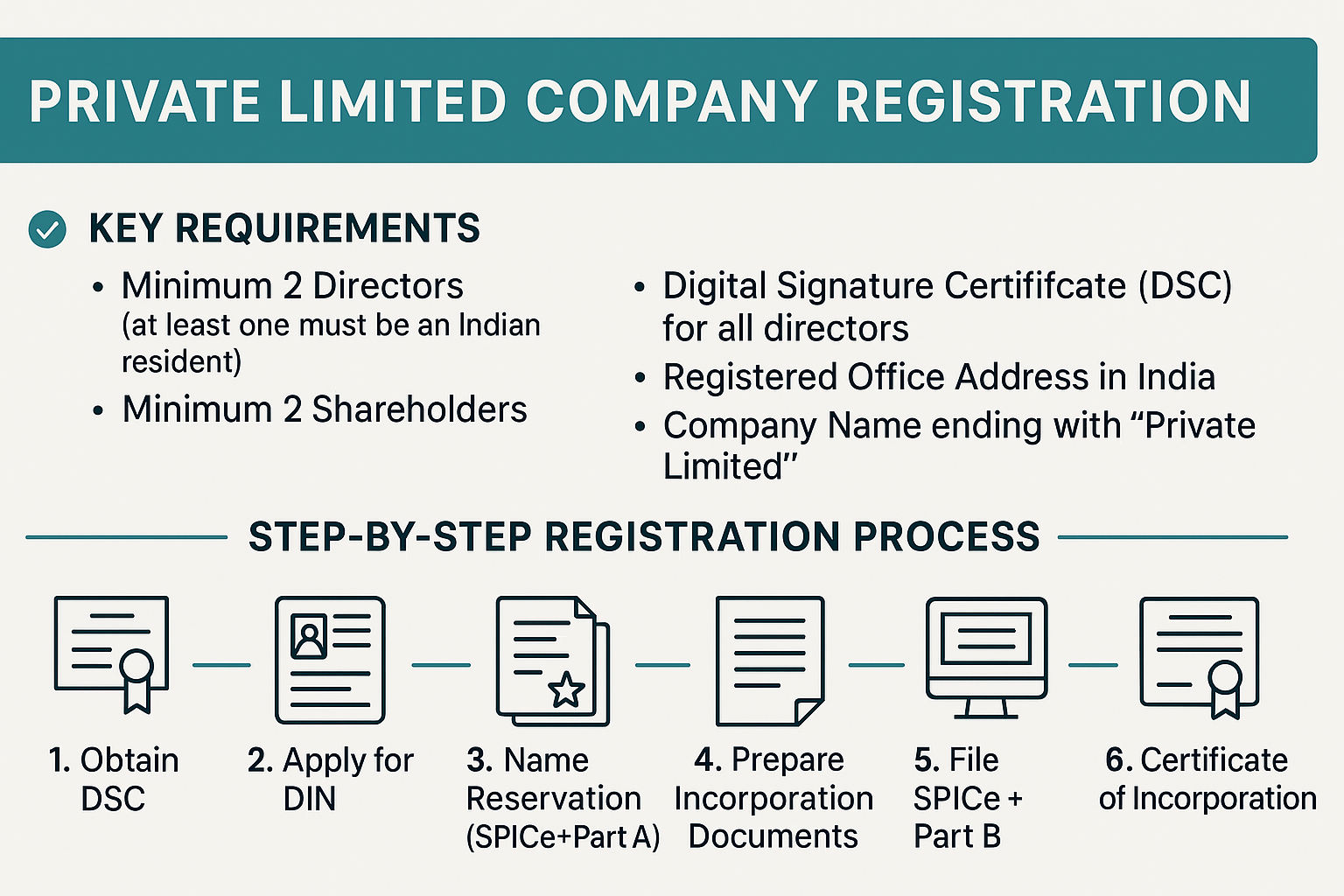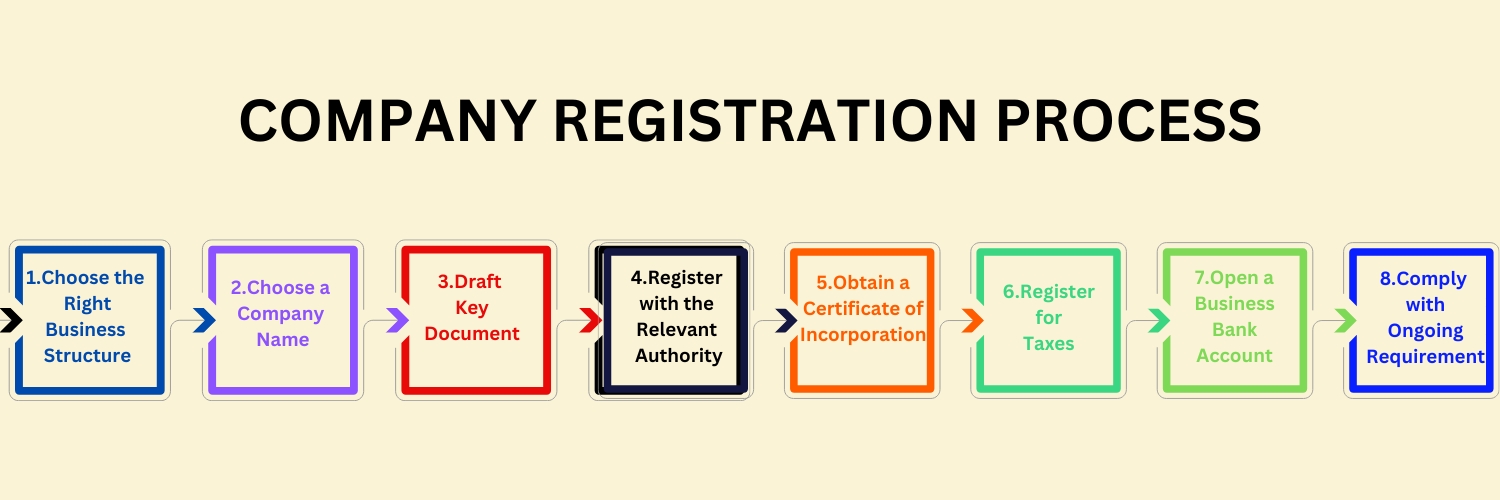
Starting a company involves a series of crucial steps to ensure that the business is legally recognized and operational. The company registration process can seem complex, but each step can simplify the journey from an idea to a registered entity. This guide outlines the essential steps involved in registering a company, highlighting key considerations and common requirements.
1.Choose the Right Business Structure
Before initiating the registration process, decide on the type of business structure that best suits your needs. Common structures include:
-Sole Proprietorship: Owned and operated by a single individual, offering simple setup but no liability protection.
-Partnership: Owned by two or more individuals or entities, with shared responsibilities and liabilities.
-Private Limited Company (Ltd): A separate legal entity with limited liability for its owners, suitable for many small to medium-sized businesses.
-Public Limited Company (PLC): Can offer shares to the public and is subject to more regulatory requirements, ideal for larger enterprises.
2.Choose a Company Name
Selecting a unique and compliant name for your company is the next step. The name should:
-Be Distinctive: Ensure it is not identical or too like existing company names or trademarks.
-Include the Appropriate Suffix: Most jurisdictions require names to include “Limited” or “Ltd” for private limited companies.
-Comply with Regulations: Avoid restricted or sensitive terms that may require approval from regulatory authorities.
3.Draft Key Documents
Prepare the necessary documents required for company registration:
-Memorandum of Association: A legal document outlining the company’s purpose and the initial subscribers' agreement to form the company.
-Articles of Association: Defines the company’s internal rules and regulations, including the rights and responsibilities of shareholders and directors.
-Incorporation Form: Provides essential information about the company, such as its name, registered office, directors, and shareholders.
4.Register with the Relevant Authority
Submit your completed documents to the appropriate government body responsible for company registration. This is typically Companies House or a similar regulatory authority in your jurisdiction. The registration process can often be completed online, although some regions may require physical submission or additional documentation. Ensure that all details are accurate to avoid delays.
5.Obtain a Certificate of Incorporation
Upon successful registration, you will receive a Certificate of Incorporation. This official document confirms that your company is legally recognized and includes details such as the company number, date of incorporation, and legal status. The certificate is necessary for opening a business bank account and entering contracts.
6.Register for Taxes
After incorporation, you must register your company for various tax obligations:
-Corporate Tax: Register with the tax authority to manage corporate tax responsibilities. This includes filing annual tax returns and paying taxes on the company’s profits.
-VAT Registration: If your company’s taxable turnover exceeds the VAT threshold, register for Value Added Tax (VAT). This allows you to charge VAT on sales and reclaim VAT on business expenses.
-PAYE: If you plan to employ staff, register for Pay as You Earn (PAYE) to handle payroll taxes and contributions.
7.Open a Business Bank Account
Open a business bank account in the company’s name. This account will manage all financial transactions related to the business, including receiving payments and paying bills. Maintaining a separate business account is crucial for accurate financial management and record-keeping.
8.Comply with Ongoing Requirements
Once your company is registered, you must adhere to various ongoing compliance obligations:
-Annual Filings: Submit annual returns and financial statements to the relevant authority. These filings keep the public records up-to-date and ensure transparency.
-Tax Returns: File annual tax returns and pay any corporate taxes due. Staying on top of tax obligations helps avoid penalties and interest.
-Record Keeping: Maintain accurate records of financial transactions, board meetings, and company decisions. Proper record-keeping is essential for compliance and auditing purposes.
Additional Considerations
-Legal Advice: Seek legal advice during the registration process to ensure that all documents and procedures meet regulatory requirements. A legal professional can assist with drafting the Memorandum and Articles of Association and provide guidance on compliance issues.
-Business Insurance: Consider obtaining business insurance to protect against potential risks. Coverage can include liability, property, and employee-related risks.
-Company Secretary: Some jurisdictions may require or recommend appointing a company secretary to assist with regulatory compliance and administrative duties.
Conclusion
The company registration process involves several critical steps, from selecting the right business structure and choosing a unique name to preparing essential documents and fulfilling tax obligations. By following these steps, you can establish a legally recognized business entity and set a solid foundation for future growth. Proper planning and adherence to regulatory requirements are key to a smooth and successful registration process, ensuring your company operates efficiently and compliantly from the start.