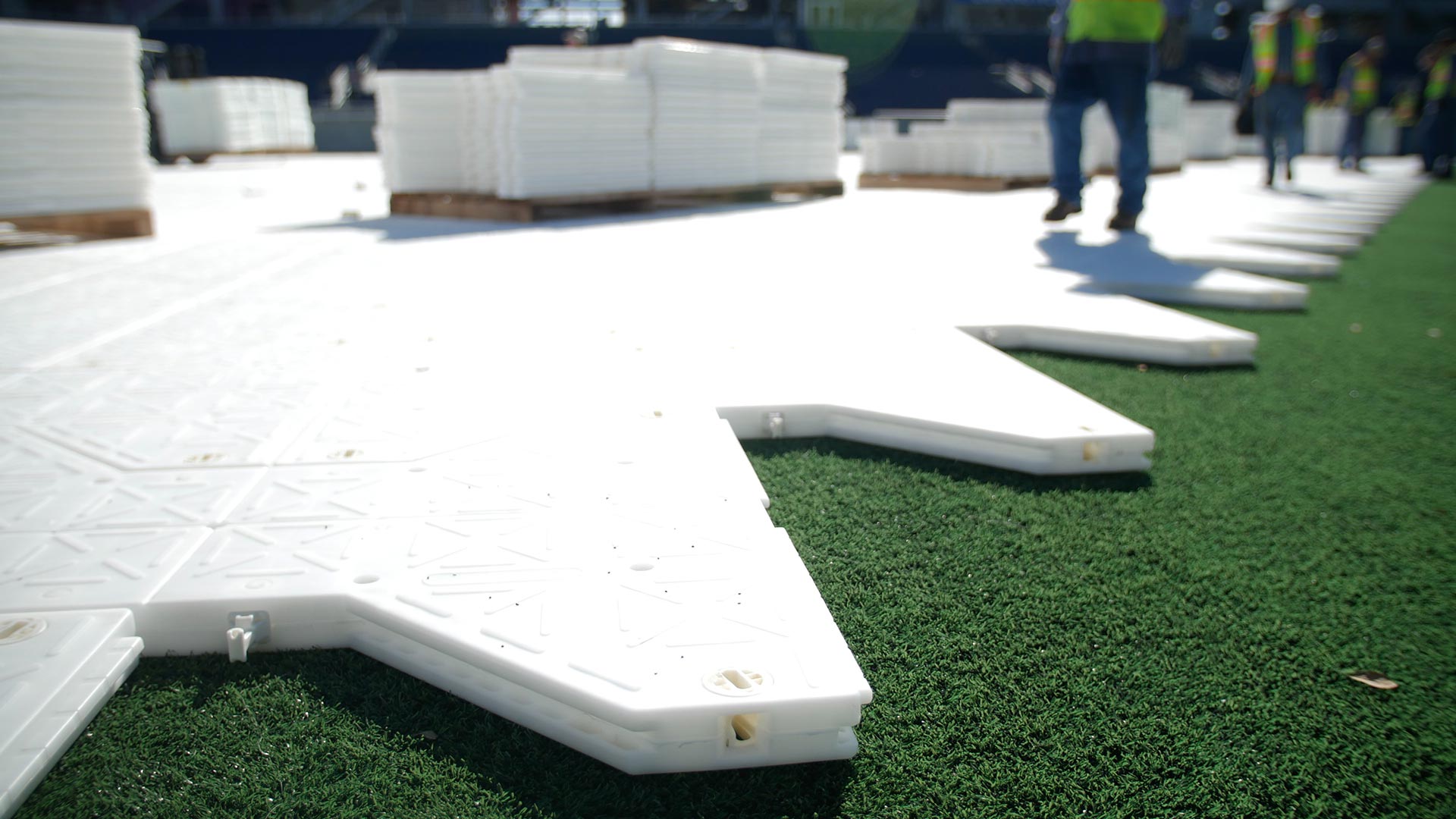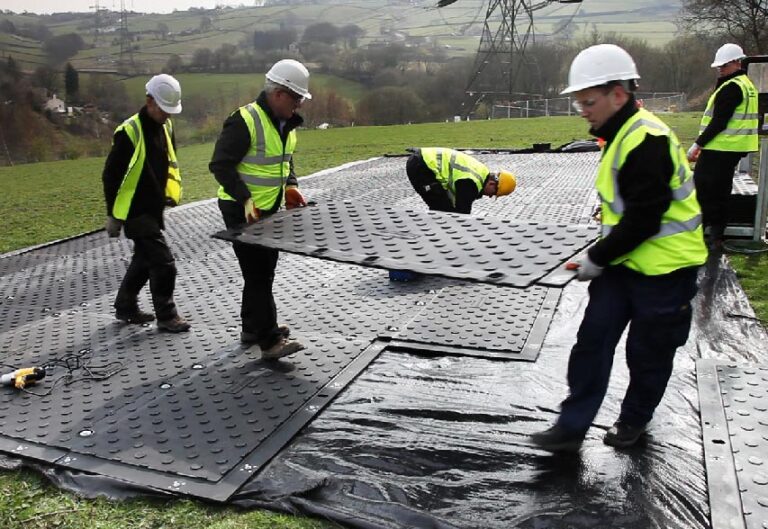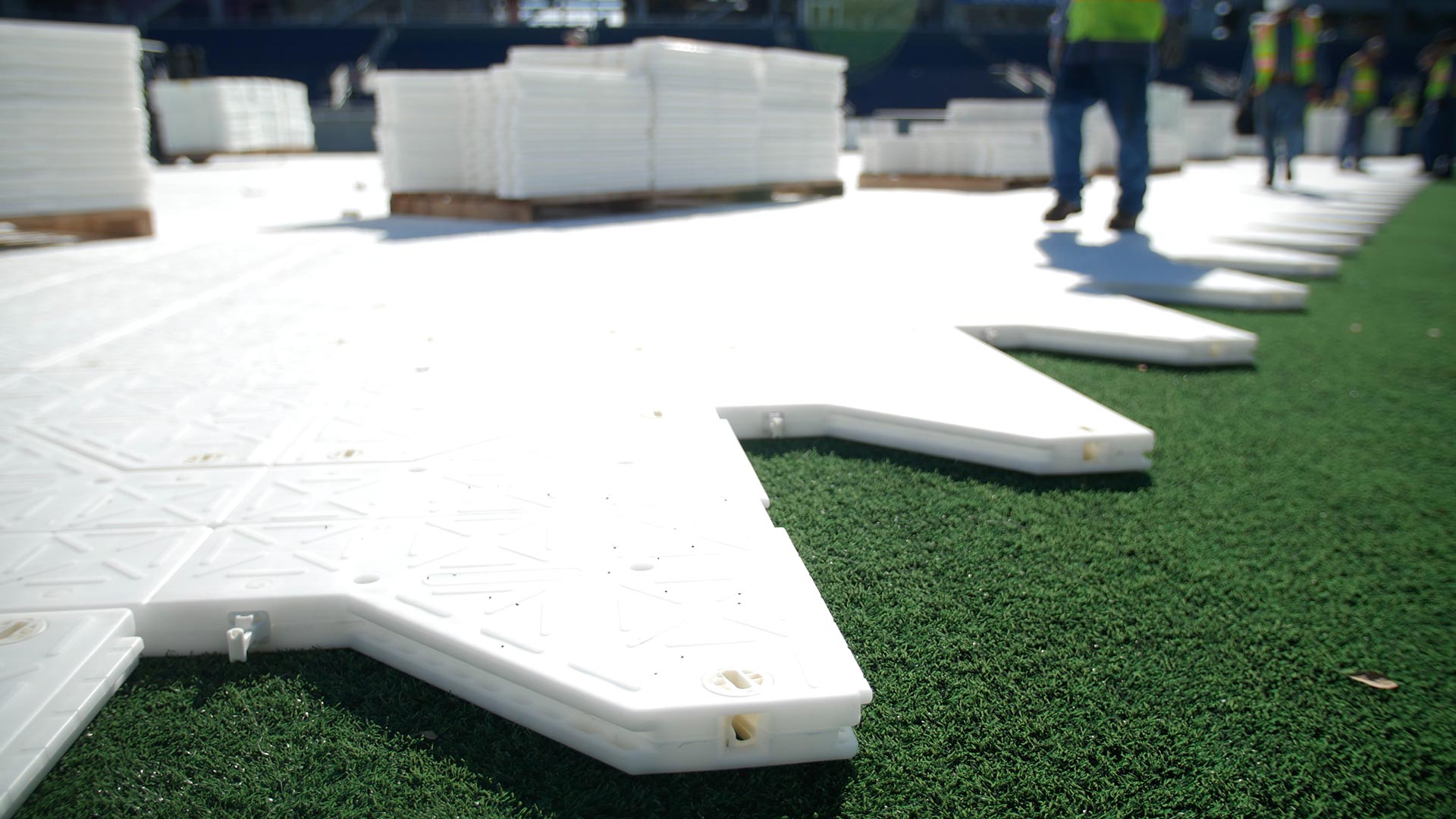
Types There are several different types of ground protection mats available on the market. The type you choose will depend on the task and location. Some common options include: Temporary Floor Mats: These lightweight, interlocking floor mats are made of recycled rubber or plastic. They are affordable and ideal for short-term indoor or outdoor projects where you need temporary floor coverage. They are easily assembled and removed. Rubber Equestrian Mats: Thicker and more durable than temporary floor mats, rubber equestrian mats are designed to withstand foot traffic and animals. With anti-fatigue properties, they are commonly used in stables, barns, riding arenas and other equestrian locations. Industrial Floor Mats: Made of heavy-duty rubber, industrial floor mats can withstand heavy loads and foot traffic in manufacturing facilities, warehouses, and commercial buildings. Fire-retardant options exist for compliance with industrial standards. The thickness provides insulation and protection of underlying surfaces. Natural Grass Mats: For event spaces, parks or green spaces where you want to protect natural grass, but also allow it sunlight, natural grass mats are a good choice. Made of a plastic or composite material, they are breathable to avoid killing the grass below. Drainage Mats: In wet, muddy conditions, drainage mats are useful for absorbing water and directing it away. With open pore structure, standing water flows through to avoid excess soil saturation underneath the mat. Choosing the Right Surface Material The surface material of a Ground Protection Mat will determine its durability, longevity, weight, and properties. Some common options include: Rubber: Rubber mats are very durable and can withstand heavy wear from foot traffic, vehicles, and other machinery. However, rubber is heavier than other materials. Plastic: Lightweight plastic mats are a cheaper option than rubber but may not last as long. High-density polyethylene (HDPE) plastic mats tend to be more durable. Grass: For natural settings, permeable grass mats are a good choice so that sunlight can reach the grass below. The plastic or composite material allows water drainage. Bamboo: More environmentally-friendly than plastic, bamboo mats are lightweight and durable. However, they may not withstand heavy loads as well as rubber or plastic. Other Considerations for Choosing the Right Ground Protection Mat Beyond material and intended use location, other factors to consider when choosing ground protection mats include: Thickness: Impact absorption and weight capacity increase with thicker mats. But thicker mats are heavier to handle and install. Interlocking Design: Mats with interlocking edges stay neatly in place without shifting. This reduces tripping hazards for foot traffic. Non-slip Surfaces: Textured or ridged surfaces provide better traction to avoid slips, especially in wet conditions. Drainage Grooves: Mats with drainage grooves allow water to flow through without causing puddles or mud. Fire Resistance: For industrial settings, comply with fire safety ratings by choosing fire-retardant mat materials. Maintenance Requirements: Low maintenance durable mats may have higher upfront costs versus plastic mats that degrade faster in sunlight. Weight & Transport: Lightweight mats are easier to transport and install but offer less protection than thicker heavy-duty options. Using and Maintaining Ground Protection Mats To maximize the life of any ground protection mat, proper use and care is important. Here are some tips: Install mats securely according to manufacturer instructions. Use stakes or tape as needed to prevent shifting. Inspect regularly for wear, cracks or damage from use. Repair or replace sections as needed. Clean periodically with a pressure washer or hose to remove built up dirt and debris. For mats in direct sunlight, expect faster degradation that may require earlier replacement. Provide shaded coverage if possible. Avoid dragging or sliding heavy objects across surfaces which can cause premature wear. Store indoors during winter or other periods of extended disuse to prevent weather damage. Letting the right ground protection mat simplify projects while saving your landscaping, flooring, or other surfaces below from damage or premature wear. With proper choosing and care, a mat is a wise long-term investment.
Get more insights on Ground Protection Mats
Get More Insights—Access the Report in the Language that Resonates with You
French | German | Italian | Russian | Japanese | Chinese | Korean | Portuguese
About Author:
Money Singh is a seasoned content writer with over four years of experience in the market research sector. Her expertise spans various industries, including food and beverages, biotechnology, chemical and materials, defense and aerospace, consumer goods, etc. (https://www.linkedin.com/in/money-singh-590844163)