

With the increasing awareness of aesthetic issues, hair loss has emerged as a significant concern for both men and women. Experiencing hair loss can be a distressing event that adversely affects an individual's self-confidence and self-esteem. Therefore, consulting a medical professional may provide a promising solution to address the problem of hair loss.
When to consult a doctor? What could be advised by the doctor?
The pattern of hair loss is often evident, allowing for self-diagnosis. However, if you notice signs of hair loss, it is advisable to consult a physician promptly rather than attempting to manage the issue independently.
Upon your consultation, the physician may suggest a medication such as finasteride, which aims to halt hair loss and promote the growth of new hair. While this treatment can be beneficial for those experiencing hair loss, it is important to note that the results may not be permanent; discontinuation of the medication can lead to a return of hair loss.
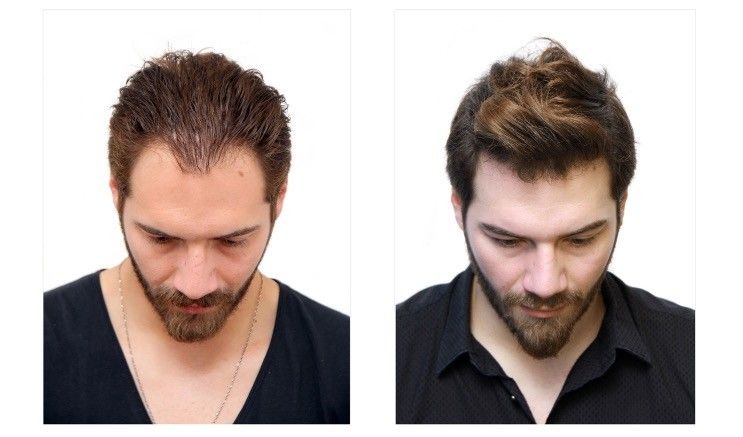
For those seeking a more definitive solution, hair transplants are considered the most effective option, offering lasting results with a natural appearance. Nonetheless, as this procedure is surgical in nature, it is essential to consult with a medical professional to assess your suitability for the surgery. Mechanism of hair loss in male pattern baldness:
Hair follicles develop a sensitivity to dihydrotestosterone (DHT) after it is produced from testosterone through the action of the enzyme 5-alpha reductase. The phenomenon known as miniaturization, which is often referred to as hair loss, occurs due to the excessive sensitivity of hair follicles to DHT, leading to a significant reduction in their size. If this process persists, men may experience noticeable baldness as it continues to advance over time.
How it affects only a certain part of scalp?
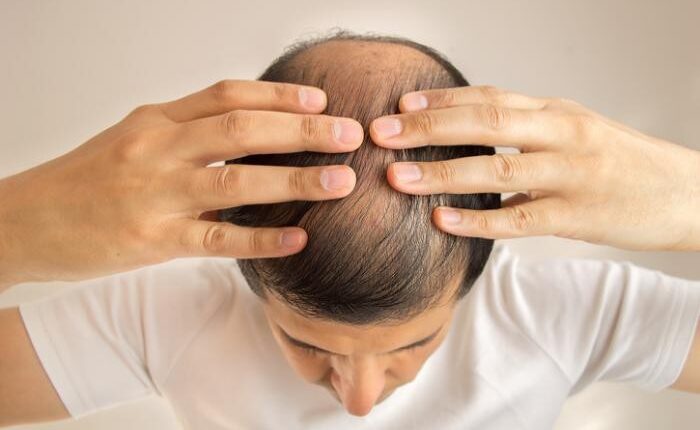
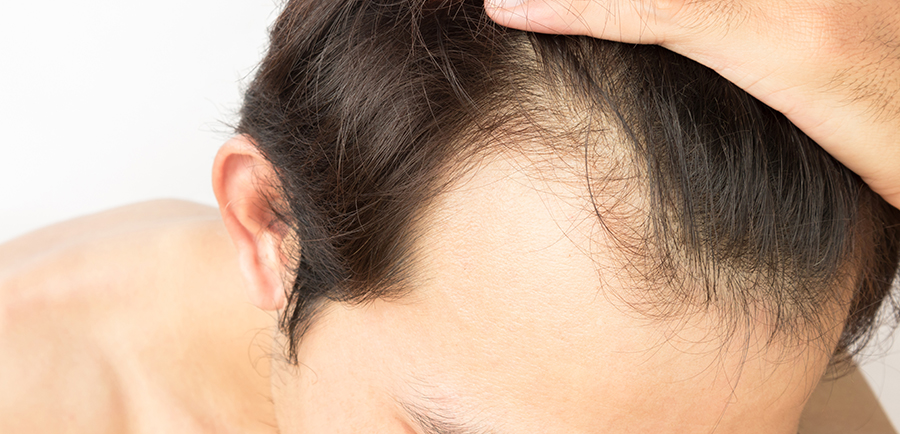
Male pattern baldness typically initiates at the frontal region of the head and gradually advances towards the vertex area of the scalp. In successive stages, the majority of the frontal and vertex regions are impacted, while the hair on the occipital side, which includes the back and sides of the head, remains unaffected.
This specific pattern occurs because only the hair follicles in the frontal and vertex regions are sensitive to dihydrotestosterone (DHT), as they possess the necessary receptors. In contrast, the hair follicles in the occipital area do not have these receptors, rendering them immune to the effects of this hormone.
It is important to note that the genetic characteristics of hair reside within the hair follicle itself, not the scalp. Consequently, when hair follicles are transplanted from the occipital region to areas that are sensitive to DHT, they do not experience hair loss, as the transplanted follicles are not influenced by DHT. The extraction of follicular grafts from the sides and back of the head is fundamental to achieving permanent results in hair transplantation.
Treatments options available to treat men pattern baldness include
1. Cosmetic and Ayurvedic Products – Numerous products available in the market, including hair oils, conditioners, shampoos, and tonics, are heavily promoted; however, their efficacy in addressing male pattern baldness remains largely unverified. These products are primarily marketed through personal recommendations.
2. Wigs, Hair Patches, and Prosthetic Hair – These solutions are commonly employed to conceal bald areas or the scalp, yet they often lack aesthetic appeal and require significant upkeep. Additionally, they can be easily detected.
3. Medications – There are typically two primary medications utilized for hair loss: a) Minoxidil, an over-the-counter treatment available in liquid, foam, and shampoo forms, which is applied topically; and b) Finasteride, a prescription medication for men that is administered orally in pill form. A notable drawback of these treatments is that they do not provide a permanent solution to hair loss, which tends to resume once the medication is discontinued.
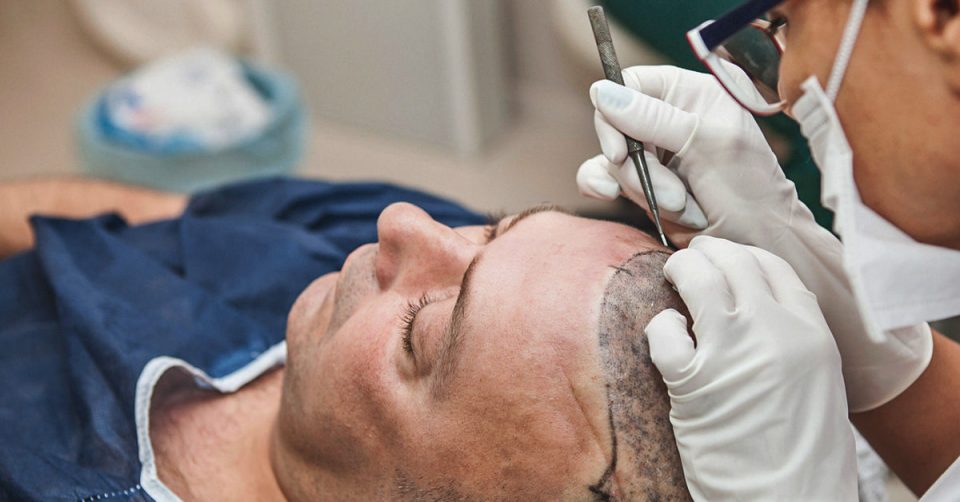
4. Hair Transplantation – This is a minimally invasive surgical procedure that involves relocating your own hair follicles from donor sites (characterized by high density and permanent roots) to the balding areas. Only those hair roots that are resistant to Dihydrotestosterone (DHT) are harvested and transplanted to ensure a natural and lasting appearance. The hair transplant procedure is conducted under local anesthesia and is generally painless. When performed by a skilled surgeon, it can result in minimal to no visible scarring, making it difficult to discern the extraction sites. Depending on the specific case and the number of grafts required, the surgeon may opt for one of two techniques, or a combination thereof: Follicular Unit Transplantation (FUT) or Follicular Unit Extraction (FUE).
Hair transplant is recognized as the sole permanent remedy for male pattern baldness, leading to a surge in its popularity in India. This trend is largely attributed to the presence of highly skilled surgeons, particularly in Delhi and Jaipur, who operate state-of-the-art facilities that adhere to global standards and utilize advanced techniques and procedures. Notably, the cost of hair transplant in India remains remarkably affordable, typically ranging from 20% to 25% of the expenses incurred for similar treatments in the United States, United Kingdom, or even the United Arab Emirates.
Medispa Hair Transplant Clinic, located in Delhi and Jaipur, has established itself as a leader in the hair transplant sector, consistently achieving outstanding results over the past 15 years. Dr. Suneet Soni, the founder of Medispa, is a renowned hair transplant surgeon, widely regarded as one of the best hair transplant surgeon in India, thanks to the immense appreciation and affection he receives from his patients. Dr. Soni is particularly noted for his exceptional surgical skills and artistic vision, which enable him to create natural-looking hairlines that yield remarkable outcomes. With over 5,000 successful hair transplant procedures to his credit, he is recognized as an authority in this field. Therefore, if you are experiencing noticeable male pattern baldness, do not hesitate to reach out to Medispa Hair Transplant Clinic for assistance.