Types of Medical Thermometers
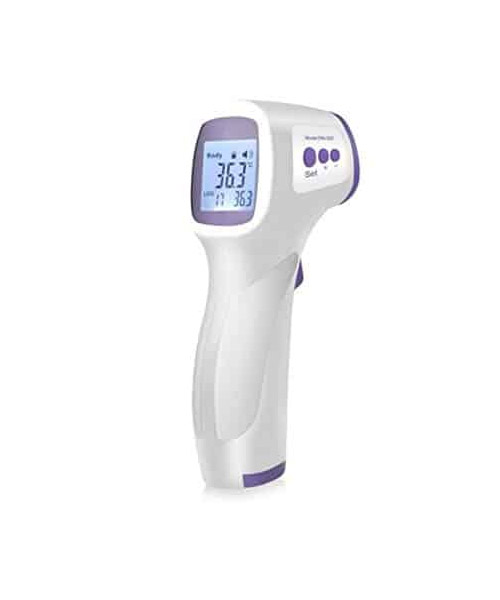
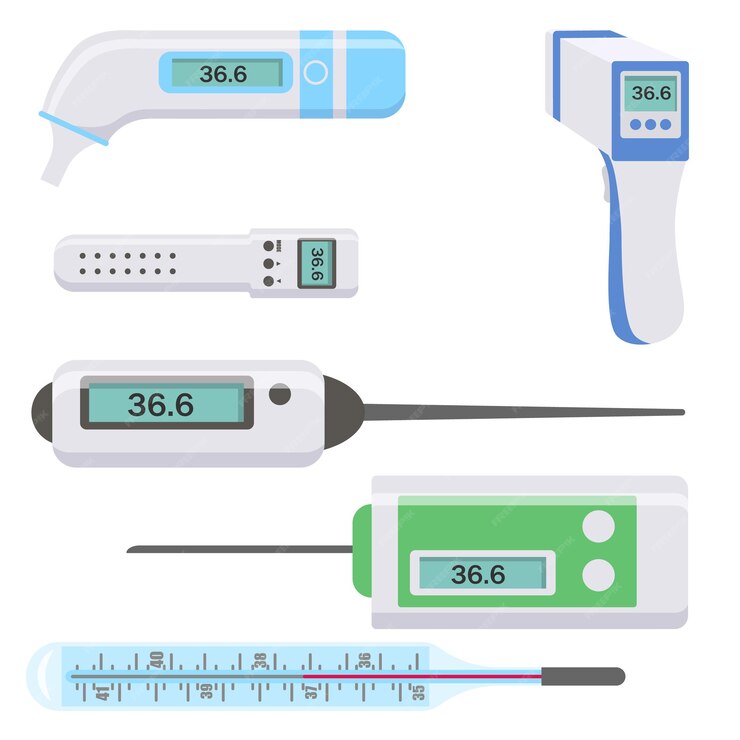
There are different types of medical thermometers available in the to take body temperature accurately. Some of the common types are: Mercury-in-glass thermometer: This is the classic and oldest thermometer design still used today. It uses mercury liquid inside a glass tube to measure temperature. The height mercury rises corresponds to the body temperature. It provides accurate readings but involves handling mercury which is a hazardous material. Digital thermometers: These are the most commonly used thermometers today. They come with a digital display and measure temperature using a thermistor (thermal sensor). The sensor is placed inside the mouth, armpit or rectum to take reading. Digital thermometers provide faster, more precise readings without mercury. Some advanced models have memory to store past readings. Infrared thermometers: An infrared thermometer measures the infrared heat emitted by the body without any contact. It is held near the forehead to take a temperature reading. These are very convenient but less accurate than contact thermometers. Forehead temperature may differ from internal body temperature. Tympanic thermometers: Also known as ear thermometers, these measure the temperature inside the ear canal which closely matches the core body temperature. The thin probe is gently inserted into the ear to take a fast, precise reading. Ear thermometers are very popular due to their accuracy and speed.
How does a Medical Thermometer Work?
All Medical Thermometer work on the principle that temperature can be measured using changes in certain materials when exposed to heat. The basic working mechanism can be summarised as: - Most thermometers contain either mercury or another liquid that expands when heated. As temperature rises, the liquid expands and fills more space inside the thermometer tube or bulb. - Digital thermometers replace liquids with thermistors - semiconductor devices whose electrical resistance changes with temperature. Warmer temperatures cause lower resistance. - Infrared thermometers detect infrared light emitted by any object based on its temperature. Warmer objects emit more infrared light. - The thermometer casing has a temperature-calibrated scale that converts the change in liquid level or resistance into a temperature reading in degrees Celsius or Fahrenheit. - Thermometers are designed to be placed in areas where core body temperature can be accurately assessed like mouth, armpit, rectum or ear canal.
Importance of Using Medical Thermometers
Taking body temperature regularly using a medical thermometer helps detect illnesses early and monitor health conditions accurately. Here are some key importance and benefits of using thermometers: - Detect fever: Fever (temperature above 100.4°F or 38°C) is one of the most common signs of infection, illness or inflammation in the body. Thermometers help identify if a fever is present. - Monitor infections: Tracking temperature over time during an infection shows how well treatments are working or if the condition is worsening. This aids healthcare decisions. - Screen for illnesses: Measuring baseline temp helps recognize even subtle increases indicating illness onset before other symptoms appear. Early detection improves outcomes. - Assess recovery: Regular temperature checks during recovery from surgeries or injuries help gauge healing progress and identify any developing complications. - Manage chronic conditions: Diseases like thyroid disorders can cause temperature imbalances. Thermometers help oversee fluctuations and adjust treatments as needed. - Guide decisions in newborns/infants: Premature or sick babies require close temp monitoring since even slight changes may worsen conditions. Thermometers are essential in neonatal care. - Comply with medicine instructions: Many medications recommend dosing based on temperature. Thermometers allow taking accurate measurements essential to ensure proper intake as directed.
The Medical thermometer Report provide a simple yet important tool for healthcare and self-care. Used as directed, they aid early detection of potential health issues, guide treatments and recovery monitoring. Hence, having the right thermometer at home helps manage health holistically.
Reading Technical Specifications of Thermometers
Before purchasing a thermometer, it is important to understand some key technical specifications. These help determine accuracy, suitability for purpose and safety. Some important parameters are: - Measurement range: Indicates the minimum and maximum temperatures that can be reliably measured. Ensure it includes normal and fever-range body temps. - Accuracy: Specified as +/- a certain value (e.g. +/- 0.1°C), it impacts reliability. Clinical-grade accuracy is essential for medical use. - Response time: Time taken to display a stable reading. Fast response (under 10-30 seconds) is required for patient comfort. - Display resolution: Smallest temperature change it can detect and display. Higher resolution (0.1°C) is preferable. - Probe type: e.g. glass, plastic - impacts durability, safety, precision of insertion-based models. - Memory function: Useful for tracking historical readings and sharing with doctors. - Power source: Whether battery operated, solar or non-replaceable for long shelf-life. - Safety features: Low battery indicator, auto-switch off, water/drop resistance as applicable. - Intended usage: Ear, oral, rectal, underarm, object/liquids - match intended site. Carefully assessing specifications ensures a thermometer's capability and safety for the purpose of use. This leads to correct diagnosis and aids healthcare management overall.
Get more insights: Medical Thermometer
About Author:
Money Singh is a seasoned content writer with over four years of experience in the market research sector. Her expertise spans various industries, including food and beverages, biotechnology, chemical and materials, defense and aerospace, consumer goods, etc. (https://www.linkedin.com/in/money-singh-590844163)

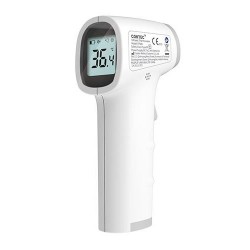
Want to Buy Medical Infrared Thermometer & Temperature Gun.Infrared Thermometer Help to measure the Body Temperature.https://easylab.ae/product/info/2244/infrared-thermometer