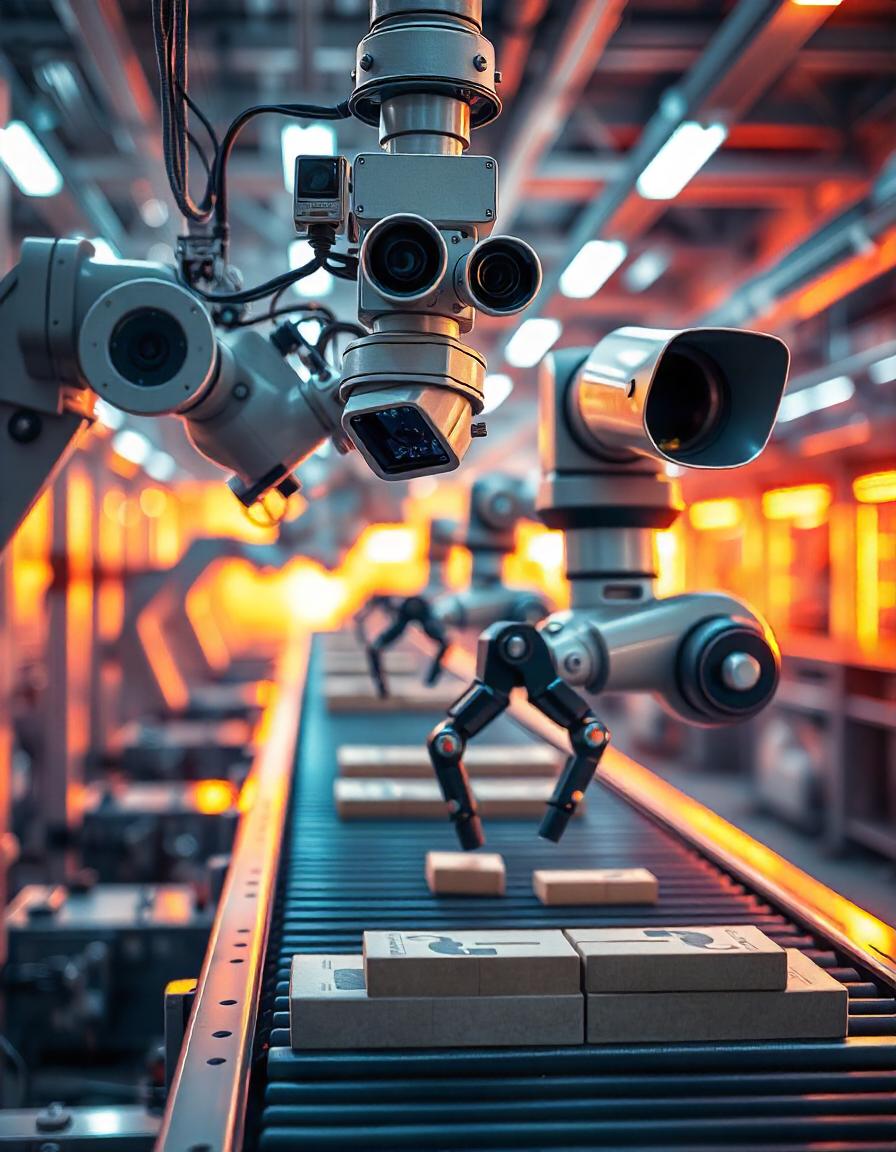
Precision is the key to success in the field of machine vision. Increased use of high-resolution monochrome cameras is becoming the standard for industries with high standards. For applications including surface analysis, assembly line monitoring, and quality inspection, these cameras are essential due to their unmatched image clarity. They are essential in many applications, ranging from manufacturing to medical imaging, because of their remarkable accuracy in capturing minute details. This article will examine the value of high resolution monochrome cameras in machine vision systems, highlighting their advantages for contemporary industrial processes as well as how they improve imaging performance.
High-Resolution Monochrome Camera in Machine Vision Systems: Why It Matters
Machine vision systems are at the forefront of quality control and automation in industries like manufacturing, robotics, and medical diagnostics. A high-resolution monochrome camera enhances the precision and detail of captured images, allowing for more accurate analysis and decision-making. Unlike color cameras, which can introduce noise and complexity in image processing, monochrome cameras focus on sharp contrasts and finer details, making them ideal for applications that demand high clarity, such as surface inspections or object recognition.
These cameras excel in environments with limited light conditions, where the absence of color allows for better detection of even the smallest variations in texture or shape. Whether it's detecting flaws on an assembly line or identifying minuscule patterns for medical analysis, the high-resolution monochrome camera ensures that every detail is captured without compromise.
The Benefits of High-Resolution Monochrome Cameras for Object Recognition and Classification
One of the most significant applications of high-resolution monochrome cameras in machine vision is object recognition and classification. With a high pixel count and a focus on grayscale imaging, these cameras can capture subtle differences in object features that may be difficult to discern with a color camera.
By analyzing these detailed images, machine vision systems can identify and classify objects with greater accuracy. This is particularly valuable in quality assurance processes, where even the smallest defect or variation can be detected and addressed before it becomes an issue. Whether it's a microchip, a component on an assembly line, or even a biological sample, the precision of a high-resolution monochrome camera ensures nothing is overlooked.
Imaging Performance Features: Auto Control and Enhanced Dynamic Range
When it comes to performance, high-resolution monochrome cameras offer a range of features designed to optimize image quality in various environments. These features play a crucial role in ensuring that the cameras perform at their best, regardless of the lighting conditions or subject matter.
Auto Control: Auto-Exposure, Auto-Gain
The auto-exposure and auto-gain features ensure that the camera adjusts its settings in real-time to maintain optimal image clarity. Auto-exposure automatically adjusts the camera’s exposure time to match the ambient light levels, ensuring that the image is neither overexposed nor underexposed. Meanwhile, auto-gain boosts the camera’s sensitivity to light, allowing it to perform well in low-light conditions. These features ensure that the camera produces clear, detailed images even in challenging environments.
Imaging Performance: Enhanced Dynamic Range (eDR)
The enhanced dynamic range (eDR) of high resolution monochrome cameras allows for better differentiation between dark and bright areas in a single image. This is crucial for applications where fine details are hidden in shadows or bright spots. By capturing more information across a wider range of light intensities, eDR ensures that no detail is lost, making it perfect for surface inspection or object recognition tasks.
Excellent NIR Response
Another standout feature of these cameras is their excellent near-infrared (NIR) response. High-resolution monochrome cameras are capable of capturing images at wavelengths of 850nm and 900nm, making them highly effective for applications such as monochrome NIR imaging. These wavelengths are particularly valuable in environments where visible light is insufficient or where materials need to be inspected using infrared light to reveal hidden features.
Wake on Motion and Signal-to-Noise Ratio
In dynamic environments, where objects are in constant motion, the wake on motion feature becomes invaluable. This feature ensures that the camera is activated only when movement is detected, improving energy efficiency while maintaining image clarity. Additionally, the signal-to-noise ratio (SNR) of high-resolution monochrome cameras plays a critical role in delivering high-quality images. A high SNR means the camera can capture crisp, clear images with minimal interference from noise, even in low-light conditions.
Use Cases of High-Resolution Monochrome Cameras in Machine Vision
From quality inspection to assembly line monitoring, the applications of high resolution monochrome cameras are vast. These cameras are employed in industries where precision is key, and even the smallest flaws can lead to significant issues.
Ready to elevate your machine vision systems with precision imaging? Discover the power of high resolution monochrome cameras and explore our range of advanced imaging solutions. Whether you’re improving quality control, assembly line efficiency, or surface inspection, we have the right solution to meet your needs. Contact us today to learn more about our high-resolution monochrome cameras and how they can transform your operations.
By focusing on precision, dynamic performance, and innovative features, high-resolution monochrome cameras are transforming the landscape of machine vision. As technology continues to evolve, these cameras will remain at the forefront of innovation, driving progress across industries.




Address:77 Cantua Close,The Gardens, Manukau 2105Phone : 029 9360-108Email : info@sipotek.netWebsite: https://www.sipotek.net/Our company has been committed to the research, development and manufacturing of image technology and machine vision, with more than 70 senior R personnel of machine vision system and industrial automation engineers.
A new generation of class-leading vision system, better in every way.
Faster, more efficient and integrated by our experts.Easy to use, our vision systems are also practical and simple to maintain.Whichever way you look at it, we’ve got you covered.
More detail please visit https://www.sipotek.net/ Category: manufacturing BusinessMon - Sun 08:30-09:30