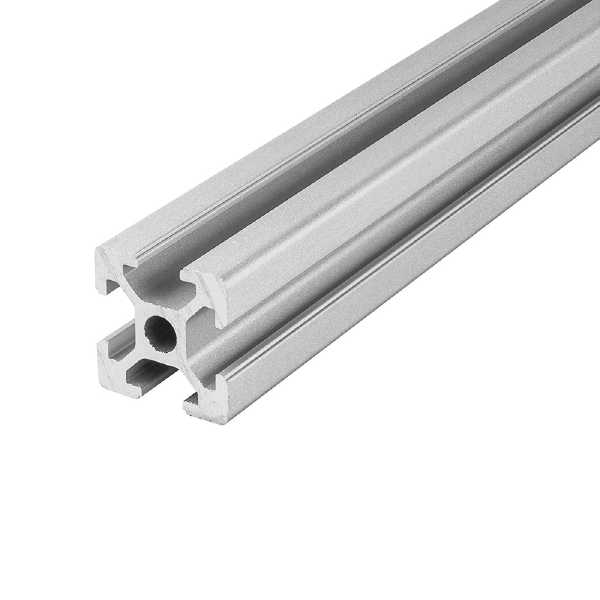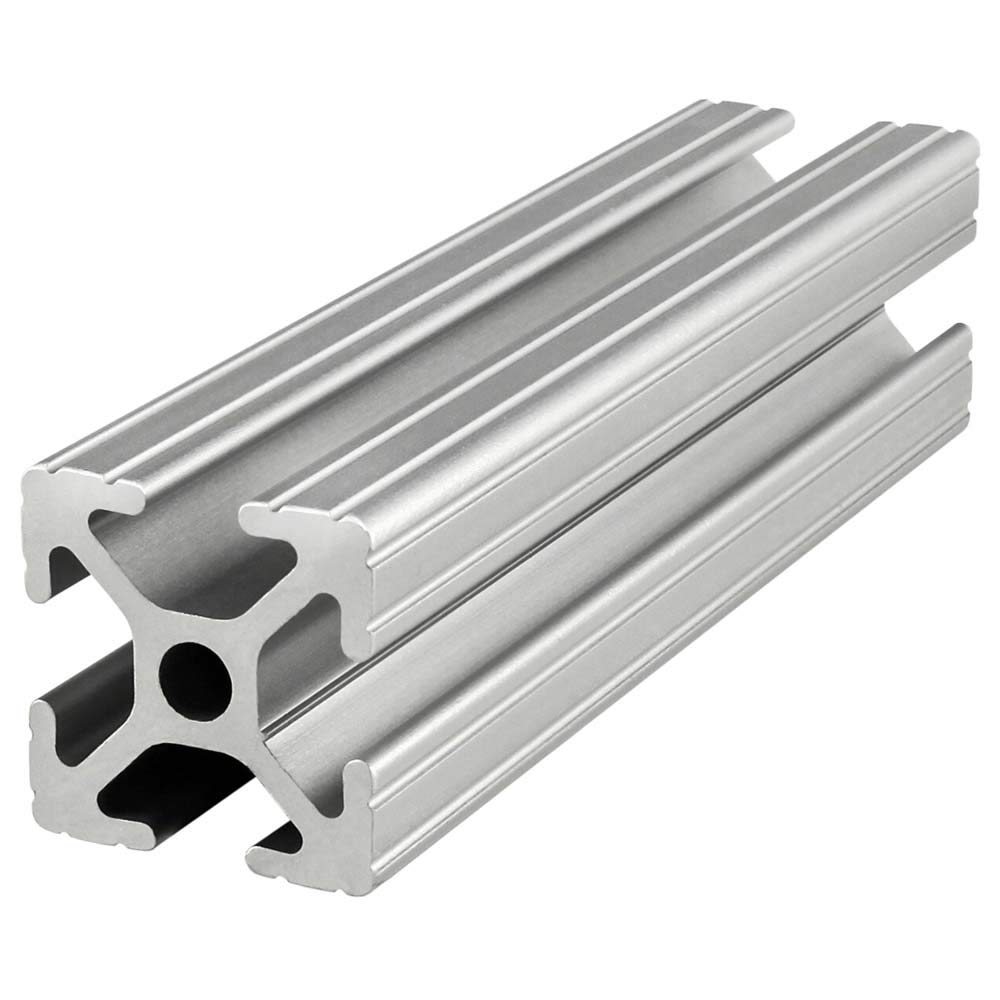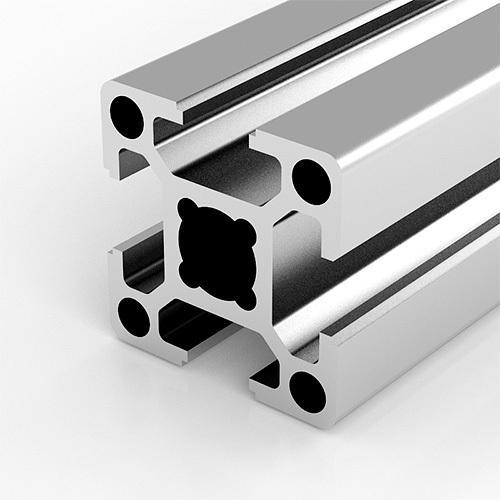
Aluminum extrusion is a manufacturing process used to create objects of a fixed cross-sectional profile. It involves pushing aluminum alloy material through a die of the desired cross-section using either a hydraulic press or a screw extruder. The die is a hollow block with a hole drilled through one side to the other. There is an opening at the entrance side that is in the shape of the required cross-section and an exit on the other side with the same cross-section. The shape of the opening decides the cross-sectional contour of the extruded part. The first aluminum extrusion machine was developed in the 1850s, however, widespread use and advancements occurred much later in the 20th century. This was because aluminum was very expensive to produce until invention of the Hall–Héroult process made it commercially viable in 1886. Early applications included window frames, architectural moldings, and vehicular parts starting in the 1920s as the automotive industry was expanding rapidly. Following World War II, improvements in extrusion technology allowed for mass production and lower costs, leading to greatly increased usage. Today, it makes up over 50% of all aluminum produced annually globally. Materials The main aluminum alloys used for extrusion include: - 1000-series alloys (99% pure aluminum) – Aluminium Extrusion used for electrically conductive applications. - 3000-series alloys (Al-Mn) - Provide excellent corrosion resistance for marine and architecture uses. - 6000-series alloys (Al-Mg-Si) - Offers the best strength and formability. Commonly used alloy for structural parts. - 7000-series alloys (Al-Zn-Mg-Cu) - Highest strength of aluminum alloys, though difficult to extrude. Used for aerospace components. Addition of elements like zinc, copper, magnesium, and manganese strengthen aluminum alloys for extrusion by improving workability, corrosion resistance, durability, and other characteristics depending on the application. Process Here are the basic steps involved in aluminum extrusion: 1. Pre-treatment of aluminum billet - It is heated to 600-650°C and held in a homogenizing furnace to ensure uniform microstructure. 2. Billet charging - The pre-treated hot aluminum billet is loaded into the container chamber of the extrusion press. 3. Container closure - The container chamber is tightly closed to develop the necessary pushing force. 4. Billet heating - The loaded container is brought to the required extrusion temperature range of 450-500°C. 5. Forward movement - The ram or screw mechanism pushes the hot aluminum through the die at controlled pressure. 6. Die design - Various die shapes such as tubes, bars, angles, and I-beams can be extruded. 7. Sizing - Extrusions are sized and shaped within tolerances on a downstream sizing machine. 8. Finishing - Processes such as cutting to length, surface treatment like anodizing or painting may follow. Quality Control Maintaining quality is essential in aluminum extrusion since defects cannot be corrected post extrusion. Rigorous controls are exercised at various stages: - Chemical composition testing of billets ensures consistency with specifications. - Accurate temperature monitoring during heating is critical to achieve required plasticity without defects. - Die lubrication quality impacts surface finish and extrudate movement through die. - Ram speed and pressure controls prevent surface tearing or centreline cracks. - Sizing operation brings product within tolerance band for dimensional accuracy. - Non-destructive tests using x-rays check for internal flaws like wet spots. - Surface quality checks detect imperfections to be fixed at finishing stage. Strict adherence to optimal process parameters and quality inspections results in consistent, defect-free aluminum extrusions. Common Shapes The most prevalent extruded aluminum profiles include: - Tubes - Used extensively in transportation, architecture and irrigation sectors. - Angles - Load bearing structures like trusses, frames and joists employ aluminum angles. - Channels - Serve as tracks, rails and enclosure beams due to their asymmetric shape. - Hollow sections - Pipe-like sections find application as poles, posts and structural supports. - Bars - Provided as input material for secondary fabrication into rods, bolts or bars. - I-beams - Their asymmetric, two-flange shape makes I-beams suitable for roofing, flooring and bridges. Besides these, extruders can produce complex shapes like closures, panels, gears and others based on application needs. Applications Major markets for aluminum extrusions are: - Transportation - Auto and truck components, aircraft ribs/frames, railway coaches & wheels. - Construction - Doors, windows, curtain walls, roofing, cladding, decorative trims and fixtures. - Machinery & Equipment - Extrusions are used extensively in manufacturing equipment. - Electrical - Housing for wires/cables, switchboards, conductors and structural supports. - Consumer Durables - Furniture, appliances, sports goods frames benefit from extruded aluminum. - Packaging - Cans, lids and tubes for food, beverage and aerosol industries. - Engineering - Heat sinks, cooling fins and structural members in industrial tools. Sustainability is an added advantage as aluminum extrusions can be recycled numerous times without loss of properties.
About Author-
Ravina Pandya, Content Writer, has a strong foothold in the market research industry. She specializes in writing well-researched articles from different industries, including food and beverages, information and technology, healthcare, chemical and materials, etc. With an MBA in E-commerce, she has an expertise in SEO-optimized content that resonates with industry professionals. (https://www.linkedin.com/in/ravina-pandya-1a3984191)