


A Commercial Car Wash dryer system is one of the most vital parts of a successful car wash. So, it's very vital to consider different technical specifications as each system has its unique combination of features and benefits. The right system will fit the size and scope of your operation and ensure that your customers get an exceptional car wash experience every time they visit.

A good car wash dryer system ensures that the customer's car will leave looking its best. With so many different choices, it can be confusing to determine which will be best for you. Here. You will discuss what you should look for in a commercial Drying Car Wash Machine.
Key Considerations When Choosing Commercial Car Wash Drying Systems
Once you have determined whether a fixed or free-standing dryer system is right for you, here are five key factors that will help you make the right choice for your business:

Dryer Type
There are several kinds of professional car wash dryers to choose from:
· HV Air Dryer
· Towel System
· Blower System
· Foam-Covered Cloth System
· Blow-Off System
· Closed-Loop System
· Soft Cloth System
Fan Style
The fan style is a vital consideration when choosing a dryer system. There are two types to choose from: centrifugal and axial.
· Centrifugal car wash dryer fans: They are exhaust devices that work on an axisymmetric pattern to draw air. The fans work by being powered by a current of electricity that forces air in a circular motion. The fans cause a centrifugal force when the air increases its speed. It enables the car to dry fast and efficiently.
· Axial car wash dryer fans: This employs an electric motor to rev multiple blades and produce flow in the air parallel to the shaft of the fan or axis. They are capable of blowing large volumes of air with relatively low levels of pressure. They are far more energy-efficient than centrifugal fans. In general, though, they tend to cost more because their design is efficient and potent.
Fan Speed
You should now consider fan speed. A longer tunnel needs more horsepower for satisfactory drying. An example of this is needing a 75- to 90-horsepower centrifugal fan or a 40-horsepower axial fan to drive a 100-foot tunnel. When the fan speed is not set to where it needs to be, you are going to find a longer time to dry the vehicle or not dry altogether, and some of those problems are:
· Reduced Energy and Performance
· High Power Consumption
· High Operating Cost
· Low Satisfaction of Customers
· The Corrosion Rate is High.
Cost
Dryer systems range from between 7,000 USD to 25,000 USD. The buying and operating costs must not be high value over such a system that can achieve effective performance and minimal energy use.
Energy Efficiency
Automated Vehicle Drying Solutions have high energy consumption. It increases overhead costs. For that reason, it is essential to work towards energy efficiency so you do not raise your overheads as much. More efficient drying components also reduce energy usage while operating, maintaining less and producing fewer emissions giving customers spotless, dry cars each time.
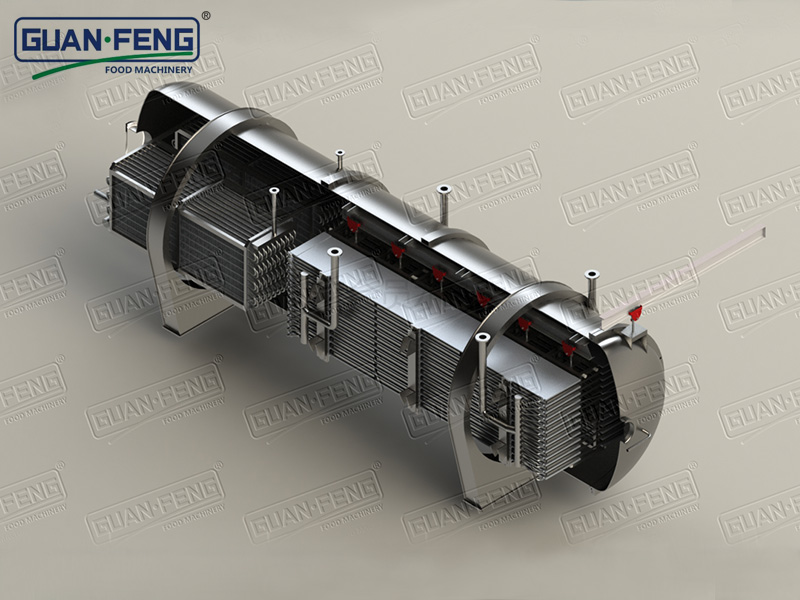
The biggest feature of Vegetable Drying Equipment is that the color and quality of products after drying does not change.
Some experts said that a large number of vegetables are on the market during the harvest season, and many local markets are oversupplied.
Fresh vegetables have high water content, strong postpartum respiratory metabolism, and extremely perishable characteristics, which bring considerable difficulties to the storage, transportation and circulation of agricultural products.Therefore, in order to reduce the huge losses of vegetables after the birth, in addition to extensive use of pre-cooling, preservation methods, etc., dried vegetables is also an effective way to regulate supply and demand, digest seasonal surplus, reduce post-natal decay losses, and it is also an effective supplement for fresh vegetables; The drying of vegetables can effectively increase the added value of products as an effective way to increase farmers' income and promote local economic development.Rural flue-cured tobacco growing areas in China, tobacco farmers are single-family households to build roasting tobacco houses to dry their own harvested tobacco leaves.
For a large number of flue-cured tobacco families, the quality and color of tobacco leaves should not be underestimated.
Therefore, the application of tobacco farmers to Vegetable Drying Machine is of great practical significance.
The emergence and application of Vegetable Drying Machine have reduced the huge losses of tobacco farmers after production, and the characteristics of non-discoloration and quality have become the biggest advantage of fruit and vegetable dryers.In a word, because the fruit and Vegetable Drying Machine has national policy support, with low cost, high efficiency, simple operation, and complete functions, the application in rural areas is becoming more and more popular.

Significant upraise in demand for food vacuum dryers is driving continuous efforts and developments by manufacturers operating in the food vacuum drying machine market.
These persistent developments and efforts for diversifying the existing product framework are stimulating the market to land on a prosperous growth course.
Moreover, high preferences for processed food is also adding up to the overall demand for food vacuum dryers across the globe.
The study foresees food vacuum drying machine market to exhibit an impressive CAGR of 2.9% during the forecast period 2018-2028.The current growth curve of the food vacuum drying machine market is preeminently influenced by surging count of food projects lined up over the time.
This, in turn, is further poised to encourage manufacturers to frame robust tactics and extend their product specialties.
Also, the vogue of customized food vacuum dryers is stimulating revival of the overall value chain process, which will augur well for the growth of food vacuum drying machine market.