

Starting a business in Saudi Arabia for foreigners can be an exciting venture, offering a wide range of opportunities in one of the largest and most dynamic economies in the Middle East. Over the past few years, Saudi Arabia has made significant strides in improving its business environment to attract foreign investors, particularly as part of its Vision 2030 initiative. This comprehensive guide will walk you through the steps on how to start business in Saudi Arabia for foreigners, including the registration process, types of companies you can establish, and key sectors to invest in. Understanding the regulations, procedures, and potential challenges is crucial for a smooth entry into the Saudi market. With the right guidance and resources, foreigners can navigate through the legal and business landscape and successfully set up their businesses in Saudi Arabia. What Attracts Foreigners to Invest in Saudi Arabia? Saudi Arabia is becoming an increasingly attractive destination for foreign investors, and it’s easy to see why. The government has implemented various reforms designed to simplify the process of business setup for foreigners. First, the country has one of the most lucrative and rapidly growing markets in the Gulf region. Additionally, Saudi Arabia’s strategic location serves as a gateway to both African and Asian markets, further enhancing its appeal. Other factors include: Strong Economic Growth: Saudi Arabia’s economy is diverse and rapidly expanding, with major investments in sectors such as energy, infrastructure, healthcare, and tourism.
Government Incentives: The government offers tax incentives, including exemptions for foreign investors in certain industries, making it an appealing destination for international businesses.
Ease of Doing Business: Through various reforms, the government has improved the ease of doing business, particularly by offering faster company registration processes and streamlined visa systems for foreign employees. These factors make Saudi Arabia a prime location for foreign investment, whether you’re looking to set up a small business or a large corporation. Promising Investment Sectors for Foreigners in Saudi Arabia Saudi Arabia is home to several promising sectors for foreign investors. These sectors have been identified by the government as key areas of growth under Vision 2030. Some of the most promising sectors for foreign investment include: Energy and Renewable Resources: Saudi Arabia is known for its vast oil reserves. However, the country is also diversifying into renewable energy as part of its Vision 2030 initiative, making this sector a major area of growth. Solar and wind energy projects are becoming increasingly important, with opportunities for foreign businesses to invest.
Tourism and Hospitality: With its rich cultural heritage and landmarks like Mecca and Medina, Saudi Arabia is becoming a hotspot for tourism. The government’s efforts to develop the sector include the construction of luxury resorts and cultural centers. This presents significant opportunities for foreign investors in the hospitality industry.
Technology and Innovation: Saudi Arabia is focusing heavily on technology and innovation. The rise of startups and tech hubs is a key feature of Vision 2030. Foreign tech companies can tap into this growing sector, with opportunities in artificial intelligence, cybersecurity, and e-commerce.
Healthcare and Pharmaceuticals: With a growing population and increasing demand for healthcare services, Saudi Arabia is seeing rapid growth in this sector. Foreign companies involved in healthcare, medical equipment, and pharmaceuticals will find a wealth of opportunities.
Retail and Consumer Goods: As the population grows, there is increasing demand for consumer goods and retail services. Setting up a retail business, especially in major cities like Riyadh and Jeddah, can yield high returns. These sectors are not only appealing for their economic potential but also align with Saudi Arabia’s strategic objectives for growth and diversification. Negative List for Foreign Direct Investment While Saudi Arabia is actively encouraging foreign investment, there are still restrictions in certain areas. The Negative List for Foreign Direct Investment (FDI) specifies industries and sectors where foreign ownership is limited or prohibited. Some of the key areas on the negative list include: Retail Trade: In some cases, foreign investors cannot fully own retail businesses, particularly in certain types of goods and services.
Legal and Accounting Services: Foreigners are generally not allowed to open law firms or accounting companies without a Saudi partner.
Broadcasting and News Media: Ownership in broadcasting and news media is heavily regulated, with restrictions on foreign ownership to preserve local control.
Real Estate Development: There are restrictions on foreign ownership in certain areas, especially in real estate development in certain parts of the country.
Understanding the negative list is essential for ensuring that your business plan aligns with the investment laws of Saudi Arabia. Types of Companies Foreigners Can Open in Saudi Arabia Foreigners looking to do business in Saudi Arabia have several options when it comes to the type of company to set up. These include: Limited Liability Company (LLC): The LLC is one of the most common forms of business in Saudi Arabia. It allows foreign investors to own up to 100% of the company, provided they meet certain conditions and sectors. LLCs are ideal for small-to-medium enterprises.
Joint Stock Company (JSC): A Joint Stock Company is suitable for larger businesses looking to raise capital. Foreign investors can own a significant stake in JSCs, but they must have a local partner in certain circumstances.
Branch of a Foreign Company: Foreign companies wishing to expand into Saudi Arabia can establish a branch office. This option is ideal for businesses that want to maintain their identity while entering the Saudi market.
Foreign Investment Company: This type of company allows foreign investors to operate in Saudi Arabia with a high degree of control. This structure is ideal for investors looking to set up larger, more complex operations.
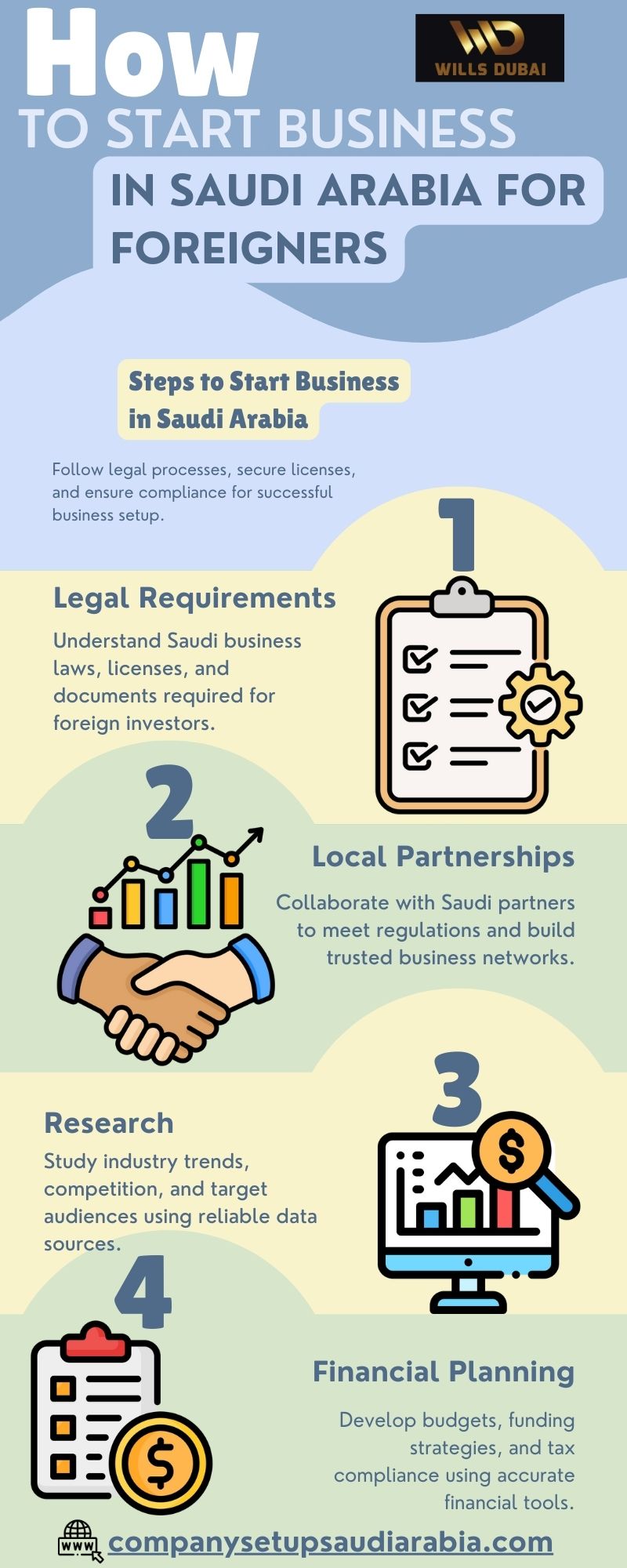
Each type of company has its own benefits and requirements, depending on the nature and scale of the business you want to start. Process and Steps for Company Registration in Saudi Arabia The process for company registration in KSA is straightforward but requires careful planning. Here are the key steps involved: Business Plan: First, outline your business plan. This will be necessary for obtaining the necessary permits and licenses.
Choose a Business Name: The next step is selecting a unique business name, which must be approved by the Ministry of Commerce and Investment.
Register with the Ministry of Commerce and Investment (MCI): After selecting the business name, you must submit the company registration documents to the MCI. This includes your business plan, financial details, and other required forms.
Obtain Investment License: For foreign investors, an investment license is required. This is issued by the Saudi Arabian General Investment Authority (SAGIA), which governs foreign investments in the kingdom.
Open a Bank Account: After obtaining the necessary licenses, you will need to open a corporate bank account in Saudi Arabia to facilitate your financial transactions.
Register with the Tax Authorities: Businesses must also register with the Saudi tax authorities for VAT, social insurance, and other related taxes.
Obtain Other Necessary Permits: Depending on the type of business, you may need additional licenses or permits, particularly if you are in a regulated sector like healthcare or construction.
Importance of Company Registration in Saudi Arabia for Foreigners Registering your company in Saudi Arabia is a critical step in starting a business. It not only ensures that your company is legally recognized but also provides access to a wide range of business opportunities. Company registration allows you to: Legally Operate: Without registration, your business cannot operate legally, and you may face penalties or legal action.
Access Government Incentives: Many government incentives and subsidies are available to registered companies, including foreign investment incentives.
Secure Business Contracts: Being a registered entity allows you to enter into contracts, hire employees, and build a reputation in the Saudi market.
Protect Your Brand: Official registration ensures your business is protected under Saudi law, especially when it comes to intellectual property and trademarks.
Conclusion Starting a business in Saudi Arabia for foreigners offers incredible potential due to its growing economy, government incentives, and strategic location. By understanding the various business structures, investment sectors, and company registration process, you can navigate the landscape effectively and set up your business in Saudi Arabia. Whether you are looking to enter a growing market like energy or healthcare, or if you’re interested in exploring emerging sectors such as tourism or technology, Saudi Arabia offers diverse opportunities for foreign investors. For further assistance in company registration in Saudi Arabia, you can visit companysetupsaudiarabia.com, which provides expert guidance and services to help you establish your business in the Kingdom.